畜牧交易

Search documents
在新疆巴扎,看他们“拍手议价”
Xin Lang Cai Jing· 2026-02-08 09:18
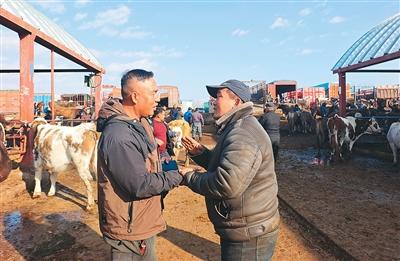
Core Viewpoint - The Xinjiang Chuangjin Huanggong Agricultural Products Trading Market, known as the largest livestock bazaar in Yining County, plays a crucial role in connecting farmers and buyers, with the profession of livestock brokers gaining formal recognition in 2025 [1][3]. Group 1: Livestock Brokers - The bazaar is home to over 3,000 livestock brokers, who have transitioned from being referred to as "livestock traders" to "brokers," reflecting a more professional image [3]. - Brokers like Ma Jun utilize various skills to assess livestock quality, negotiate prices, and facilitate transactions, often handling over 100 cattle in a single day, generating nearly 1 million yuan in transaction volume [5][7]. - The role of livestock brokers is essential in bridging the gap between farmers seeking to sell their livestock at favorable prices and buyers looking for quality products, thus enhancing market efficiency [7]. Group 2: Market Dynamics - The bazaar spans over 600 acres and can accommodate approximately 25,000 livestock, with transaction days increasing from one to three per week since 2020, resulting in a weekly transaction volume of around 200 million yuan [7]. - The bazaar's livestock products are exported to regions as far as Guangdong and Zhejiang, with an estimated 20% of weekly sales being outside Xinjiang, highlighting its competitive pricing and quality [7]. - Recent improvements in management services, including automated disinfection channels and an information-based trading platform, have enhanced operational efficiency and market integration [9].

首个规范化活畜交易中心运营
Xin Lang Cai Jing· 2026-01-16 18:01
Core Insights - The establishment of the livestock trading center in Hualong County marks a significant advancement in local agricultural practices, enabling farmers to sell livestock conveniently at their doorstep rather than traveling long distances [1][2] - The center provides a one-stop service for transactions, inspections, and documentation, greatly enhancing the efficiency of supply and demand connections for local livestock farmers [2] Group 1 - The livestock trading center occupies an area of 1.27 hectares and addresses the long-standing issue of farmers needing to travel extensively for livestock transactions [2] - The center features a high-capacity weighing scale and standardized facilities, ensuring safety and efficiency in transactions, with a 24-hour monitoring system in place [2] - The center is a key initiative for improving the quality and efficiency of the livestock industry, facilitating the integration of scattered farmers into larger markets and reducing circulation costs [2] Group 2 - The trading center is a notable outcome of East-West cooperation aimed at empowering rural revitalization and aligns with the county's modernization goals for agricultural industry development [2] - It is expected to stimulate the development of related industries such as feed supply, cold chain logistics, and deep processing, creating a positive cycle of "trading promotes breeding, breeding stabilizes industry" [2]
牛羊买卖的“牵线人”(新职·新知㉜)
Ren Min Ri Bao Hai Wai Ban· 2025-11-23 23:27
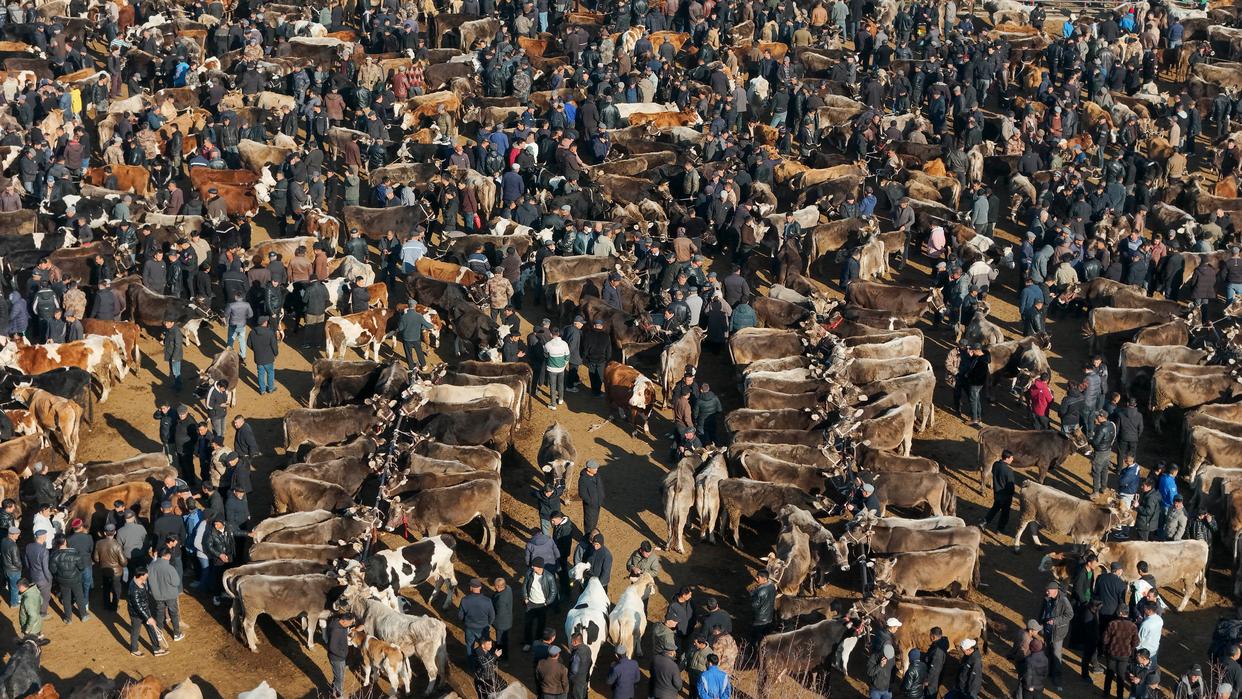
Core Insights - The article highlights the emergence of "livestock brokers" as a recognized profession in China, particularly in the Xinjiang region, where the Huanggong Bazaar serves as the largest livestock trading market with a history of over a century [1][9]. Group 1: Market Overview - Huanggong Bazaar can handle a daily trading volume of up to 15,000 livestock, making it a central hub for livestock transactions in Xinjiang [1]. - The market has a weekly trading schedule, with peak activity on Wednesdays, attracting up to 30,000 visitors [4]. - The annual trading volume at Huanggong Bazaar exceeds 1 million livestock, with an annual transaction value surpassing 6 billion yuan [9]. Group 2: Role of Livestock Brokers - Livestock brokers like Ma Jun facilitate transactions, handling around 7,000 livestock annually and generating monthly transaction values exceeding 3 million yuan during peak seasons [2][4]. - Brokers have adapted to modern demands by utilizing social media platforms to promote livestock, significantly increasing their client base and transaction speed [4][5]. - Trust and credibility are essential for brokers, as they often need to compensate clients for unsatisfactory livestock quality, which helps build long-term relationships [6]. Group 3: Technological Integration - The market is moving towards digital management, allowing for online transactions and data integration, which enhances transaction security and efficiency [9]. - The introduction of features like video calls for livestock viewing reflects a shift from traditional negotiation methods to more transparent and efficient practices [8]. Group 4: Market Structure and Functionality - Huanggong Bazaar spans 630 acres and includes various functional areas such as inspection zones and financial services, facilitating a comprehensive trading environment [8]. - The market's organization into specific trading zones for different livestock types streamlines the buying process for customers [7].
贵港港北区激活牛经济 壮大牛产业
Zhong Guo Xin Wen Wang· 2025-10-22 09:11
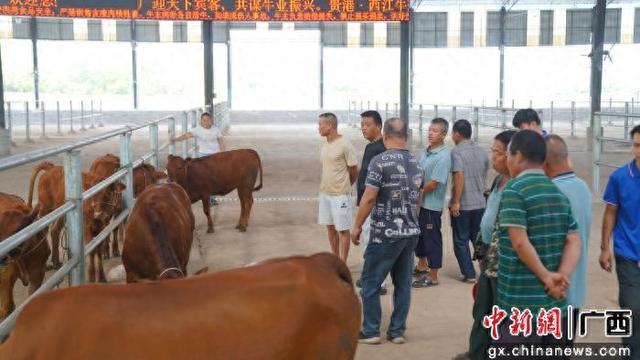
Core Viewpoint - The article highlights the establishment of a live cattle trading market in Guangxi's Guigang City, which aims to enhance the scale and standardization of the beef cattle industry, thereby contributing to rural revitalization efforts [1]. Group 1: Project Overview - The live cattle trading market project, named Xijiang Cattle Market, is set to be officially signed in December 2024 with a total investment of 674 million yuan [3]. - The market occupies 42 acres and features a 15,000 square meter fully covered trading shed with 36 specialized trading stalls and a 3,600 square meter free trading area, officially commencing operations on August 17 this year [3][4]. Group 2: Operational Model and Market Activity - The company adopts an innovative operational model of "three days a market, daily trading," ensuring continuous market activity, with a stable trading volume of around 300 cattle per market day [4]. - The market has successfully facilitated the transaction of 20,000 head of cattle this year, generating a trading value of approximately 200 million yuan, with an expected total trading value of 500 million yuan by year-end [4]. Group 3: Support and Services - The project benefits from comprehensive support from the Port North District, which implements a "motherly" service approach, ensuring dedicated service for each project through a designated contact person [5]. - The Guigang Modern Investment Group has provided full support from project site selection to operational challenges, addressing issues related to land, electricity, and water supply [5]. Group 4: Market Features and Future Plans - Xijiang Cattle Market is currently the only standardized and large-scale live cattle trading market in Guigang City, offering integrated services such as dining, accommodation, feed supply, and parking facilities [5]. - The company is exploring the application of digital technologies to create a "Digital Cattle Market," aiming to build a smart agricultural ecosystem [5].