
环保减排

Search documents
西部水泥(02233) - 2025 H2 - 电话会议演示
2026-03-23 23:00
West China Cement Limited 2025 Annual Results March 2026 Disclaimer By attending the meeting where this presentation is made, or by reading the presentation materials, you agree to be bound by the following limitations: The information in this presentation has been prepared by representatives of West China Cement Limited (the "Issuer" together with its subsidiaries, the "Group") for use in presentations by the Issuer at investor meetings for information purposes only and does not constitute a recommendation ...
欧洲人也是搞笑,禁了燃油车现在来后悔了。
Sou Hu Cai Jing· 2025-12-20 12:12
Core Viewpoint - The European Union has proposed to delay the 2035 ban on the sale of all fuel vehicles, allowing car manufacturers to sell hybrid vehicles and use various methods to offset carbon emissions, which has sparked significant reactions from the automotive industry [3][21]. Group 1: Industry Reactions - Traditional automakers like Volkswagen and BMW expressed relief at the EU's decision, feeling that their legacy technologies are preserved [5]. - In contrast, companies that have already transitioned to electric vehicles, such as Polestar and Volvo, criticized the decision, arguing it undermines climate goals and European competitiveness [5][12]. - The CEO of Polestar, Michael Lohscheller, described the postponement of the 2035 target as a "terrible idea," emphasizing the negative impact on climate and competition [5]. Group 2: Historical Context and Plans - In 2021, the EU announced an ambitious plan to ban fuel vehicles by 2035 and significantly reduce carbon emissions, which initially boosted confidence among member states and automakers [6]. - The plan included infrastructure development, such as establishing charging stations every 60 kilometers and hydrogen refueling stations every 150 kilometers [6]. - Major automakers like Renault and Volkswagen committed substantial investments to support electric vehicle development, with Volkswagen pledging €73 billion by 2025 [6]. Group 3: Challenges Faced - By 2023, several EU countries, led by Germany, Italy, and Portugal, opposed the 2035 ban, citing insufficient charging infrastructure and the poor performance of European automakers in the electric vehicle market [10][12]. - The EU's initial plans faced setbacks, with only 150,000 charging stations added from 2021 to 2022, and 88% of these being slow chargers [10]. - The failure to establish a robust local supply chain for electric vehicle components, particularly batteries, has been highlighted, with the bankruptcy of Northvolt, a key battery manufacturer, serving as a significant example [16][19]. Group 4: Shift in Strategy - The EU's recent proposal allows for a 90% reduction in emissions instead of the original 100% target and permits the continued sale of hybrid vehicles, reflecting a shift in strategy due to commercial realities [21]. - This change has led to a broader reconsideration of electric vehicle plans among automakers, including those outside Europe, such as Ford, which have also adjusted their strategies in light of the EU's new direction [21][23]. - The EU's retreat from its initial goals has raised concerns about its ability to compete in the global electric vehicle market, particularly against countries like China, which have made significant advancements in electric vehicle technology [23][25].


欧洲人也是搞笑,禁了燃油车现在来后悔了
虎嗅APP· 2025-12-20 09:27
Core Viewpoint - The EU's recent proposal to delay the 2035 ban on the sale of all fuel vehicles, including hybrids, reflects a significant shift in its environmental policy, allowing car manufacturers to continue selling hybrid vehicles and use various methods to offset carbon emissions from hybrids [6][22]. Group 1: EU Regulations and Industry Response - In 2021, the EU announced a plan to ban fuel vehicles by 2035 as part of its environmental initiative, which initially boosted confidence among car manufacturers [6][8]. - The recent proposal allows car manufacturers to sell hybrid vehicles and introduces a carbon credit system, indicating a retreat from the original 100% emission reduction target [22][24]. - Major car manufacturers like Volkswagen and BMW expressed relief at the delay, while companies that had already transitioned to electric vehicles, such as Polestar and Volvo, criticized the decision as detrimental to climate goals and European competitiveness [7][22]. Group 2: Challenges in Electric Vehicle Transition - Despite initial enthusiasm, European car manufacturers faced challenges in the electric vehicle transition, including inadequate charging infrastructure and poor market performance [14][19]. - The bankruptcy of Northvolt, a key battery supplier, highlighted the difficulties in establishing a reliable local supply chain for electric vehicle components, with significant financial losses reported [16][17]. - The failure to develop a robust electric vehicle industry in Europe has led to increased reliance on foreign technology, particularly from China, raising concerns about competitiveness [19][27]. Group 3: Comparison with China's Electric Vehicle Industry - China has been proactive in developing its electric vehicle industry since 2009, positioning itself to compete directly with Western manufacturers [25][26]. - The contrast between Europe's struggles and China's advancements in electric vehicles suggests that European manufacturers may have underestimated the competitive landscape [27]. - The article implies that the EU's retreat from stringent regulations may be a response to the growing dominance of Chinese electric vehicles in the global market [24][30].

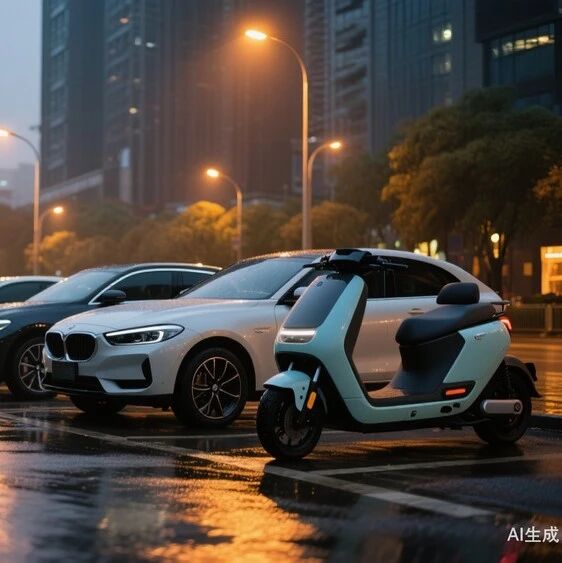
欧盟委员会公布提案:放弃自2035年对新燃油车实施禁令,重新调整减排目标
Guan Cha Zhe Wang· 2025-12-17 04:40
Core Viewpoint - The European Union (EU) is planning to abandon its ban on new combustion engine vehicles set for 2035, marking a significant retreat from its green policies due to pressure from the automotive industry, particularly from Germany and Italy [1][7]. Group 1: EU Proposal and Regulatory Changes - The EU Commission's proposal will allow the continued sale of certain non-electric vehicles, including plug-in hybrid and range-extended combustion vehicles, in response to competition from Tesla and Chinese manufacturers [1][2]. - The new emissions target will be adjusted to a 90% reduction in carbon dioxide emissions from 2021 levels, rather than achieving zero emissions for all new cars and vans by 2035 [1][2]. - A three-year window from 2030 to 2032 has been established for car manufacturers to reduce passenger car CO2 emissions by 55% from 2021 levels, while the target for vans has been relaxed from 50% to 40% [2]. Group 2: Industry Reactions and Implications - Major automakers like Volkswagen view the proposal as a pragmatic approach that aligns with market realities, expressing support for the new CO2 reduction targets [4]. - Critics, including climate advocacy groups, argue that the measures represent a significant setback for the traditional automotive industry and disadvantage electric vehicles, undermining investments in the sector [5]. - The automotive industry is experiencing pressure, particularly in Germany, where local manufacturers are struggling against fierce competition from Chinese electric vehicle producers [6][10]. Group 3: Broader Context and Future Outlook - The EU's decision reflects a broader anxiety about maintaining competitiveness in the face of aggressive policies from China and the U.S., with calls for a reassessment of the EU's zero-emission goals [8][10]. - The shift in policy may weaken investments in critical charging infrastructure and hinder Europe's transition to clean driving, as highlighted by industry leaders [12]. - The rise of Chinese electric vehicles in Europe is evident, with a significant increase in new car registrations from Chinese brands, indicating a growing market presence [12][13].
吉化化肥完成3号锅炉烟气超低排放改造
Zhong Guo Hua Gong Bao· 2025-07-11 02:36
Core Viewpoint - The project for ultra-low emissions renovation of Boiler No. 3 at Jilin Petrochemical Fertilizer Plant has been completed and is operational, significantly reducing nitrogen oxides and sulfur dioxide emissions annually [1][2] Group 1: Project Details - The renovation project was officially started on December 13, 2024, and completed in 190 days, overcoming challenges such as winter construction difficulties and limited working space [2] - The project achieved performance acceptance after 72 hours, with sulfur dioxide emissions at 20 mg/m³, nitrogen oxides at 32 mg/m³, and dust at 7 mg/m³, all exceeding design values by reductions of 34%, 36%, and 30% respectively [2] Group 2: Future Plans - The company plans to apply the successful experience from the renovation of Boiler No. 3 to the upcoming renovations of Boilers No. 1 and No. 2, aiming for all boiler units to achieve ultra-low emissions [2]
中远海控一季度净利增超7成 新一轮回购已完成6亿元
Zhong Guo Jin Rong Xin Xi Wang· 2025-04-29 13:19
Core Viewpoint - 中远海运 reported strong financial performance for Q1 2025, with significant increases in revenue and net profit, indicating robust growth in the container shipping sector [1][2]. Financial Performance - The company achieved operating revenue of 57.96 billion yuan, a year-on-year increase of 20.05% [1]. - Net profit attributable to shareholders was 11.695 billion yuan, reflecting a 73.12% year-on-year growth [1]. - Earnings per share rose to 0.74 yuan, up 76.19% compared to the previous year [1]. - The asset-liability ratio decreased to 41.97% as of March 31, 2025 [1]. - Net cash flow from operating activities was 15.062 billion yuan, an increase of 69.49% year-on-year [1]. - Cash and cash equivalents reached 186.699 billion yuan [1]. Shipping and Terminal Operations - Container shipping business completed a total of 6.4815 million TEUs, a year-on-year increase of 7.53% [1]. - Revenue from shipping operations was 55.883 billion yuan, up 20.07% year-on-year [1]. - Terminal operations achieved a total throughput of 35.7489 million TEUs, reflecting a 7.48% increase [1]. - Revenue from terminal operations was 2.767 billion yuan, a year-on-year growth of 16.06% [1]. Share Buyback - In April 2025, 中远海控 announced a new round of share repurchase, having repurchased 43.2444 million A-shares at a cost of approximately 600 million yuan [1]. - From October 2024 to April 2025, the company repurchased A and H shares totaling about 3.894 billion yuan, with all repurchased shares being canceled [1]. Industry Outlook - The container shipping industry is expected to face a complex and changing market environment due to geopolitical factors, the situation in the Red Sea, and uncertainties in U.S. trade policies [2]. - New environmental regulations will also impact the shipping industry [2]. - The company aims to focus on global digital supply chain operations and investment platforms, optimizing resource allocation and enhancing service quality to create greater value for shareholders [2].

中国动力(600482):船海业务超额完成年度计划 “成本工程”效果显著
Xin Lang Cai Jing· 2025-04-29 02:35
Core Insights - The company reported a revenue of 51.697 billion yuan for 2024, a year-on-year increase of 14.62%, and a net profit of 1.391 billion yuan, up 78.43% year-on-year [1] - In Q1 2025, the company achieved a revenue of 12.311 billion yuan, a year-on-year increase of 7.98%, with a net profit of 396 million yuan, up 348.96% year-on-year [1] Segment Analysis - **Marine Industry**: The marine segment maintained high prosperity, with low-speed engine completion exceeding 10 million horsepower for two consecutive years. The company established a global service network, generating nearly 1.5 billion yuan in after-sales service revenue, a year-on-year increase of nearly 25% [2] - **Application Industry**: The application segment faced increased competition in the domestic market, but the company focused on technological innovation and differentiated marketing strategies, achieving new contracts worth 21.755 billion yuan, nearly completing the annual plan [3] - **Defense Industry**: The company enhanced its contract fulfillment capabilities, achieving over 120% completion rate for new contracts in 2024 [3] Financial Performance - The company reported a gross margin of 14.81%, up 1.52 percentage points year-on-year, and a net margin of 4.94%, up 2.59 percentage points year-on-year. The expense ratio decreased to 9.88% [4] - In Q1 2025, the company’s gross margin was 16.18%, an increase of 5.52 percentage points year-on-year, and the net margin was 6.26%, up 4.66 percentage points year-on-year [5] Market Outlook - The shipbuilding industry is currently in an upward cycle, with demand driven by fleet aging, environmental policies, and geopolitical factors. Supply constraints are expected to persist, maintaining a favorable market environment for the company [6] - The company is positioned to benefit from the ongoing demand for marine power systems, with projected revenues of 64.32 billion yuan, 78.25 billion yuan, and 91.96 billion yuan for 2025-2027, reflecting year-on-year growth rates of 24.4%, 21.7%, and 17.5% respectively [7]
