珊瑚礁保护

Search documents
在“水下热带雨林”开盲盒
Zhong Guo Zi Ran Zi Yuan Bao· 2026-02-25 03:11
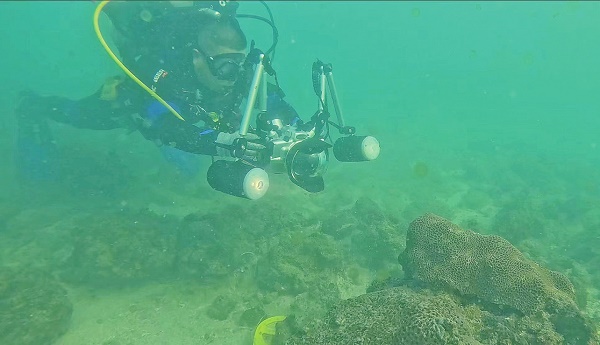
Core Insights - The article highlights the importance of coral reefs in the Beibu Gulf, specifically around Weizhou Island, as vital components of marine ecology and natural coastal protection Group 1: Coral Reef Investigation - A team from the North Sea Marine Center of the Ministry of Natural Resources conducted an emergency survey of coral reefs in the Weizhou Island area to assess their health and coverage [1][2] - The survey aimed to analyze coral coverage, bleaching levels, and benthic biodiversity, which are crucial for future coral reef protection and restoration efforts [2] Group 2: Environmental Conditions and Challenges - The team faced challenging conditions, including low water temperatures and poor visibility, which limited their operational time and required careful planning and execution [1][2] - The team utilized advanced equipment, including underwater cameras and lighting, to ensure high-quality data collection despite the difficult conditions [1][2] Group 3: Restoration Efforts and Success Rates - Approximately 2,000 artificial coral reefs have been deployed in the Weizhou Island area, restoring around 40 hectares of coral reef, with a survival rate exceeding 85% under the monitoring and protection of the North Sea Marine Center [3] - The ongoing efforts include underwater surveys and shoreline monitoring along a 7.5-kilometer stretch, demonstrating a commitment to marine conservation and restoration [3]

生态环境部发布黄岩岛海域生态环境相关报告
Xin Jing Bao· 2025-11-28 02:06
Core Insights - The ecological environment of the Huangyan Island waters is reported to be continuously excellent, with seawater quality and marine sediment quality maintaining a first-class rating [1] - The coral reef ecosystem is healthy and stable, with a significant increase in coral species recorded compared to the previous year [1][2] Group 1: Environmental Quality - The report indicates that heavy metals and petroleum hydrocarbons in fish samples are below evaluation standard limits, and cyanide was not detected in seawater, sediment, or fish samples [1] - The average coverage of live coral is reported at 29.8%, with a high replenishment rate of coral juveniles [1] Group 2: Biodiversity - A total of 134 coral species from 39 genera were recorded, an increase of 25 species from the 2024 survey [1] - The survey documented 145 species of reef fish from 24 families, with an increase of 20 species compared to the previous year [1] - Three species of seagrass were found in the lagoon, including Salicornia europaea, Halophila ovalis, and Zostera marina [1] Group 3: Ecosystem Stability - The report emphasizes the importance of Huangyan Island's natural ecosystem for providing habitat and shelter for marine life in the South China Sea [2] - Despite the positive findings, the report warns of increasing thermal stress on coral reefs due to climate change, highlighting the potential risk of coral bleaching [2]
聆听珊瑚低语 触摸海洋脉搏
Zhong Guo Zi Ran Zi Yuan Bao· 2025-10-30 08:07
Core Points - The marine science outreach activities conducted by the Beihai Ocean Center aimed to educate students about coral reefs and marine ecology through engaging methods such as lectures, hands-on experiences, and demonstrations [1][2] - The activities included a focus on coral reef protection, where students learned about the ecological functions of coral reefs and the threats they face, enhancing their understanding of marine conservation [1] - The use of high-tech equipment like drones and pH meters was highlighted, showcasing their importance in marine observation and research, which sparked students' interest in marine technology [2][4] Group 1 - The Beihai Ocean Center organized marine-themed science outreach events at local schools, including interactive sessions on coral reefs and marine ecology [1] - Students participated in a quiz and hands-on activities, reinforcing their knowledge and enthusiasm for marine science [1] - The outreach included demonstrations of diving equipment and marine survey techniques, allowing students to experience marine research firsthand [1][4] Group 2 - The high-spectral drone attracted significant attention, with students inquiring about its capabilities and applications in marine surveying [2] - Students engaged in pH testing activities, learning about the chemical properties of seawater and its importance in marine environments [3][4] - The overall response from students and teachers was positive, indicating that the activities successfully broadened scientific perspectives and fostered a sense of responsibility towards marine conservation [4]