生产挂钩激励计划(PLI)

Search documents
印度“红灯补贴”被置于聚光灯下
Huan Qiu Shi Bao· 2025-12-24 22:43
Core Viewpoint - The World Trade Organization (WTO) announced that China has formally requested dispute resolution regarding India's trade measures on solar photovoltaic (PV) products and information technology (IT) products, marking another step by China to protect its industrial interests following a similar lawsuit concerning electric vehicles and battery subsidies [1]. Group 1: China's Actions - China has initiated a dispute resolution request at the WTO against India for measures that allegedly violate multiple WTO obligations, including tariff constraints and national treatment [1]. - The Chinese Ministry of Commerce claims that India's measures provide unfair competitive advantages to domestic industries and cause substantial harm to Chinese interests [1]. Group 2: India's Measures - India's core measures include the "Production-Linked Incentive" (PLI) scheme, which offers substantial subsidies to local manufacturing in sectors like IT and solar energy, imposes high tariffs on imports, and mandates local procurement [1]. - The tightening of India's "domestic content requirements" aims to restrict imports from specific countries, particularly China, by setting a "Domestic Value Added" (DVA) threshold of over 50% for products to qualify as local [2]. Group 3: Economic Implications - Analysts suggest that India's dual approach of high tariffs and domestic subsidies creates a significant cost disadvantage for imported products while enhancing the price competitiveness of local products [2]. - This strategy, characterized as "import substitution subsidies," is seen as discriminatory against imports and is in violation of WTO rules, specifically the prohibition of subsidies that distort international trade [2].
超400亿!中创新航拿下重要合作
行家说储能· 2025-09-01 11:32
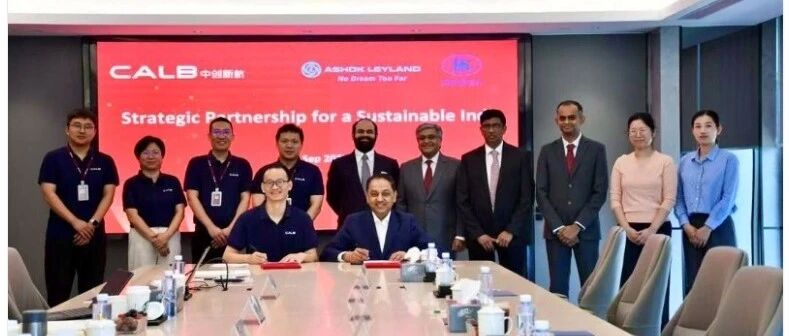
Core Insights - The article highlights the significant developments in the energy storage market, particularly focusing on the collaboration between Chinese companies and Indian manufacturers to enhance local battery production and supply chains [1][3]. Group 1: Market Developments - The meeting between Chinese and Indian leaders in late August marks a new phase in bilateral relations, creating opportunities for Chinese energy storage companies to expand into India [1]. - Ashok Leyland, an Indian commercial vehicle manufacturer, has announced a long-term exclusive partnership with China Innovation Aviation, planning to invest over 500 billion rupees (approximately 40.45 billion yuan) in battery manufacturing over the next 7-10 years [1][3]. Group 2: Company Performance - In the first half of 2025, China Innovation Aviation reported a 109.7% year-on-year increase in revenue from energy storage system products, totaling 5.757 billion yuan [3]. - The company achieved significant growth in energy storage shipments and operational efficiency, leading to successful projects in Latin America and South Africa [3]. Group 3: Capacity Expansion - China Innovation Aviation is actively expanding its production capacity with projects in Jiangsu, Sichuan, Fujian, and Portugal, aiming to add over 75 GWh of capacity by 2025 [4]. - Despite India planning around 120 GWh of battery capacity, there is still a need for further investment to meet future market demands, indicating a reliance on overseas supply chains in the short to medium term [4]. Group 4: Local Initiatives - The Indian government has initiated a Production-Linked Incentive (PLI) scheme worth 181 billion rupees to encourage local manufacturing and establish India as a global hub for advanced chemical battery (ACC) production [4]. - Local brands like Livguard plan to invest 33.6 billion rupees (approximately 2.876 billion yuan) to expand their battery capacity to 25 GWh over the next five years [5].