生命周期投资

Search documents
欧洲各国政府转向短期借贷
Guo Ji Jin Rong Bao· 2026-01-24 13:35
因为养老基金需求的结构性转变导致长期主权债券的传统买家减少,欧洲各国政府正在从根本上调整其 债务发行策略,转向短期借贷。 奥地利债务管理办公室近日证实,在多年致力于发行长期债券之后,其平均债务期限"还有进一步缩短 的空间"。 德国2026年发债计划也出现重大调整,联邦债务发行量将增至创纪录的5120亿欧元,同时通过增加短期 和中期债务,将平均期限从7.8年缩短至7.7年,长期债券发行量则维持在此前的水平,接近600亿欧元。 目前,欧元区各国政府均面临着创纪录的借贷需求,但对以往支撑其债务组合的15至30年期债券的需求 有所下降。这一转变或许要归因于荷兰养老基金体系改革,该群体被认为是超长期债券市场的一个重要 机构买家。 巴克莱预测,包括德国、法国和意大利在内,今年欧元区大型市场债券发行的平均期限有望降至10年以 下,为2015年以来首次;英国平均期限甚至可能缩短到8.8年左右,为本世纪以来最低。 荷兰改革引发市场调整 尽管荷兰仅占欧元区经济总量的7%,其养老金体系却是举足轻重的市场参与者。欧洲央行数据显示, 荷兰养老金持有的主权债在整个地区养老金机构的此类持仓中占比约达65%。 根据荷兰的养老金体系改革计划, ...
当人生周期遇上经济周期:我们该如何下注?
雪球· 2026-01-11 13:00
Core Viewpoint - The article emphasizes the importance of time in investment, highlighting that while economic cycles may repeat, individual life is finite, and missing investment opportunities can lead to significant long-term regret [4][5][22]. Group 1: Economic Cycles and Personal Wealth - Economic cycles are described with certainty by economists, ranging from short-term cycles (3-5 years) to long-term cycles (50-60 years), but the return of cycles does not guarantee personal wealth recovery [7]. - The concept of time cost is illustrated with an example where an investment of 1 million yuan at age 30 may only break even after 7 years, while missing out on other investment opportunities during that time can lead to significant financial loss [8]. Group 2: Age-Related Financial Constraints - Younger investors may have time but lack knowledge, leading to poor investment decisions, as illustrated by a personal anecdote of investing before a market crash [9]. - Middle-aged investors often face financial constraints due to family responsibilities, such as children's education and elder care, which limit their investment capacity [10]. - Older investors may find themselves in a time crunch, where waiting for market recovery could mean missing out on enjoying the benefits of their investments [11]. Group 3: The Power of Compound Interest - Compound interest is highlighted as a powerful tool that requires time to manifest its benefits, with calculations showing that starting to invest earlier can lead to significantly higher returns compared to starting later, even with higher contributions [13]. - The article discusses the asymmetry of recovery from losses, where larger percentage losses require disproportionately larger gains to recover, emphasizing the importance of avoiding significant losses [15]. Group 4: Investment Strategies by Age Group - For individuals aged 20-30, aggressive investment strategies are recommended, focusing on high-volatility funds, as they can afford to take risks [16]. - Those aged 30-45 should adopt a balanced approach, reducing exposure to high-risk assets while still seeking growth [17]. - Investors aged 45-60 should prioritize capital preservation, focusing on lower-risk investments to secure their accumulated wealth [18]. - For those over 60, the focus should be on safety and liquidity, minimizing exposure to equities and ensuring funds are readily available [19]. Group 5: Wisdom in Investment - The article concludes that true investment wisdom lies in understanding the finite nature of time and making informed decisions that align with one's life stage, rather than attempting to predict market cycles [20][21].


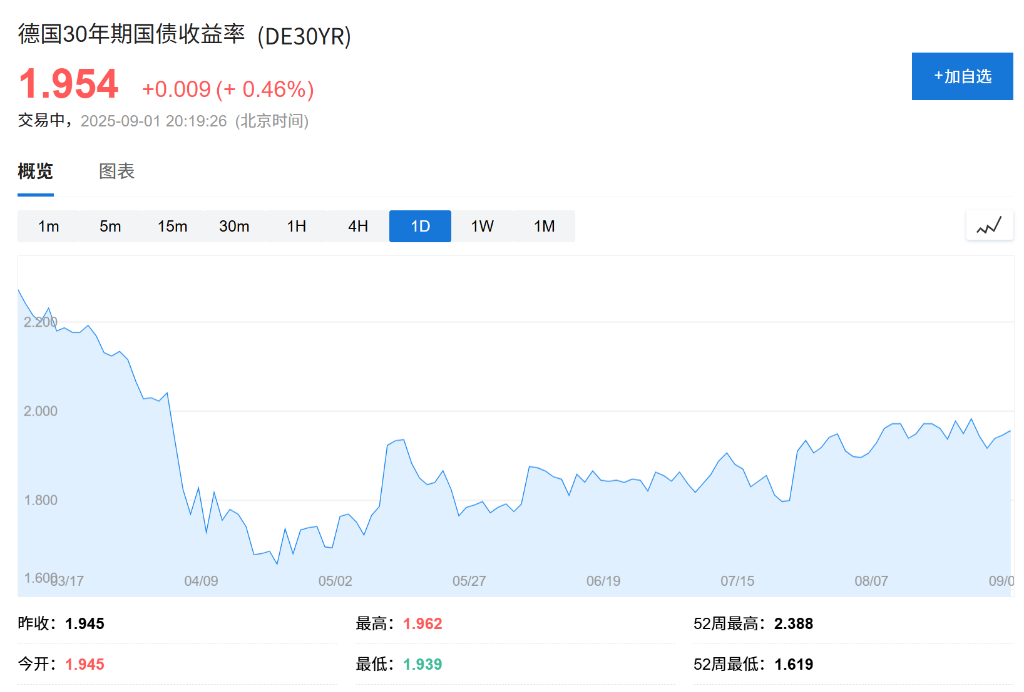
欧洲长债“风暴”:2万亿荷兰养老基金"去杠杆",德法30年期国债收益率创多年新高
Hua Er Jie Jian Wen· 2025-09-01 12:36
Core Viewpoint - A significant upheaval in the Dutch pension system, estimated at nearly €2 trillion, is impacting the European bond market, driving long-term borrowing costs to multi-year highs [1] Group 1: Pension Reform Impact - The Dutch pension reform is shifting investment strategies, moving from long-term interest rate swaps to a "lifecycle investment" model that favors equities for younger members and safer assets for older members [4] - This transition is forcing pension funds to unwind their long-duration swap positions, which could create ripples in the market due to the substantial size of the Dutch pension system [4][7] Group 2: Market Reactions - Major asset management firms like BlackRock and Invesco are advising caution on the long end of the yield curve, favoring short-term bonds instead [3] - The demand for long-term government bonds is expected to be tested, particularly as January is typically a busy month for new bond issuances [7] Group 3: Liquidity Concerns - Market participants are preparing for potential volatility as around 36 funds plan to switch to the new system on January 1, coinciding with a period of typically low market liquidity [5] - The imbalance in supply and demand for long-duration swaps is already evident, with traders anticipating a steepening of the yield curve as they wait for market conditions to evolve [5] Group 4: Political and Regulatory Factors - The political instability in the Netherlands, including the resignation of key officials, adds uncertainty to the pension transition process [8] - Despite the political turmoil, the Dutch central bank believes that the transition period will provide sufficient flexibility for pension funds to adjust their portfolios [8]
2万亿欧元的“大麻烦”!荷兰养老金改革即将引爆欧洲债市?
智通财经网· 2025-09-01 01:13
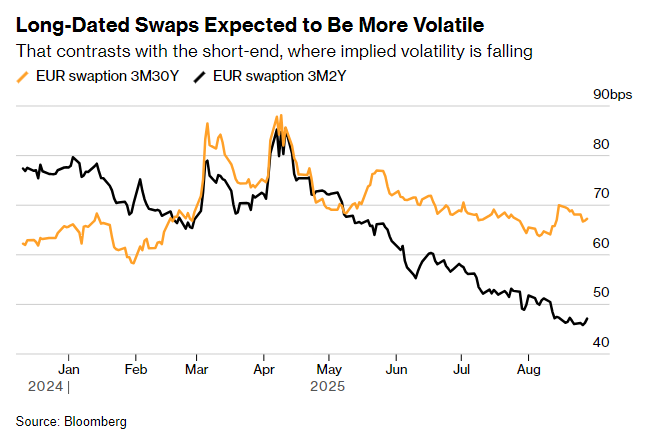
Core Viewpoint - A significant transformation in the European bond market, amounting to nearly €2 trillion (approximately $2.3 trillion), is underway, primarily driven by the reform of the Dutch pension system, which is expected to impact long-term bond yields and market volatility in 2025 [1]. Group 1: Pension Reform and Market Impact - The Dutch pension reform aims to address issues related to an aging population and labor market changes, with the Netherlands holding over half of the EU's pension savings and nearly €300 billion in European bonds [1]. - The reform has already led to increased long-term bond yields, prompting traders to actively position themselves in the euro swap market to hedge risks [1][3]. - The transition to a "lifecycle investment" model will shift younger workers' pensions towards higher-risk assets like stocks, reducing the demand for long-term hedging tools [6]. Group 2: Political and Economic Context - The political crisis in the Netherlands, including the resignation of the minister responsible for pension reform, complicates the reform process, with early elections scheduled [2]. - The ongoing fiscal tensions in Europe have pushed bond yields close to multi-year highs, with France facing its own political crisis due to budget issues [7]. Group 3: Market Volatility and Bond Demand - Recent weeks have seen a rise in the volatility index for 30-year euro swaps, influenced by the pension reform and its effects on euro financing costs [3]. - The demand for long-term bonds is expected to decline as pension funds transition, potentially forcing governments to issue more short-term bonds, which are more sensitive to interest rate changes [8]. - Concerns exist that if all funds transition simultaneously, it could create significant market disruptions, with long-term bonds becoming undesirable for traders [8][10]. Group 4: Mitigating Factors and Future Outlook - There are potential mitigating factors, such as pension funds possibly starting to unwind long-term hedges early if they believe they have sufficient buffers against potential losses [10]. - The Dutch government has provided a one-year grace period for pension funds to adjust their hedging strategies, which may help alleviate market congestion [10]. - Despite these factors, many trading desks remain cautious, anticipating that the initial impacts of the reform will lead to heightened volatility in early January [10].