生态位

Search documents
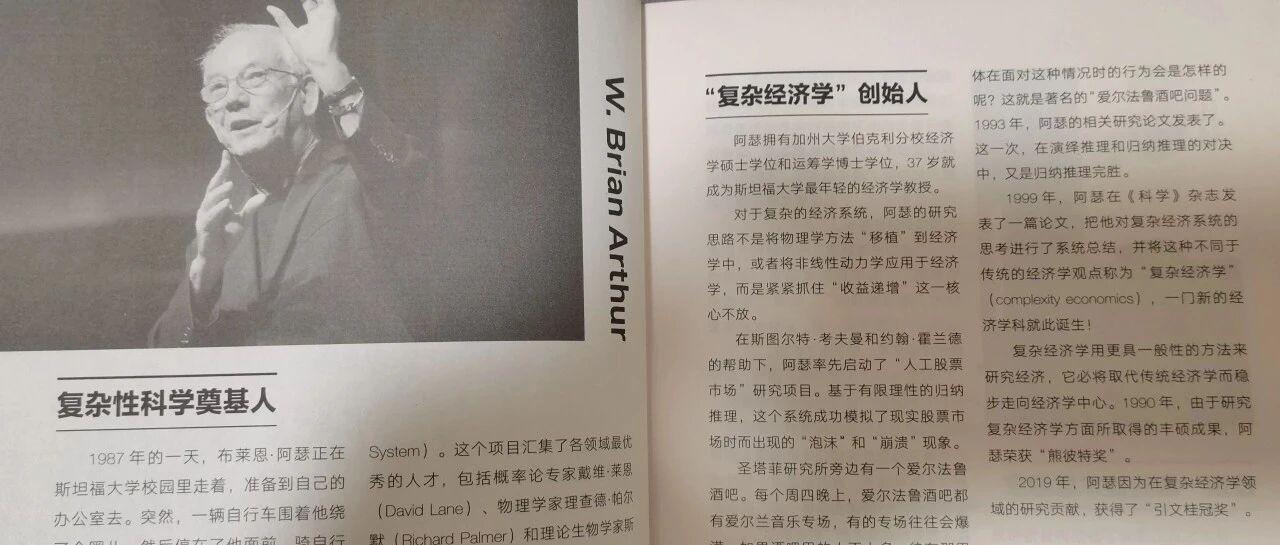
圣塔菲人工股票市场
猛兽派选股· 2026-03-28 05:03
Core Insights - The article discusses the Santa Fe Artificial Stock Market project led by Arthur Brian, which aims to simulate real stock market dynamics using simple rules and computer programs called agents. These agents adapt their strategies based on market data and trading outcomes, mimicking real trader behavior [1] Group 1: Market Dynamics - In slow exploration, the market reaches a stable rational expectations equilibrium, resembling an efficient market, where trading behavior becomes homogeneous [2] - In moderate-speed exploration, market behavior deviates from rational expectations, exhibiting characteristics of bubbles and crashes seen in real financial markets [2] - In medium to high-speed exploration, initially homogeneous traders spontaneously differentiate into various trading styles, leading to wealth concentration and income inequality, with a few consistently profiting while most incur losses [2] Group 2: Implications of Market Behavior - The findings suggest that the efficient market hypothesis is a subset of complex economic realities, as most economic systems operate in a state of medium to high-speed exploration, continuously evolving like biological systems [2] - The Santa Fe model replicates the phenomenon of wealth disparity in financial markets, indicating that this is a natural outcome of complex systems rather than a result of human malice or conspiracy [2] Group 3: Strategy Evolution - Strategies that are widely copied will automatically become ineffective, prompting the emergence of new strategies [4] - Long-term winners do not rely on a fixed strategy but possess the ability to evolve their strategies over time [4] - The long-term winners in the Santa Fe model are agents that maintain a stable ecological niche while adapting to details [4] Group 4: Ecological Niche Concept - An ecological niche is defined as a high-dimensional principle that remains constant, while specific strategies may change. This leads to a persistent supply shortage of niches, resulting in sustained excess returns [4] - For example, Warren Buffett's value investing approach maintains core principles like margin of safety and long-term perspective while adapting specific stock selection and valuation methods [4] - The trend-following ecological niche is characterized by the inherent nature of trends in the market, which are influenced by industry iterations, technological innovations, and economic cycles [5] Group 5: Psychological Costs and Market Phenomena - The Santa Fe Artificial Stock Market serves as a milestone model in behavioral finance and complex systems science, highlighting psychological costs such as frequent false breakouts, severe fluctuations during major trends, and significant drawdowns during reversals [6] - The model unifies two market views, demonstrating that efficient and complex markets are different parameter states of the same model rather than mutually exclusive theories [7] - It provides reproducible empirical evidence for phenomena like bubbles, crashes, and volatility clustering, which are difficult to explain by the efficient market hypothesis [7]

烘焙行业还能不能做出品牌?
东京烘焙职业人· 2025-09-03 08:33
Core Viewpoint - The article discusses the current state of the Chinese baking industry, highlighting the intense competition and the potential for brand development amidst a rapidly changing market landscape [6][19][33]. Group 1: Industry Background - The baking industry in China is heavily influenced by the "Jiangxi Gang," with over half of the brands linked to individuals from Jiangxi province, showcasing a unique marketing approach and trend-following ability [7][8]. - The market is characterized by a large scale but fragmented brand presence, with many local brands unable to expand nationally due to low entry barriers and geographical limitations [9][10]. - The baking retail market is projected to reach 611.07 billion yuan by 2024 and grow to 859.56 billion yuan by 2029, indicating significant market potential despite brand fragmentation [9][10]. Group 2: Current Market Dynamics - The industry is experiencing a wave of new entrants while many foreign brands are retreating, leading to a shift towards "new Chinese baking" as local brands expand rapidly [11][12]. - The competition is fierce, with brands engaging in price wars and rapid store openings, resulting in a market that is both large and difficult to navigate [13][19]. - The current environment is described as "卷" (intense competition), where brands are focused on marketing and product updates rather than establishing stable brand identities [16][22]. Group 3: Brand Development Opportunities - There is a belief that amidst the chaos, opportunities for true brand development will emerge as the market matures and stabilizes [19][26]. - Key factors for future brand success include capital and supply chain investments, which are addressing previous challenges in scaling operations [20][21]. - The article emphasizes the need for brands to clarify their "ecological position" and communicate effectively with consumers to build lasting relationships [28][29]. Group 4: Strategic Recommendations - Brands should focus on increasing the "information volume" they communicate to consumers, moving beyond price and product details to establish deeper connections [29][30]. - Creating unique content experiences that differentiate brands from one another is essential for standing out in a crowded market [31][32]. - The baking industry is at a pivotal moment where the combination of supply chain improvements and consumer engagement strategies can lead to the emergence of strong, lasting brands [33].