
生态协同性

Search documents
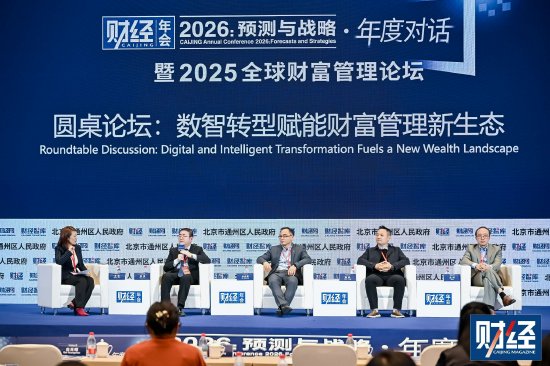
杨涛:财富管理是普惠金融的首要突破方向
Xin Lang Cai Jing· 2025-12-20 10:08
Core Insights - Wealth management is identified as a primary breakthrough direction for inclusive finance in China, with current household property income being relatively low and concentrated in deposits and fixed income products, showing significant disparity compared to Western countries [1][4] - The core value of digital transformation is to break the limitations of the traditional "80/20 rule" in wealth management, enabling middle-class, low-income groups, and long-tail populations to access quality, low-cost financial services, thereby enhancing household property income and contributing to domestic demand and internal circulation [1][4] - The importance of "ecological synergy" in industry ecosystem construction is emphasized, as many participants in the wealth management sector operate in isolation, failing to create a diversified service system for the entire customer lifecycle [1][4] Technology Empowerment - The core role of digitalization is highlighted as "cost reduction and efficiency enhancement" and "precise matching," where the application of AI and big data can significantly lower service costs and expand service reach while addressing information asymmetry [2][5] - Technology is seen as a means to promote precise matching of supply and demand in wealth management, shifting from a one-sided innovation model to a system where "suitable products are matched to suitable customers in suitable ways," thereby enhancing customer patience and improving industry sustainability [2][5]

当学习发生在屏幕、终端和交互机上:教育智能硬件改变了什么?
3 6 Ke· 2025-11-21 00:59
Core Insights - The rapid expansion of educational smart hardware is reshaping the organization of education, with hardware becoming a key entry point for learning across family, school, and community settings [1][12] - Recent funding of 200 million yuan in Pre-A round for Lingyuzhou highlights the trend of AI learning companions breaking through with scenario-based interactions [1][3] Family Segment - The family segment has seen the earliest and most concentrated changes, evolving from basic tools to comprehensive learning systems that address emotional support and cognitive development [1][2] - AI learning machines and tablets are integrating textbook synchronization, diagnostic exercises, and intelligent explanations, providing a complete learning path for families [2] - Specialized tools for specific subjects are rapidly gaining popularity, reflecting the shift from traditional to intelligent tools along the lines of "learning actions - function disassembly - technology reorganization" [2][3] School Segment - The transformation of educational hardware in schools is evident as it evolves from traditional tools to system-level facilities, enhancing teaching and management processes [6][8] - Smart blackboards and interactive devices are now central to classroom organization, enabling content access, interactive exercises, and real-time feedback [6][7] - The integration of smart grading devices and XR/VR teaching tools is reshaping the teaching process, allowing for quantifiable teaching behaviors and expanded understanding of abstract concepts [6][8] Community Segment - Community smart hardware must balance accessibility and low barriers while integrating educational functions [9][10] - Devices like smart reading machines and interactive whiteboards address the need for light educational experiences when parents cannot accompany their children [10] - Community education hardware is evolving from mere tools to comprehensive learning support systems, enhancing public education functions [11][12] Overall Trends - The evolution of educational smart hardware across family, school, and community settings signifies a shift from isolated tools to a cohesive learning support network [12] - The future competitiveness of educational hardware will focus on "scene adaptability" and "ecological synergy," enabling seamless data sharing and service integration across different educational environments [12]
