生态安葬

Search documents
三部门:各地对树葬等不保留骨灰和土葬区遗体深埋不留坟头等生态安葬按规定给予适当奖补
Jin Rong Jie· 2026-01-27 09:35
Core Viewpoint - The National Development and Reform Commission, Ministry of Civil Affairs, and Ministry of Finance have issued a notice to further improve the pricing policy for funeral services, emphasizing ecological burial options and regulated fees for various burial methods [1] Summary by Relevant Categories Funeral Service Pricing Policy - Basic projects for burial services include ecological burial and ash interment provided by government-run funeral service institutions [1] - Local governments are encouraged to provide appropriate subsidies for ecological burials that do not retain ashes, such as tree burials and deep burial without tombstones [1] - If burial costs are excessively high, a reasonable ecological burial fee may be charged [1] Fee Structure - For burial in grave form, fees can be charged for grave usage and maintenance management [1] - For ash interment in niche form, fees can be charged for niche usage and related construction materials [1] - The grave usage fee covers costs related to grave rental, tombstone construction materials, and burial services [1] - The niche usage fee includes costs for niche rental and construction materials [1] - Maintenance management fees cover daily maintenance, cleaning, repairs, and management expenses [1] - Funeral service institutions are prohibited from charging any other fees related to burial services beyond those specified [1]
三部门:对树葬等不保留骨灰和土葬区遗体深埋不留坟头等生态安葬按规定给予适当奖补
Xin Lang Cai Jing· 2026-01-27 09:35
Core Viewpoint - The notice issued by the National Development and Reform Commission, Ministry of Civil Affairs, and Ministry of Finance aims to improve the funeral service fee policy, emphasizing the need to reduce the financial burden on the public while ensuring the provision of essential funeral services [2][3]. Group 1: Strengthening Funeral Service Fee Management - Funeral services are categorized into basic and non-basic projects, with basic projects including body transportation, storage, farewell services, cremation, and ash storage [3][4]. - Provincial civil affairs departments, in collaboration with local development and reform and finance departments, will determine the fee standards for basic projects, while non-basic project fees will be set based on local demand [3][4]. Group 2: Clarifying Burial Service Fee Standards - Burial service basic projects include ecological burial and ash placement in government-operated facilities, with potential subsidies for ecological burial methods [4][5]. - Fees for burial services can include usage and maintenance fees for graves and niches, with specific definitions for each type of fee [4][5]. Group 3: Establishing Pricing Principles - The pricing for funeral and burial services will adhere to a public welfare orientation, with standards based on actual costs minus government subsidies and donations [6][7]. - Local governments will guide funeral service providers in establishing internal pricing management and cost accounting systems [7]. Group 4: Strengthening Guidance on Funeral Supplies Pricing - Local governments will oversee the pricing of funeral supplies, promoting centralized procurement to reduce costs and ensure the availability of affordable options [8]. Group 5: Implementing Regular Evaluation Systems - A regular evaluation system for funeral service fees will be established to monitor market changes and industry dynamics, with evaluations occurring at least every three years [9]. Group 6: Establishing a Fee Directory and Public Disclosure System - A national directory of funeral service fees will be created, detailing service items, fee standards, and specific service content, with strict controls on additional charges [10][11]. - Local governments will ensure that funeral service providers publicly disclose their service offerings and pricing information [11]. Group 7: Regulating Funeral Service Fee Behavior - Local civil affairs departments will enhance supervision of funeral service providers, ensuring compliance with established regulations and preventing unauthorized fee charges [12].
句容殡葬改革引领文明新风 润物无声,生态安葬惠民生得民心
Zhen Jiang Ri Bao· 2025-12-08 23:47
Core Viewpoint - The article highlights the successful implementation of ecological burial practices in Jurong City, which aligns with national funeral reform initiatives aimed at resource conservation, ecological protection, and reducing burdens on families [1][2]. Group 1: Ecological Burial Practices - Jurong City has pioneered the use of forest land for ecological burial, utilizing a 20-acre provincial public welfare forest in Guhuang Village as a pilot site, creating a harmonious landscape where 5,000 burial sites are integrated into the forest [2][3]. - Since the establishment of the Guhuang Ecological Cultural Memorial Park in 2021, 135 old graves have been relocated, and 23 new graves have been established, significantly improving the village's environment and aesthetics [2][3]. Group 2: Community Engagement and Cultural Change - The village has leveraged community organizations to promote changes in funeral customs, with more residents opting for ecological burials, which are seen as both dignified and less burdensome [3][5]. - Innovative promotional strategies, including open days at ecological cemeteries and cultural events, have helped shift public perception towards accepting and choosing ecological burial options [5][6]. Group 3: Service Improvements and Financial Support - Jurong City has implemented a series of measures to alleviate the financial and logistical burdens associated with funerals, including the cancellation of 14 service fees and the reduction of prices for 7 services [4]. - A one-time subsidy of 1,000 yuan is provided to families choosing ecological burial methods, alongside the development of diverse ecological burial landscape options [4][5]. Group 4: Institutional Support and Long-term Sustainability - The city has integrated ecological burial practices into local regulations and community agreements, incentivizing civilized mourning and green memorial practices through a points management system [6].
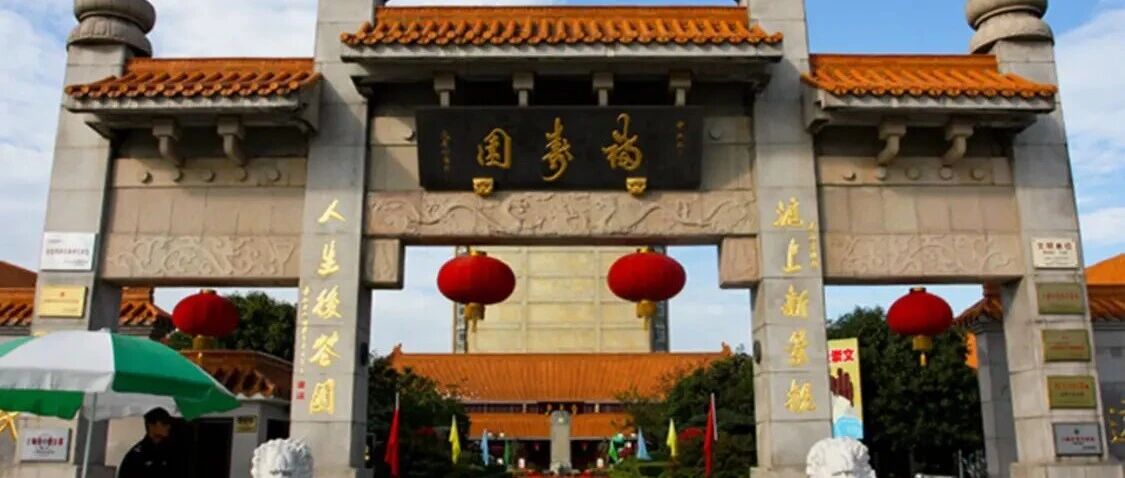
殡葬暴利时代落幕?“天价墓地”也卖不动了
凤凰网财经· 2025-09-16 03:08
Core Viewpoint - The funeral industry, particularly represented by Fushouyuan, is experiencing a significant downturn, with unprecedented losses and a sharp decline in average burial plot prices, indicating a shift in consumer behavior and market dynamics [2][20][21]. Financial Performance - Fushouyuan reported a revenue of approximately 611 million yuan in the first half of the year, a year-on-year decrease of 44.5%, and a net loss of 261 million yuan, marking its first loss since its IPO in 2013 [5][20]. - The average selling price of operational burial plots plummeted by 47.5% to 63,400 yuan per plot in the first half of 2025, compared to 120,000 yuan in the same period last year [21][22]. - The company sold 6,253 burial plots in the first half of 2025, down from 6,704 in the same period of 2024, indicating a simultaneous decline in both price and volume [22]. Market Dynamics - The Chinese funeral market is projected to grow to 4,114 billion yuan by 2026, despite the current challenges faced by major players like Fushouyuan [7]. - The average burial plot prices in major cities have reached high levels, with Beijing at approximately 83,100 yuan and Shanghai nearing 100,000 yuan [18]. - The industry is witnessing a shift towards alternative burial methods, such as sea burials and eco-burials, as younger generations redefine their views on death and funerals [28][29]. Strategic Responses - In response to the changing market conditions, Fushouyuan is promoting "pre-need contracts" to encourage customers to purchase burial plots in advance, although the number of contracts signed has decreased compared to the previous year [31]. - The company is also innovating with services like AI memorials and virtual representations of the deceased to adapt to evolving consumer preferences [31].