
殡葬改革

Search documents
江西省都昌县——风拂旧俗去 暖从民心来
Xin Lang Cai Jing· 2026-01-15 09:08
Core Viewpoint - Jiangxi Province's Duchang County is reforming its funeral services to achieve "optimal pricing, best services, and highest public satisfaction," while promoting ecological preservation and cultural values in the sector [1] Group 1: Reform Direction - Duchang County's leadership has held multiple meetings to address funeral service issues, demonstrating a strong commitment to eliminating irregularities in the sector [2] - A task force led by the county's disciplinary inspection commission and involving 12 departments has been established to coordinate efforts and ensure effective oversight [2] - A comprehensive self-inspection and cross-audit process will be conducted from November 2024 to April 2025 to address service irregularities and policy implementation challenges [2] Group 2: Public Welfare Focus - Duchang County has transitioned its funeral services from private to public management, becoming one of the first counties in the region to do so, and has established new pricing standards for services [3] - The county has implemented 10 regulatory measures to enhance management efficiency and service quality in the funeral sector [4] Group 3: Community Services - The county has reduced the average funeral cost by 635 yuan per person by lowering prices for funeral supplies and setting maximum prices for commercial cemeteries [5] - A "one-stop" service initiative has been launched to streamline the process for families, allowing them to handle multiple administrative tasks through a single point of contact [5] - A satisfaction feedback mechanism has been established, achieving a 99% satisfaction rate from over 3,168 follow-up calls [5] Group 4: Cultural Transformation - The community has adopted simplified funeral practices to curb extravagance, with regulations limiting the duration of mourning and replacing traditional practices with modern alternatives [6] - Duchang County has implemented a comprehensive management system for public cemeteries, ensuring cleanliness and adherence to new cultural norms [6][7] - A tracking system for cremated remains has been established, utilizing QR codes to ensure transparency and control over the handling of ashes [7]
对殡葬服务实行清单化管理 遏制过高收费
Xin Lang Cai Jing· 2026-01-07 22:24
Core Points - The revised Funeral Management Regulations emphasize the importance of funeral services as a public welfare undertaking, promoting civilized, frugal, and eco-friendly practices while advancing funeral reforms [1] - The regulations aim to gradually include qualified funeral service projects into the national basic public service framework and establish a funding mechanism aligned with public needs [1] - There will be stricter management of fees for funeral services, with a clear list of services and prohibition of additional charges outside this list, alongside enhanced price monitoring [1] - Comprehensive regulation across all aspects of funeral services will be strengthened, ensuring coordinated enforcement and management of services related to death, funerals, burials, and memorials [1] - The regulations promote eco-friendly burial methods that occupy less land, encouraging ecological burial practices [1]
受权发布丨殡葬管理条例
Xin Hua Wang· 2026-01-07 10:58
Core Viewpoint - The regulation aims to strengthen the public welfare nature of the funeral industry, enhance management, and promote reforms in the funeral sector to support the construction of socialist spiritual civilization [2]. Group 1: General Principles - The funeral management adheres to principles of public welfare, civilization, thrift, and ecological sustainability, while improving funeral services and promoting changes in customs [4]. - The State Council's civil affairs department is responsible for national funeral management, while local civil affairs departments oversee management within their jurisdictions [4][5]. Group 2: Funeral Services and Pricing - Funeral services are categorized into basic and non-basic projects, with pricing policies developed by relevant government departments [7]. - The state will gradually include eligible funeral service projects in the basic public service scope and adjust them dynamically [8]. Group 3: Funeral Facilities - Funeral facilities, including funeral homes, columbariums, and cemeteries, are essential to meet public demand, and new facilities must be non-profit and government-run [12]. - Local governments are required to integrate funeral facility construction into relevant planning and ensure compliance with local regulations [15]. Group 4: Burial Practices - The state promotes cremation and reforms burial practices to save land, with local governments tasked to expand cremation areas based on regional conditions [9]. - The regulation encourages eco-friendly burial methods and respects minority customs regarding burial practices [10]. Group 5: Supervision and Management - Local governments must establish a comprehensive regulatory framework covering all aspects of funeral activities and enhance inter-departmental cooperation [47]. - The regulation mandates that funeral service institutions submit annual reports and undergo regular inspections to ensure compliance [52]. Group 6: Legal Responsibilities - Violations of the regulations can result in warnings, fines, and other penalties, with specific consequences outlined for various infractions [41][42]. - The regulation emphasizes the importance of ethical conduct in the funeral industry, prohibiting practices that harm the rights of the bereaved [32].
李强签署国务院令 公布修订后的《殡葬管理条例》
Xin Hua She· 2026-01-07 09:17
Core Points - The State Council of China has revised the Funeral Management Regulations, which will take effect on March 30, 2026, consisting of 8 chapters and 73 articles [2] Group 1: Management Requirements - The revised regulations emphasize that the funeral industry is an important public welfare undertaking, advocating for public benefit, civilized frugality, and ecological sustainability [2] - The regulations aim to improve funeral services and promote cultural changes in funeral practices while steadily advancing funeral reforms [2] Group 2: Public Service Provisions - The regulations stipulate that eligible funeral service projects will gradually be included in the national basic public service framework, with dynamic adjustments [2] - A funding mechanism for funeral services that aligns with the basic needs of the public will be established [2] Group 3: Fee Management - The regulations implement a list-based management system for funeral services, prohibiting the establishment of projects and fees outside the list [2] - Relevant departments are required to strengthen price monitoring and supervision to curb excessive charges, detailing specific circumstances of price violations in the funeral sector [2] Group 4: Regulatory Oversight - The regulations call for enhanced law enforcement collaboration to standardize service management across all stages of the funeral process, including death, funeral, burial, and memorial services [2] Group 5: Eco-Friendly Practices - The regulations promote land-saving or minimal land-use burial methods, encouraging ecological burials and advocating for space-efficient funeral practices [2]
句容殡葬改革引领文明新风 润物无声,生态安葬惠民生得民心
Zhen Jiang Ri Bao· 2025-12-08 23:47
Core Viewpoint - The article highlights the successful implementation of ecological burial practices in Jurong City, which aligns with national funeral reform initiatives aimed at resource conservation, ecological protection, and reducing burdens on families [1][2]. Group 1: Ecological Burial Practices - Jurong City has pioneered the use of forest land for ecological burial, utilizing a 20-acre provincial public welfare forest in Guhuang Village as a pilot site, creating a harmonious landscape where 5,000 burial sites are integrated into the forest [2][3]. - Since the establishment of the Guhuang Ecological Cultural Memorial Park in 2021, 135 old graves have been relocated, and 23 new graves have been established, significantly improving the village's environment and aesthetics [2][3]. Group 2: Community Engagement and Cultural Change - The village has leveraged community organizations to promote changes in funeral customs, with more residents opting for ecological burials, which are seen as both dignified and less burdensome [3][5]. - Innovative promotional strategies, including open days at ecological cemeteries and cultural events, have helped shift public perception towards accepting and choosing ecological burial options [5][6]. Group 3: Service Improvements and Financial Support - Jurong City has implemented a series of measures to alleviate the financial and logistical burdens associated with funerals, including the cancellation of 14 service fees and the reduction of prices for 7 services [4]. - A one-time subsidy of 1,000 yuan is provided to families choosing ecological burial methods, alongside the development of diverse ecological burial landscape options [4][5]. Group 4: Institutional Support and Long-term Sustainability - The city has integrated ecological burial practices into local regulations and community agreements, incentivizing civilized mourning and green memorial practices through a points management system [6].
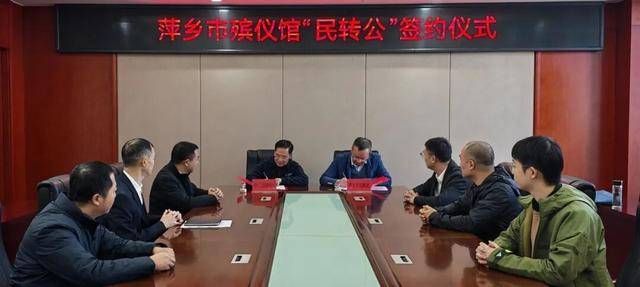
经营权回收!萍乡市民政局接管市殡仪馆
Sou Hu Cai Jing· 2025-12-01 12:55
Core Points - The transfer of management rights of the Pingxiang Funeral Home took place on November 30, 2025, as part of efforts to deepen the public welfare attributes and standardize funeral services [2] - The recovery of management rights is a specific practice to promote the return of public welfare attributes in funeral services and respond to the public's expectation for dignified treatment of the deceased [2] - The Pingxiang Civil Affairs Bureau will tighten management responsibilities, enforce strict regulations, optimize service processes, and enhance service quality to make funeral services more compassionate and aligned with public sentiment [2]

绘就民生幸福底色
Shan Xi Ri Bao· 2025-10-07 00:20
Core Viewpoint - The provincial civil affairs system has made significant strides in improving social welfare and support for vulnerable populations, focusing on a people-centered development approach and implementing various social assistance measures to enhance the quality of life for residents [1][2][3]. Group 1: Social Assistance and Welfare Improvements - The province has integrated 56 assistance programs from 21 departments to streamline social support, ensuring that policies proactively reach those in need rather than waiting for individuals to seek help [2][3]. - A monitoring database has been established, covering 1.78 million low-income individuals and 5.29 million at-risk individuals, with 51 early warning indicators to facilitate timely intervention [3][4]. - The annual distribution of various policy subsidies amounts to 15 billion yuan, benefiting 6.4592 million individuals across 14 categories, including low-income households and the elderly [2][3]. Group 2: Elderly and Child Welfare - The province has built 4,929 urban elderly meal assistance points and 9,419 rural happiness homes, enhancing meal services for the elderly [5][6]. - Child welfare standards have been significantly raised, with monthly support for institutionalized or scattered orphans set at 1,800 yuan and 1,400 yuan, respectively, ranking third among western provinces [7]. - A comprehensive protection network for minors has been established, including 109 child protection centers and 2,700 community children's homes, ensuring the rights of vulnerable children are upheld [7]. Group 3: Marriage and Funeral Reforms - The province has promoted marriage customs reform, achieving 100% coverage of marriage counseling rooms in all counties, which aids in fostering healthy marriage and family values [8][9]. - Significant investments have been made in funeral services, with 329 million yuan allocated for upgrading facilities and supporting the construction of public cemeteries, thereby reducing the financial burden on families [9].