生态环境整治

Search documents
【基层治理进行时】“家门口”清爽 人更精神爽
Xin Lang Cai Jing· 2026-01-03 00:41
Group 1 - The core viewpoint emphasizes the importance of addressing environmental issues to enhance public well-being and satisfaction in Guangde City [1][2][3] - Guangde City has implemented a noise pollution control initiative, responding to complaints from local residents and hotel guests regarding air conditioning noise [1] - The city has increased enforcement efforts, with over 1,200 personnel deployed and more than 500 enterprises inspected in 2025, leading to a 20% decrease in odor complaints compared to the same period in 2024 [1] Group 2 - The town of Sihuo has made significant improvements in water quality due to the establishment of 18 wastewater treatment facilities, which have effectively reduced pollution in local rivers [2] - The A2/O + artificial wetland technology used in Daliu Village's wastewater treatment facility processes 60 tons of wastewater daily, resulting in clear water and increased biodiversity in the area [2] - The local government has created a system to manage and address environmental complaints, ensuring timely responses and effective resolutions to community concerns [2][3] Group 3 - The city has adopted innovative methods to expose environmental issues, resulting in the identification of 178 significant problems and the completion of 288 environmental complaint resolutions [3] - Over the past three years, Guangde City has addressed nearly 5,000 local environmental issues, achieving a 99.97% resolution rate [3] - The city's air quality has met standards for five consecutive years, with a 100% compliance rate for key water quality metrics and an increase in public satisfaction regarding environmental conditions from 93% to 97.1% [3]
苏州推进整改“房前屋后”生态环境问题
Su Zhou Ri Bao· 2025-08-07 00:50
Core Viewpoint - The city of Suzhou has made significant progress in addressing prominent ecological environment issues related to residential areas, achieving an 85.3% completion rate in rectifying identified problems since the initiative began in April [1] Group 1: Initiative Overview - The initiative was launched in accordance with provincial directives, focusing on the ecological environment issues in residential areas [1] - A total of 169 issues were identified and rectified, with 144 issues resolved to date [1] Group 2: Management and Collaboration - Suzhou has established a collaborative framework involving city-level leadership, departmental oversight, and community participation to ensure effective problem management [1] - The initiative employs a closed-loop management mechanism that includes problem reception, assignment, rectification, verification, and closure [1] Group 3: Operational Mechanism - A dual-driven work model involving the "Task Force + Procuratorate" has been implemented to enhance oversight and address complex issues across different regions and departments [1] - Regular inspections and supervision have been conducted to facilitate the resolution of longstanding environmental issues [1] Group 4: Achievements - As of now, 5,614 residential communities have been established under the "Three Definitions and One Supervision" program [1] - The city has processed 281.55 million tons of incinerated household waste and 72.7 million tons of kitchen waste, along with the removal of 10,188 tons of large household items [1] - Continuous efforts have been made to eliminate inferior water quality, with 1,257 inferior V-class rivers being treated [1]
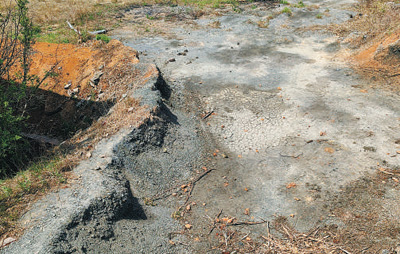
煤渣倾倒耕地 多年难以恢复(来信调查)
Ren Min Ri Bao· 2025-05-11 22:30
Core Viewpoint - The article highlights the environmental concerns raised by villagers regarding the dumping of coal gangue in agricultural lands, which they believe affects crop growth and may lead to soil and groundwater contamination [4][5][8]. Group 1: Environmental Impact - Villagers report that coal gangue has been dumped on their farmland, leading to concerns about its impact on crop yields and potential pollution of soil and groundwater [4][5]. - The local government acknowledges the presence of 12 dumping sites within the village, primarily consisting of coal gangue, which is a byproduct of coal mining and washing [8][9]. - Initial water quality tests conducted by local authorities indicate that the levels of contaminants in groundwater and soil samples are within normal ranges [9][10]. Group 2: Agricultural Concerns - Villagers express frustration over the poor growth of crops on land where coal gangue has been dumped, citing insufficient soil cover and nutrient deficiencies [6][11]. - The local agricultural department has set standards for soil cover thickness (60 cm) to ensure proper farming conditions, but some areas reportedly do not meet these requirements [10][11]. - The article mentions that the agricultural practices in the region include seasonal planting of crops like corn and wheat, which are affected by the soil conditions [9][10]. Group 3: Regulatory and Remediation Efforts - The local government has taken steps to address the issue by shutting down coal washing plants and initiating land restoration efforts [8][10]. - The company responsible for the coal gangue dumping, Xinyi Mining Co., claims to have followed regulations for waste disposal but acknowledges past issues with improper dumping [12][13]. - Ongoing monitoring and testing of soil and water quality are being conducted to assess the long-term effects of coal gangue on the environment and agriculture [13].