
基层治理

Search documents
“60岁正是闯的年纪”:托举银发打工人,支持体系如何建?
第一财经· 2026-03-30 03:10
Core Viewpoint - The article discusses the increasing participation of elderly individuals in the workforce, particularly in the caregiving and domestic service sectors, highlighting the benefits of their experience and the supportive policies being implemented to facilitate this trend [5][12]. Group 1: Elderly Workforce Participation - Elderly individuals, such as Liu Yulan and Guo Feng, are finding meaningful employment in caregiving roles after retirement, with monthly incomes ranging from 8,000 to 10,000 yuan [3][4]. - The Shanghai government has introduced policies to support elderly employment, including the "Implementation Plan" aimed at creating a social participation support system for older adults [5][12]. - The demand for experienced caregivers is rising, as older workers are often preferred for their skills and reliability in roles such as housekeepers and nursing aides [7][9]. Group 2: Training and Skill Development - Training programs for new roles, such as "accompanying doctors" and "organizing specialists," are being offered, often with subsidies or free participation, allowing elderly workers to diversify their job opportunities [7][10]. - The article emphasizes the importance of patience and empathy in caregiving, particularly for those caring for individuals with cognitive impairments, which requires a deep understanding of the elderly's needs [8][10]. Group 3: Policy and Support Systems - The article outlines the need for a robust support system for elderly workers, including legal protections and insurance coverage, to ensure their rights and safety in the workplace [12][14]. - Recommendations include creating a tiered classification for elderly workers based on their job type, with specific protections and benefits tailored to their roles [13][14]. - The integration of elderly workers into community services and volunteer roles is seen as a way to enhance social participation and leverage their experience for community benefit [12][13].


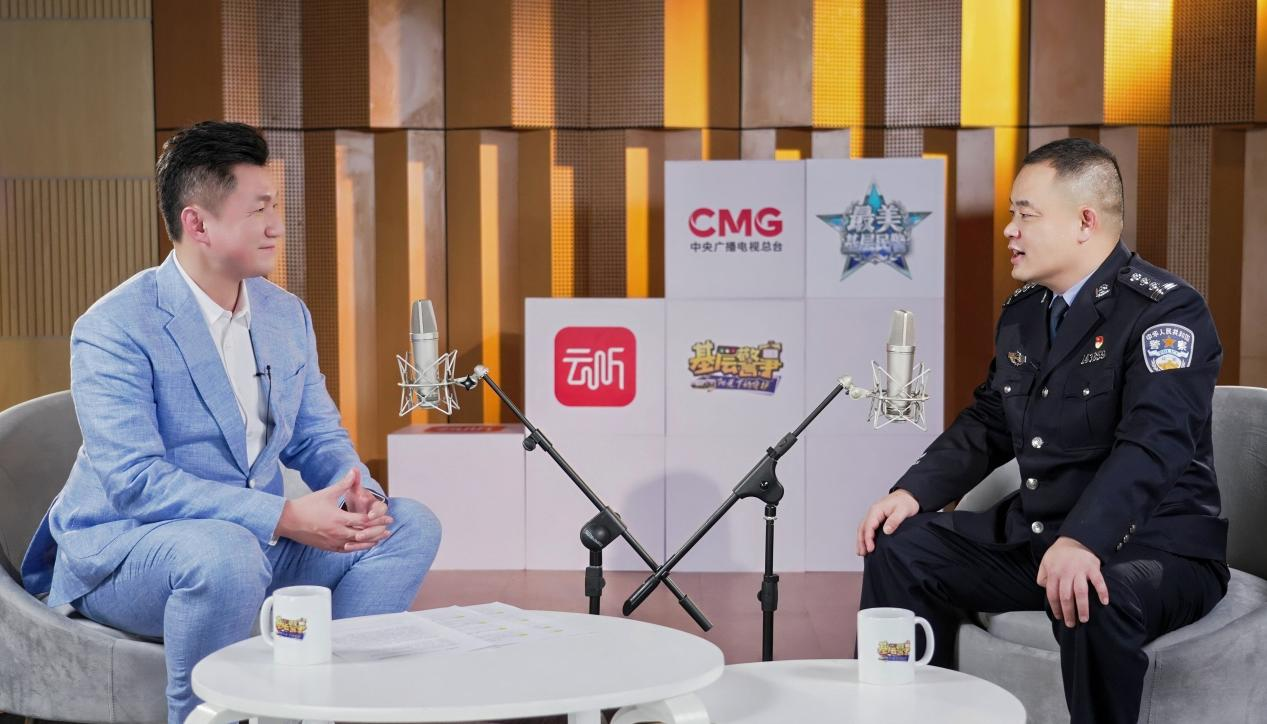
基层警事:铁轨边的归途守护人
Yang Guang Wang· 2026-02-28 01:34
Core Viewpoint - The article highlights the dedication and innovative efforts of Lin Fangde, the head of the Quanzhou Railway Police Station, in ensuring passenger safety and enhancing service quality at the Quanzhou high-speed railway station since its opening in 2010 [3][4]. Group 1: Security and Safety Measures - Lin Fangde has been instrumental in establishing a robust security framework at the Quanzhou station, addressing initial safety gaps by conducting thorough inspections and implementing surveillance measures [3]. - He initiated the "Quanzhou Safe Railway Joint Action Center," collaborating with various local authorities to tackle issues like illegal taxi operations and traffic violations, significantly improving the station's traffic order [3]. - The implementation of smart policing models has enhanced security measures, focusing on preventing intrusion and tailgating, thereby ensuring a safer travel environment for passengers [3][4]. Group 2: Community Engagement and Support - Lin Fangde's principle of "serving the public" led to the creation of the "Maritime Silk Road Peace Station," aimed at resolving passenger disputes on-site, thus preventing conflicts from escalating [4]. - He established the "Yilu Tongxing" service to assist migrant workers and their children during peak travel seasons, alleviating concerns for working parents [4]. - Lin has also set up a charity fund using his personal awards to help passengers in need, demonstrating a commitment to community welfare and support [4]. Group 3: Training and Development - Lin Fangde has introduced a "Three-Year Training Plan" to mentor new police officers, fostering a culture of knowledge transfer and skill development within the team [6]. - Under his leadership, the police station has seen significant recognition, with multiple officers receiving commendations for their exemplary service, reflecting the effectiveness of the training initiatives [6]. - The emphasis on practical experience and mentorship has cultivated a capable and resilient police force at the Quanzhou station [6].
县委书记网上回应公众诉求,乐见更多“本人回复”
Xin Jing Bao· 2026-02-27 08:42
Group 1 - The core viewpoint of the article highlights the proactive engagement of local government officials, specifically the county party secretary of Lanshan, who has opened a personal account to directly respond to public concerns and issues [2][3] - The county party secretary's responses to various public complaints, such as broken streetlights and inadequate school accommodations, demonstrate a commitment to addressing community needs in a timely manner [2] - The initiative has sparked significant online discussion, with many netizens expressing appreciation for the direct and transparent communication style, which contrasts with traditional bureaucratic processes [2][3] Group 2 - This approach signals a shift in grassroots governance, suggesting that public management can be more accessible and responsive through direct online engagement [3] - The article notes that while this model has its limitations, such as reliance on individual capacity and the risk of reverting to traditional methods without institutional support, it represents a valuable opportunity for improvement in public administration [3] - The importance of integrating online feedback into existing complaint and hotline systems is emphasized, highlighting the need for clear processes to ensure that public concerns are systematically addressed [3][4] Group 3 - The essence of effective governance lies in the ability to listen to the public and maintain open communication channels, regardless of the medium used [4] - Continuous and genuine engagement with the community is crucial for enhancing governance effectiveness and public trust [4] - The article concludes that while more "personal replies" are desired, the fundamental aspect is the genuine attention given to public issues and the commitment to resolving them [4]

广陵文峰街道:打造“一站三联四赋能”新就业群体服务模式
Xin Lang Cai Jing· 2026-02-25 22:05
Group 1 - The core idea is the establishment of a multi-functional service platform for new employment groups in Yangzhou's Guangling District, focusing on addressing their practical needs and enhancing community support [1][2] - The "Warm New Pioneer Nest" is designed to provide all-day services, addressing common issues such as access to drinking water, hot meals, charging facilities, and rest areas, creating a welcoming environment [1] - The service model emphasizes integration and collaboration, transforming scattered services into a cohesive supply system through joint organization, resource sharing, and collaborative governance [2] Group 2 - The initiative aims to empower new employment groups by leveraging their mobility and familiarity with local conditions, transitioning them from being governance subjects to active governance partners [3] - A comprehensive map of service stations and battery swap stations has been created to facilitate easy access for new employment individuals, ensuring they can find support whenever needed [3] - Professional training programs are being offered to enhance skills in various fields, encouraging knowledge sharing and community engagement, thus fostering a vibrant and motivated workforce [3]
全国人大代表殷其龙:聚焦群众急难愁盼和行业痛点
Xin Lang Cai Jing· 2026-02-25 17:54
Core Viewpoint - The article highlights the efforts of a taxi driver and national representative, Yin Qilong, in advocating for the development of the taxi industry and improving grassroots governance through active participation in legislative processes and community engagement [1] Group 1: Legislative Advocacy - Yin Qilong submitted a proposal titled "Strengthening the Coordinated Development of Taxi and Online Ride-Hailing Services" in 2025, which received a positive response from the Ministry of Transport, indicating that relevant departments are actively promoting related work [1] - After attending the National People's Congress in March last year, Yin promptly engaged with local communities and companies to disseminate the spirit of the two sessions and new national policies [1] Group 2: Community Engagement - Yin participated in grassroots judicial governance initiatives, such as the "People's Congress + Court" model, and engaged in activities like "door-to-door listening" and "heartfelt mediation" to understand the efficiency of grassroots judicial dispute resolution [1] - He attended court hearings related to sentence reductions and public interest litigation cases, overseeing the judicial process from a representative's perspective [1] Group 3: Industry Focus - Yin conducted in-depth research on pressing issues in the taxi industry, particularly focusing on operational management and labor employment of drivers, providing targeted suggestions to support the healthy development of the industry [1] - He actively participated in legal education activities in schools, promoting legal awareness among youth and supporting underprivileged children through charitable initiatives [1]
中国人寿接连受罚 合规与业绩的矛盾凸显
Xin Lang Cai Jing· 2026-02-25 05:43
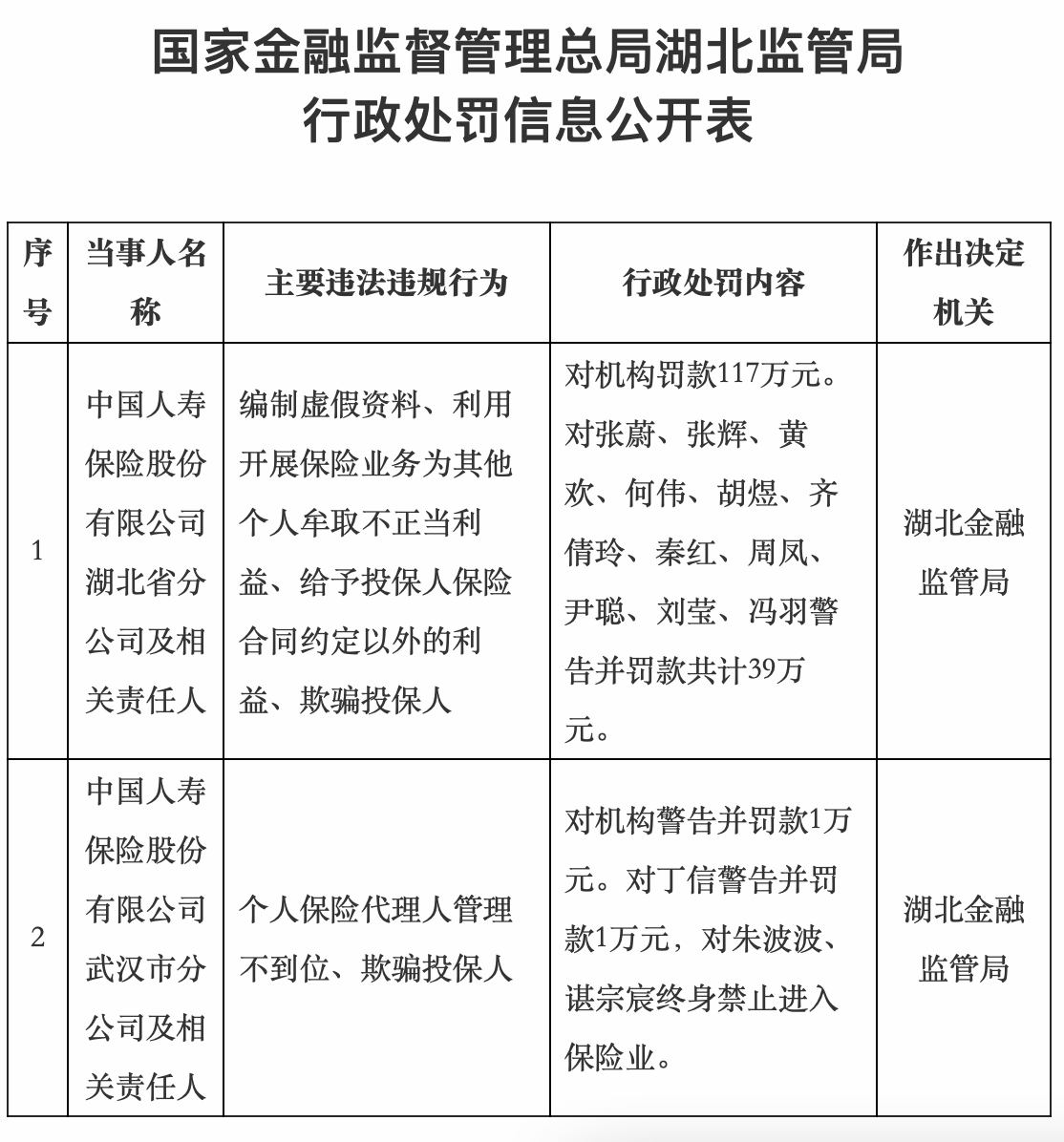
Core Viewpoint - China Life Insurance has faced significant regulatory penalties in early 2026, highlighting compliance and internal management challenges despite its strong market performance [1][4]. Regulatory Actions - China Life's branches in Henan and Hubei received fines exceeding 2 million yuan within two months, indicating a focus on compliance and governance issues [1][5]. - The first fine of 900,000 yuan was issued to the Luoyang branch for multiple violations, including fabricating insurance intermediary business and deceiving customers [1][6]. - Following this, the Hubei branch was fined 1.17 million yuan for similar violations, including providing false information and offering benefits outside of contracts [2][7]. - The penalties reflect a comprehensive regulatory approach, targeting not only the companies but also individual executives and agents involved in misconduct [2][7]. Company Performance - Despite regulatory challenges, China Life reported impressive financial results for the first three quarters of 2025, with a net profit of 167.8 billion yuan, a 60.5% increase year-on-year [3][8]. - Total investment income reached 368.6 billion yuan, up 41.0%, with a total premium income of 669.6 billion yuan, reflecting a 10.1% growth [3][8]. - The company attributes its growth to effective asset-liability management and increased equity asset allocation, maintaining a sales force of 657,000 [3][8]. Industry Perspective - The recent regulatory actions signify a shift towards a more normalized, detailed, and stringent regulatory environment in the insurance industry [4][9]. - The regulatory bodies are adopting a zero-tolerance approach towards actions that harm consumer rights and disrupt market order, sending a clear message about the importance of compliance [4][9]. - The fines, while minor relative to the company's revenue, expose significant management and internal control weaknesses that could undermine long-term market credibility if not addressed [4][9]. - China Life faces the challenge of balancing rapid business growth with effective risk management and compliance integration throughout its operations, particularly within its extensive sales network [4][9].

河南湖北监管接连重拳 中国人寿两地分公司深陷违规泥潭
Jing Ji Guan Cha Wang· 2026-02-25 02:20
Core Viewpoint - China Life Insurance, a leading life insurance company, has faced regulatory penalties exceeding 2 million yuan for multiple violations, highlighting compliance shortcomings despite strong financial performance in 2025 [1][6]. Regulatory Penalties - On January 30, the Luoyang Regulatory Bureau imposed a fine of 900,000 yuan on China Life's Luoyang branch for fabricating intermediary business and deceiving policyholders [2]. - On February 14, the Hubei Regulatory Bureau fined the Hubei branch 1.17 million yuan for preparing false documents and other deceptive practices, with 11 responsible individuals penalized [1][2]. Violations and Compliance Issues - The violations included fabricating false materials, using insurance business for personal gain, and providing benefits outside of contractual agreements, indicating serious compliance issues within the company [4][5]. - The penalties affected not only provincial and municipal branches but also extended to branch managers and frontline agents, revealing systemic issues in management and oversight [4][6]. Financial Performance - Despite the compliance issues, China Life reported a net profit of 167.8 billion yuan for the first three quarters of 2025, a 60.5% year-on-year increase, with total premium income reaching 669.6 billion yuan, up 10.1% [5]. - The company emphasized its strategy of deepening asset-liability linkage and increasing equity investments as key drivers of its financial growth [5]. Industry Regulatory Environment - The recent penalties reflect a shift towards more stringent and regularized oversight in the insurance industry, with the regulatory authority intensifying efforts to address market irregularities and protect consumer rights [6]. - The fines, while relatively small compared to the company's size, underscore significant governance and internal control weaknesses that could undermine the company's long-term reputation and consumer trust [6].
新建社区治理“死结”变“活扣”
Xin Lang Cai Jing· 2026-02-24 22:23
Core Viewpoint - Beijing has integrated the concept of "everyone's business, discussed by everyone" into governance, transforming residents from bystanders to active participants in community governance [1] Group 1: Community Governance Innovations - The "small courtyard discussion hall" has been established to facilitate face-to-face communication and address residents' concerns effectively [2] - The community has implemented a "Weekend Appointment" brand to engage residents, particularly young homeowners, in activities that foster neighborly relationships [10] - The "Three On-Site" working method encourages residents to participate in decision-making by discussing issues directly at the problem site [8] Group 2: Conflict Resolution and Participation - The community organized multiple coordination meetings to address the issue of electric bicycle parking, leading to a consensus among residents on parking regulations [4][5] - Residents were encouraged to express their views on various issues, such as drying clothes in common areas, leading to collaborative solutions that consider everyone's needs [7] - The community's approach has shifted from reactive to proactive governance, significantly reducing complaint volumes [8] Group 3: Community Engagement and Services - The establishment of a neighborly center has provided a space for various community activities, enhancing social interaction and support among residents [11] - The community has successfully created a harmonious environment where residents feel comfortable sharing their concerns and participating in governance [11] - Initiatives like the "Building Door Convention" have empowered residents to set rules for shared spaces, further promoting community involvement [8]

从实求知 基层大有可为
Xin Lang Cai Jing· 2026-02-24 19:19
Core Viewpoint - The article discusses the challenges faced by local governments and state-owned enterprises in retaining talented graduates from prestigious universities, highlighting the mismatch between the expectations of these graduates and the realities of grassroots governance [1][2]. Group 1: Recruitment and Retention Challenges - Local governments allocate significant budgets and positions to attract graduates from top universities, but less than half remain after three years due to various reasons such as relocation or job changes [1]. - The work at county and town levels often involves repetitive and mundane tasks, which require strong execution, responsibility, and communication skills rather than just academic credentials [1][2]. Group 2: Nature of Grassroots Work - Grassroots governance involves dealing with complex, real-life issues that are not reflected in statistics, such as poverty due to illness or school dropouts, requiring a deep understanding of local conditions [2][3]. - The environment at the grassroots level is characterized by a need for comprehensive skills, including emergency response, resource integration, and political judgment, which can be developed through hands-on experience [2][3]. Group 3: Educational Background and Local Fit - The article argues that the most valuable qualities for grassroots positions are not high academic degrees but rather a willingness to engage deeply with the community and a commitment to long-term service [3]. - It suggests that local or ordinary university graduates may be better suited for grassroots roles due to their proximity and understanding of local issues, emphasizing the importance of stability, responsibility, and a strong work ethic [3].

织就一张“平安网” 奏响乡村“和谐曲”
Xin Lang Cai Jing· 2026-02-24 00:49
Core Viewpoint - The article highlights the effective grassroots governance model "One Network, One Station, One Team" implemented in Hanji Town, which has significantly improved conflict resolution and community safety [1][7]. Group 1: Governance Model - Hanji Town has established a "One Network" approach, creating a three-tiered grid management system that integrates various aspects of governance, including public safety and community services [1][6]. - The town has appointed dedicated grid members and auxiliary personnel to ensure comprehensive management and accountability within the grid system [1][6]. Group 2: Conflict Resolution - The establishment of a comprehensive mediation platform at the town's comprehensive governance center allows for one-stop resolution of disputes, addressing the complexities of grassroots conflicts [3][4]. - The center employs experienced mediators who utilize a blend of legal knowledge and local customs to effectively resolve disputes, ensuring both legal compliance and community acceptance [3][6]. Group 3: Community Engagement - Grid members serve as vital links between the government and the community, conducting regular inspections and gathering public sentiment to address issues promptly [2][6]. - The town has developed a professional and diverse mediation team that actively engages with residents, enhancing legal awareness and conflict resolution capabilities [6][7]. Group 4: Outcomes - Since the implementation of the governance model, Hanji Town has successfully mediated 161 disputes with a 100% success rate, fostering a legal environment where residents seek legal solutions to conflicts [7].