
生态补水

Search documents
1月我省生态补水量创历年同期最高纪录
Xin Lang Cai Jing· 2026-02-16 23:40
Group 1 - The ecological water replenishment in January reached a record high of 790 million cubic meters, marking the highest amount for the same period in history, which supports the revival of river ecosystems and enhances the ecological environment in the region [1] - The ecological flow from the Huangbizhuang Reservoir to the lower reaches of the Tuotuo River is approximately 28 cubic meters per second, ensuring the ecological flow at key sections of the river [1] - The ecological replenishment efforts have resulted in a waterway length of 410 kilometers along the Tuotuo River and Ziya River, effectively replenishing groundwater levels and improving the regional ecological environment [1] Group 2 - The Wangkuai Reservoir has contributed to a waterway length of 185 kilometers, with over 30 million cubic meters of water entering the Baiyangdian Lake, playing a crucial role in maintaining the ecological water level and improving the regional water ecological environment [2] - The implementation of ecological replenishment measures across the province is showing positive ecological benefits, with increased water flow, wider water surfaces, and sufficient water volume in rivers and lakes [2] - The provincial water resources department plans to continue optimizing ecological replenishment strategies and accelerate the recovery of river and lake ecosystems to maintain their health [2]
泉水复涌、候鸟留京 专家称多重因素促华北地下水位回升
Xin Lang Cai Jing· 2026-01-20 16:47
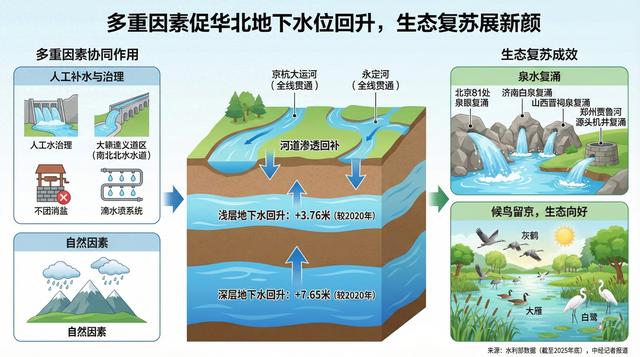
Core Viewpoint - The article highlights the significant improvement in water levels in North China, leading to the resurgence of springs and a positive ecological impact, attributed to various water management initiatives and natural factors [2][4][8]. Group 1: Water Management Initiatives - The Ministry of Water Resources has been actively promoting regular water replenishment in rivers and lakes in North China, resulting in the continuous flow of the Grand Canal and the Yongding River after decades of drought [2][4]. - By the end of 2025, shallow and deep groundwater levels in the North China governance area are expected to rise by 3.76 meters and 7.65 meters, respectively, compared to 2020 [4]. - The revival of long-dry springs, such as the one in Beijing's Fangshan district, is a direct result of ecological water replenishment projects [7]. Group 2: Ecological Impact - The resurgence of springs in various regions, including Zhengzhou and Jinan, has been noted, with local residents sharing videos of these phenomena [6]. - The increase in groundwater levels is attributed to a combination of effective management practices and favorable natural conditions, such as increased rainfall [7]. - The Ministry of Water Resources aims to continue its efforts in groundwater management, focusing on ecological restoration and the prevention of seawater intrusion [8][9]. Group 3: Public Perception and Response - The positive ecological changes have surprised many citizens, leading to discussions and skepticism on social media platforms regarding the causes of groundwater resurgence [9]. - Experts have clarified that there is no direct evidence linking the resurgence of groundwater to geological changes, urging the public not to jump to conclusions [9].

北京潮河总干渠建成后首次启动冬季输水
Shui Li Bu Wang Zhan· 2026-01-19 06:47
Core Viewpoint - The Chaohua Main Canal in Beijing has initiated winter water supply for the first time since its establishment in 1958, marking a significant operational milestone for the project [1] Group 1: Project Overview - The Chaohua Main Canal, approximately 11.42 kilometers long, connects the Miyun Reservoir to the Tangzhishan Reservoir, serving agricultural irrigation needs in the northeastern part of Beijing [1] - The canal was suspended in 2001 due to decreased irrigation demand but resumed operations in 2021 for ecological water replenishment [1] Group 2: Ecological Impact - By the end of 2025, the canal is expected to have supplied nearly 130 million cubic meters of water, with over 40 million cubic meters planned for 2025 alone, revitalizing the canal's ecological function [1] - The transformed ecological canal enhances regional water systems, replenishing the Tangzhishan Reservoir and improving the ecological environment of the Puyihe River in Pinggu District [1][2] Group 3: Biodiversity and Environmental Benefits - The winter water supply, in conjunction with spring replenishment, aims to restore biodiversity in the Chaobai River and improve the overall water and soil environment along the canal [2] - This initiative contributes to the establishment of a sustainable river-lake ecosystem, providing suitable habitats for aquatic life [2]
断流30多年的枯泉复涌!和地震有关系吗?
Xin Lang Cai Jing· 2026-01-18 06:06
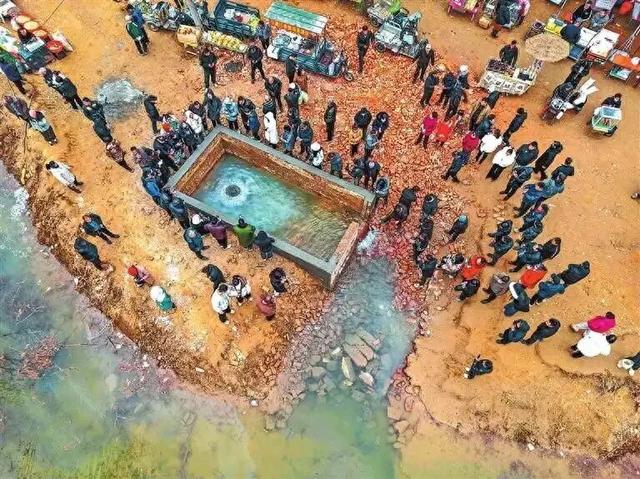
Core Viewpoint - The resurgence of previously dried-up springs in North China, attributed to improved groundwater levels and ecological restoration efforts, has sparked public curiosity and concern regarding potential seismic activity. Group 1: Groundwater Resurgence - A well in Zhengzhou, which had been dry for 32 years, has started flowing again, with water output increasing from 20 tons per hour to 80-100 tons per hour, and temperatures ranging from 28°C to 33°C [2][4] - The cumulative rise of deep groundwater in Zhengzhou has reached 9.6 meters over the past three years, indicating a significant recovery of groundwater resources [2] Group 2: Causes of Groundwater Recovery - The recovery of groundwater levels is primarily due to two factors: increased water supply and reduced extraction [4] - The South-to-North Water Diversion Project has contributed over 680 billion cubic meters of water since its inception, with over 106 billion cubic meters allocated for ecological replenishment [5][7] - The artificial extraction of groundwater has decreased significantly, with a reported reduction of 50.3 billion cubic meters (31.9%) in over-extraction since 2015, and the area of severely over-extracted groundwater has decreased by 51% [8] Group 3: Public Concerns and Misconceptions - There are widespread concerns that the resurgence of springs may indicate impending earthquakes, although experts clarify that gradual and stable increases in groundwater levels do not pose seismic risks [10][12] - The public's anxiety reflects a heightened awareness of ecological changes and disaster risks, emphasizing the importance of groundwater as a critical resource for ecological balance and drought response [14]
首启冬输!老灌渠变身“生态动脉”
Xin Lang Cai Jing· 2026-01-08 09:40
Core Viewpoint - The Chaohe Main Canal has successfully initiated winter water supply for the first time since its establishment in 1958, marking a significant transformation from an agricultural irrigation channel to an ecological channel [1]. Group 1: Project Overview - The Chaohe Main Canal, approximately 11.42 kilometers long, starts at the He'nanzhai section in Miyun District and ends at the Tangzhishan Reservoir in Shunyi District [2]. - Initially built to support agricultural irrigation in Miyun and Shunyi, the canal ceased water supply in 2001 due to decreased irrigation demand and increased urban water usage [2]. - The canal was reactivated in 2021 for ecological replenishment, with a target of nearly 130 million cubic meters of cumulative water supply by December 31, 2025, including over 40 million cubic meters in 2025 alone [2]. Group 2: Ecological Impact - The transformation into an ecological channel has enhanced the connectivity of regional water systems, revitalizing the Tangzhishan Reservoir and improving the ecological environment of the Puyihe River in Pinggu District [3]. - Winter water supply promotes biodiversity recovery, with 22 fish species and over 30 bird species now recorded in the area, alongside the return of mammals and protected plants [3]. - The winter water supply breaks seasonal limitations, achieving year-round ecological replenishment and contributing to sustainable regional ecological development [3].
永定河连续3年全年全线有水
Xin Lang Cai Jing· 2026-01-05 21:47
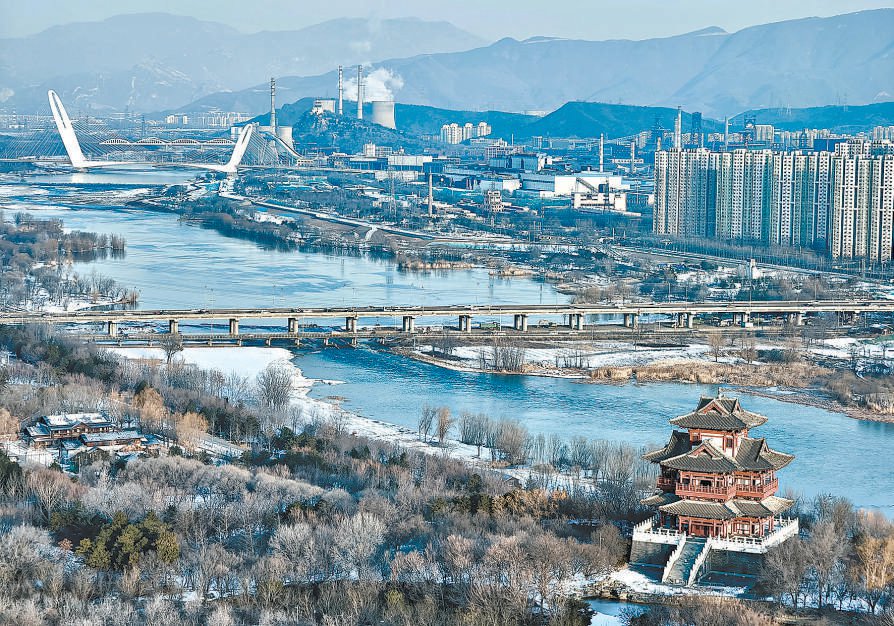
Core Insights - The Yongding River has achieved continuous water flow for three consecutive years, with a total discharge of 2.2 billion cubic meters from the Guanting Reservoir by December 31, 2025, fulfilling the goal of having water throughout the river all year round [1] - The river's revival is attributed to coordinated ecological water replenishment efforts, including water sourced from various reservoirs and recycled water, leading to significant improvements in water quality and ecosystem stability [1][2] Group 1 - The Yongding River has transitioned from a state of long-term dryness to a flowing and clean water body, with over 3 billion cubic meters of water replenished, resulting in increased water surface area and noticeable groundwater replenishment [1] - The health of the main stream in the Beijing section has reached 100%, with water quality meeting Class III surface water standards [1] - Ecological restoration efforts include the scientific configuration of vegetation in various river zones, enhancing the river's ecological environment [2] Group 2 - The completion of the "Five Lakes and One Line" water damage restoration project has opened more water areas for public enjoyment, promoting recreational activities along the river [2] - An upgrade to a 9-kilometer slow-moving system along the riverbank will connect key landmarks, enhancing accessibility and tourism [2] - The improved ecological environment has attracted rare bird species back to the area, creating a habitat that draws birdwatchers and photographers [2]
群鸟翔集,为好景更为欢鸣
Xin Lang Cai Jing· 2025-12-28 20:29
Group 1 - The core focus is on the collaborative efforts between Shihezi City and Manas County to protect the Manas National Wetland Park, breaking administrative boundaries for ecological restoration [1] - An ecological restoration project has been ongoing for over 10 years, involving activities such as returning farmland to wetland, waterway dredging, and ecological water replenishment since 2014 [1] - The ecological water replenishment strategy is designed to mimic natural hydrological rhythms, adjusting water release based on plant growth cycles and bird breeding patterns [1] Group 2 - As of now, the organization has established 21 various types of natural protected areas, with wetland reserves and parks playing a crucial role in bird conservation [2] - These protected areas cover key ecological points across the Tarim River basin, Yarkand River, Kuitun River, and Manas River, creating ecological corridors that connect desert oases [2] - Through comprehensive management of key watersheds, river-lake connectivity, and seasonal ecological water replenishment, the organization has effectively curbed wetland shrinkage and degradation, enhancing ecological functions [2]
穿塬越渭送“甘露”
Shan Xi Ri Bao· 2025-12-20 00:20
Core Viewpoint - The successful completion of the northern line of the Yinhang Jihui Phase II project marks a significant milestone in addressing water scarcity in the Weibei region, with the project expected to provide reliable water supply from the Han River to various areas in Shaanxi Province by 2026 [2][3][11]. Group 1: Project Overview - The northern line of the Yinhang Jihui Phase II project spans 89.54 kilometers, connecting the Huangchigou water distribution hub in the south to the Fen Shui Kou in the north [6][8]. - Once operational, the project will supply nearly 100 million cubic meters of water annually to the main urban area of Xi'an, benefiting approximately 2 million residents [11]. Group 2: Technical Challenges and Solutions - The construction faced significant challenges, including the need to tunnel through soft soil conditions and the requirement to safely navigate under critical infrastructure [14][17]. - Innovative construction techniques, such as combining shield tunneling with conventional excavation, were employed to overcome these challenges, ensuring minimal disruption to surface structures [16][18]. Group 3: Environmental and Economic Impact - The project emphasizes ecological sustainability, with measures in place to prevent soil erosion and promote green construction practices [22]. - The introduction of Han River water is expected to stabilize water quality and reduce production costs for local industries, such as the Shaanxi Rainbow Optoelectronics Technology Company, which relies heavily on water for its operations [19][21].
实施水量统一调度 黄河实现连续26年不断流
Ren Min Ri Bao· 2025-08-12 22:07
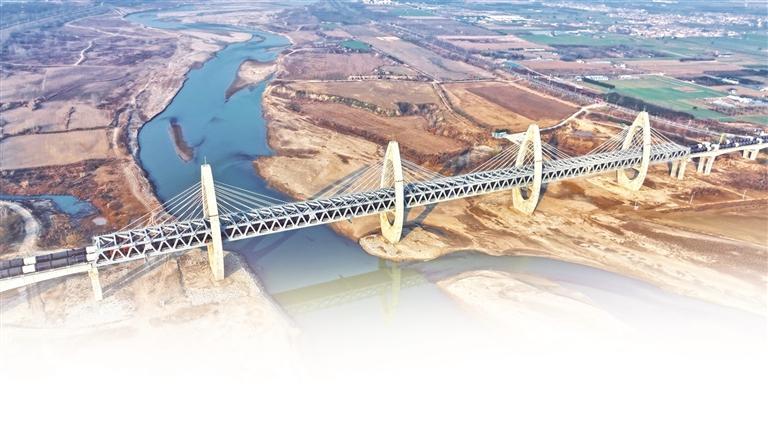
Core Viewpoint - The Yellow River has achieved continuous flow for 26 years since 1999, supported by effective water resource management and allocation strategies, despite facing drought conditions in certain regions [1][2]. Group 1: Water Resource Management - The Yellow River Water Resources Commission has implemented the "Four Waters and Four Determinations" principle to enhance water resource conservation and efficient utilization, successfully completing annual water allocation tasks [1]. - In the 2024-2025 period, over 22.3 billion cubic meters of water were supplied from the Yellow River to the basin and related areas, supporting ecological protection and high-quality development [1]. Group 2: Drought Response and Ecological Support - The Yellow River basin experienced varying degrees of drought in the summer of 2024 and spring-summer of 2025, leading to significant water demand for drought relief [1]. - The commission proactively planned and deployed resources to ensure water supply safety, food security, and ecological safety in drought-affected provinces [1]. - Cross-basin water replenishment efforts included 0.08 billion cubic meters of emergency water supply to the South Four Lakes, effectively alleviating local drought conditions [2]. Group 3: Ecological Restoration Efforts - Cumulative ecological water replenishment efforts included 3.74 billion cubic meters to the Uliangsuhai and 1.72 billion cubic meters to the estuarine delta, improving local water ecological environments [2]. - The commission is actively promoting the restoration of the Qinhai and Heihe rivers as part of ongoing ecological recovery initiatives [2].
2025年永定河生态补水进行时 北京市水务部门多举措保障补水安全
Shui Li Bu Wang Zhan· 2025-06-13 04:52
Core Points - The Ministry of Water Resources has approved the 2025 water allocation plan for the Yongding River, with ecological replenishment activities underway in Beijing [1] - As of June 6, 2023, a total of 306 million cubic meters of water has been supplied to the Yongding River, along with 31.206 million cubic meters to the Daxing Canal [1] - The Yongding River has maintained ecological base flow throughout the year, with a continuous water flow achieved for five consecutive years, significantly improving the ecological environment and biodiversity in the river basin [1] Group 1 - The ecological replenishment started on March 1, 2023, and has been effectively managed by the Beijing Water Authority [2] - Public awareness campaigns have been launched to enhance citizens' safety and responsible behavior around the river during the replenishment period [2] - Safety measures have been implemented, including the installation of warning signs and increased inspections to ensure compliance with safety regulations [2] Group 2 - The water authority has established a communication mechanism to address unauthorized water activities and ensure public safety [2] - Citizens are advised to adhere to safety guidelines, particularly avoiding dangerous areas and respecting warning signs during the ecological replenishment [2] - Coordination with construction units has been emphasized to enhance safety management and protect personnel and facilities during the replenishment activities [2]