生物制造技术

Search documents
浮萍什么来头?
Xin Lang Cai Jing· 2025-12-21 17:38
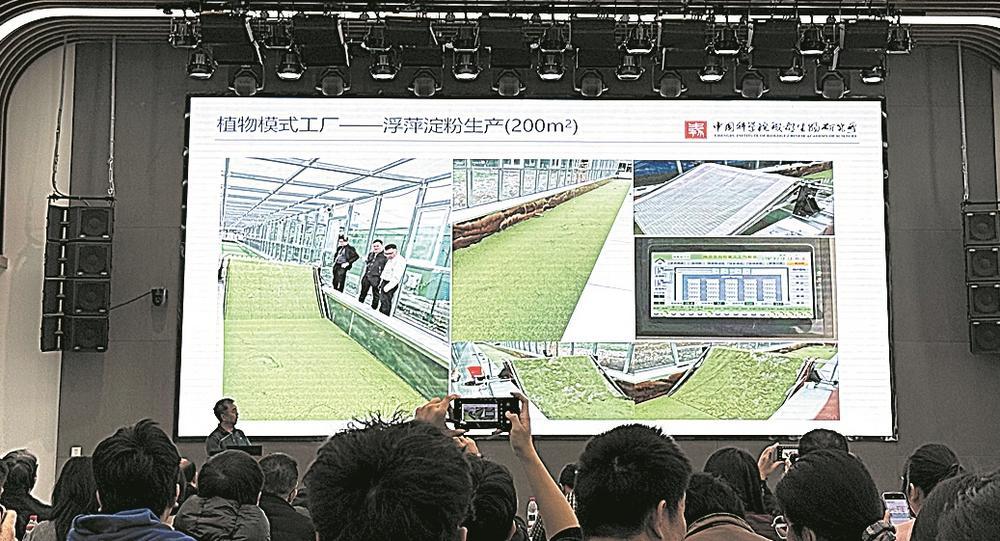
Core Insights - The article discusses the increasing recognition and potential applications of duckweed as a sustainable food source and resource for biomanufacturing, particularly in addressing food security challenges and environmental sustainability [3][5][6]. Group 1: Duckweed's Nutritional and Agricultural Advantages - Duckweed has a higher starch content than rice and a protein content comparable to soybeans, making it a promising alternative food source [4][6]. - Research indicates that duckweed can achieve a starch accumulation rate of 8.55g/㎡/d, which is five times higher than traditional crops, with potential annual starch production exceeding 2 tons per acre, significantly surpassing rice [6]. - The protein yield from various duckweed strains can exceed 1,000 kg/acre annually, with some strains reaching up to 1,567 kg/acre and protein content as high as 50%, indicating its potential as a substitute for soybeans [6]. Group 2: Environmental and Economic Benefits - Duckweed can be cultivated in wastewater, effectively removing nitrogen and phosphorus while sequestering carbon dioxide, thus enhancing wastewater treatment processes [7]. - In specific projects, duckweed cultivation has demonstrated the ability to produce protein yields of 850 kg/acre/year from nutrient-rich wastewater, which is over ten times the protein yield of soybeans, with low production costs [7]. - The cultivation of duckweed offers a sustainable agricultural model that does not compete for arable land, supporting the development of a new food production system that is both economically viable and environmentally friendly [7]. Group 3: Research and Development Initiatives - The third Duckweed Resource Development and Utilization Seminar highlighted ongoing research into duckweed's applications in food security and biomanufacturing [3][5]. - Researchers are actively promoting small-scale duckweed cultivation in regions like Yunnan and Sichuan to explore its practical applications and benefits [7].

报告预计明年我国人工智能产业维持高速增长态势
Xin Hua Wang· 2025-12-20 10:48
Group 1 - The core viewpoint of the article is that China's artificial intelligence industry is expected to maintain rapid growth, with significant advancements in smart computing power and domestic chip applications by 2026 [1] - By September, the scale of China's core AI industry has exceeded 900 billion yuan, with more than 5,300 AI companies and over 400 national-level "little giant" enterprises specializing in AI [1] - The report anticipates that in 2025, AI technology will focus on enhancing physical cognition, improving reasoning efficiency, and innovating architectural paradigms, leading to further upgrades [1] Group 2 - The simultaneous release of the "2026 Outlook on Future Industry Development in China" indicates that significant turning points in future industry development are expected, with multiple sectors likely to achieve key breakthroughs from technology to industrialization [1] - Quantum technology is projected to gradually transition from laboratory settings to specific application scenarios [1] - The application depth of biomanufacturing technology in fields such as pharmaceutical research and agricultural breeding is continuously expanding [1]
2025年中国化妆品新原料行业短报告:“妆”备竞赛升级,谁最有可能定义下一代超级单品?
Tou Bao Yan Jiu Yuan· 2025-12-09 12:16
Investment Rating - The report does not explicitly provide an investment rating for the cosmetics new ingredients industry in China Core Insights - The report aims to systematically outline the development status and core characteristics of the new cosmetic ingredients industry in China, analyzing the definition management, efficacy orientation, filing patterns, and technological trends to provide valuable insights for industry participants to grasp R&D directions and optimize strategic layouts [3] Summary by Sections Overview of China's Cosmetic Ingredients - Cosmetic ingredients are the core foundation and value source throughout the entire industry chain, with innovation directly determining the efficacy, safety thresholds, and market competitiveness of end products. China implements a dual-track management system for new cosmetic ingredients, providing a clear regulatory pathway for ingredient innovation while imposing higher safety and efficacy requirements [7] - The analysis indicates that due to abundant local plant resources, natural and mild plant extracts have become mainstream, with maintaining skin barrier and antioxidant properties being two major functional claims. The industry shows a dual-track development path, rapidly following mature ingredients validated in international markets while actively exploring cross-application of food-grade materials [7][8] Overview of China's Cosmetic Filing New Ingredients - The data shows that chemical ingredients account for 46.0%, plant ingredients for 30.7%, biotechnology ingredients for 20.0%, and animal ingredients for 3.3% of the new filing ingredients in China. Chemical synthesis remains the dominant force in upstream development due to its advantages in formula stability, process maturity, and cost control [29] - The leading functions of these ingredients include skin protectants and antioxidants, which account for 43.0%, followed by moisturizers at 17.3% and anti-wrinkle agents at 9.0%. The focus of cosmetic R&D has shifted from superficial modification to maintaining and enhancing skin health [29][28] Development Trends of China's Cosmetic New Ingredients - Biomanufacturing technologies, including microbial fermentation, genetic engineering, enzyme engineering, and tissue culture, are profoundly influencing traditional chemical ingredient production methods, driving the transformation of cosmetic ingredients towards greener, low-carbon, and high-efficiency directions [7] - Despite facing adjustment pressures in end-consumer demand, the continuous growth of disposable income among residents lays a solid foundation for consumption upgrades. This demand will continue to compel upstream ingredient sectors to innovate substantively to activate potential consumer needs [7][41]
华恒生物递表港交所 L-丙氨酸及L-缬氨酸的市场份额分别位居全球第一
Zhi Tong Cai Jing· 2025-09-30 02:55
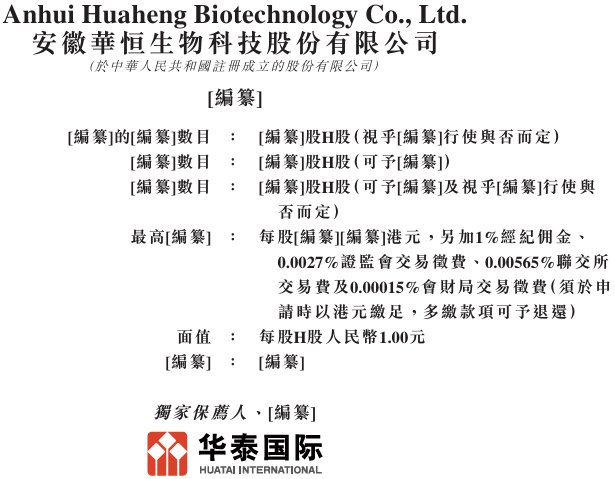
Core Viewpoint - Anhui Huaheng Biotechnology Co., Ltd. (Huaheng Bio) has submitted an application for listing on the Hong Kong Stock Exchange, with Huatai International as the sole sponsor [1]. Company Overview - Huaheng Bio is a pioneer in synthetic biology, focusing on the research, large-scale production, and commercialization of bio-based products through biomanufacturing technology. The company has established a leading position in the industry over the past 20 years [3]. - The company is recognized as one of the most comprehensive enterprises in the commercialization of bio-based products through synthetic biology, being the first globally to industrialize the anaerobic fermentation of a series of amino acids, including L-Alanine and L-Valine. By 2024, it is projected to hold the largest market share for L-Alanine and L-Valine globally [3]. Product Portfolio - As of June 30, 2025, Huaheng Bio has established stable long-term partnerships with over 768 customers across 85 countries in Asia, Europe, and the Americas. Its main bio-based products include amino acids (primarily alanine series, L-Valine, tryptophan, arginine), vitamins (D-Calcium Pantothenate, D-Pantothenol, inositol), and other bio-based products (1,3-propanediol, succinic acid, malic acid, arbutin) [4]. - The company employs two green manufacturing technology platforms: fermentation and enzyme catalysis, focusing on microbial cell factories and enzyme-based production processes to reduce pollution, lower energy consumption, and minimize carbon footprints [4]. Market Potential - The global bio-based products market is expected to grow from $22.8 billion in 2020 to $42.1 billion by 2024, with a compound annual growth rate (CAGR) of 16.6%. It is projected to further increase to $80.1 billion by 2030 and $109.1 billion by 2035, with CAGRs of 11.3% and 6.4% respectively [5]. - Companies with green manufacturing capabilities, large-scale production technologies, and collaborative advantages in the supply chain are anticipated to experience unprecedented growth opportunities in this market [5]. Financial Performance - The company reported revenues of approximately RMB 1.419 billion, RMB 1.938 billion, RMB 2.178 billion, and RMB 1.489 billion for the years 2022, 2023, 2024, and the first half of 2025, respectively. The corresponding profits for these periods were approximately RMB 319 million, RMB 447 million, RMB 185 million, and RMB 109 million [5][7].

投资155亿生物基材料与化学品项目签约
DT新材料· 2025-08-30 16:04
Core Viewpoint - The article discusses the signing of a cooperation agreement between Inner Mongolia Kailu County and Anhui Fengyuan Group for the establishment of a green zero-carbon bio-manufacturing industrial base, with a total investment of 15.5 billion yuan and projected annual sales revenue of approximately 26 billion yuan upon full production [2]. Group 1: Project Overview - The Fengyuan (Northern) Green Zero-Carbon Bio-Manufacturing Industrial Base Project includes three main sectors: amino acid series products, bio-materials, and bio-energy [2]. - The project is expected to generate an annual sales revenue of around 26 billion yuan once fully operational [2]. Group 2: Technological Innovations - Fengyuan Group has developed first and second-generation bio-manufacturing technologies, utilizing starch sugar and straw for sugar production, respectively [2]. - The company has established four major innovative technology platforms: 1. Technology for producing plant-based humic acid from cellulose derived from agricultural and forestry waste [2]. 2. Three bio-based material platform technologies, including polylactic acid, bio-based polyurethane, and bio-based polycarbonate [2]. 3. Three bio-energy manufacturing technologies, including cellulose ethanol, biodiesel, and bio-jet fuel [2]. 4. Downstream application technologies for bio-based materials, covering a wide range of products such as bio-fibers, bio-plastics, and bio-based construction materials [2]. Group 3: Company Background - Fengyuan Group is a mixed-ownership enterprise with state-owned shares, focusing on the R&D and industrialization of bio-chemicals, bio-materials, bio-energy, and bio-pharmaceuticals [3]. - The company controls Fengyuan Pharmaceutical and holds shares in Yunding Technology, along with several other subsidiaries in various sectors [3]. - Fengyuan Group has established bio-manufacturing plants in Thailand, Hungary, and Brazil, producing organic acids and amino acids for food and feed additives [3].
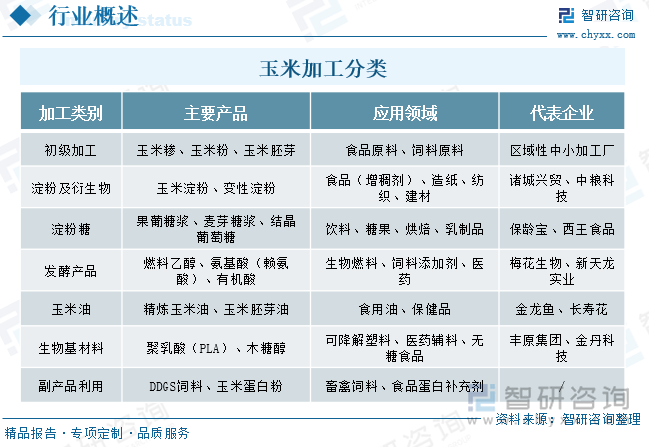
趋势研判!2025年中国玉米加工行业产业链、发展现状、细分市场产品结构及未来趋势分析:高附加值产品开发成为核心,生物制造技术引领行业转型升级[图]
Chan Ye Xin Xi Wang· 2025-07-07 01:05
Core Viewpoint - The corn industry is a strategic pillar for China's food security, with significant growth in planting area, yield, and total production expected in 2024, despite short-term market adjustments due to international price fluctuations and rising costs [1][8][14]. Group 1: Industry Overview - The corn processing industry in China has developed a complete industrial chain, from primary processing to modern biobased material research, becoming a key hub for agricultural production and industrial manufacturing [1][5][14]. - Corn processing can be categorized into primary processing and deep processing, producing various products for food, feed, and industrial applications [2][3][5]. Group 2: Current Development Status - In 2024, China's corn planting area is projected to reach 44.74 million hectares, a year-on-year increase of 1.18%, with a yield of 439.4 kg/mu, contributing to a total production of 294.92 million tons, a 2.1% increase from the previous year [1][8][10]. - The total corn consumption in 2024 is expected to reach 31.78 million tons, with industrial consumption growing by 3.07% to 7.94 million tons, driven by innovations in deep processing [12][14]. Group 3: Market Trends - The corn deep processing market size is expected to adjust to 190 billion yuan in 2024, down 6.4% from its peak in 2022, but the long-term growth trend remains solid [1][14]. - The corn processing industry is transitioning towards green and low-carbon practices, focusing on high-value product development such as polylactic acid and functional sugars [24][25][26]. Group 4: Competitive Landscape - The corn deep processing industry in China has a tiered competitive structure, with leading companies like COFCO Technology and Meihua Biological occupying the top tier, focusing on high-value products [20][22]. - The market for corn starch is highly concentrated, with top companies holding over 44% market share, and there is a trend towards differentiation and expansion into biobased materials and other emerging fields [22][24].