生物医药港股IPO

Search documents
6天8家药企闯关港股IPO
2 1 Shi Ji Jing Ji Bao Dao· 2025-11-07 03:27
Core Insights - The recent surge in IPO applications from biopharmaceutical companies in Hong Kong reflects a collective grasp of the financing window amid improved market conditions [2][10] - The influx of applications highlights the survival differentiation and development anxiety among various players in the industry [2] Market Environment - The Hong Kong stock market has seen a significant improvement, driven by rising secondary market stock prices attracting capital and the Federal Reserve's interest rate cuts pushing funds towards emerging markets [2][10] - Daily trading volume in Hong Kong stocks has surged to several hundred billion HKD post-October 2024, significantly increasing institutional investor interest [2] Company Strategies and Focus Areas - The recent IPO applications show a clear specialization in niche areas, with oncology remaining a core battlefield [4] - New Bridge Bio focuses on precision immuno-oncology drugs, targeting a market projected to grow from $15.1 billion in 2024 to $22.3 billion by 2034 [4] - Lupo Pharma is developing a platform for oral cancer and autoimmune disease treatments, maintaining over 82% of its operating expenses on R&D since 2023 [4] Financial Health and Challenges - The financial health of the eight companies reveals a stark divergence, with many unprofitable biotech firms facing ongoing cash burn pressures [5] - New Bridge Bio's cumulative losses are projected to reach $239 million by mid-2025, with a significant drop in R&D spending raising concerns about clinical progress [5] - De Mei Pharma reported a 30.7% revenue increase to 617.5 million CNY in 2024, but its net loss expanded 21 times due to high sales expenses [6] Competitive Landscape and Valuation - The IPO process is just the beginning; valuation and market competition will pose significant challenges for these biopharmaceutical companies [8] - The market has become increasingly stringent regarding valuation logic, as evidenced by recent privatization trends among companies like China Traditional Chinese Medicine and Fuhong Hanlin due to low valuations [8] - Companies must find valuation support through differentiation and commercial prospects, with R&D progress and data quality being critical for valuation ceilings [8] Operational Efficiency and Future Outlook - For traditional pharmaceutical companies, demonstrating sustainable growth is essential, as seen with Jiangxi Biopharmaceutical's focus on balancing stable traditional business with innovative breakthroughs [9] - De Mei Pharma's case illustrates the need for companies to balance market promotion and R&D investment while improving customer and supplier structures to mitigate operational risks [9] - The overall recovery of the Hong Kong biopharmaceutical IPO market injects vital liquidity into the industry, but the rationality of the market has significantly increased [10]


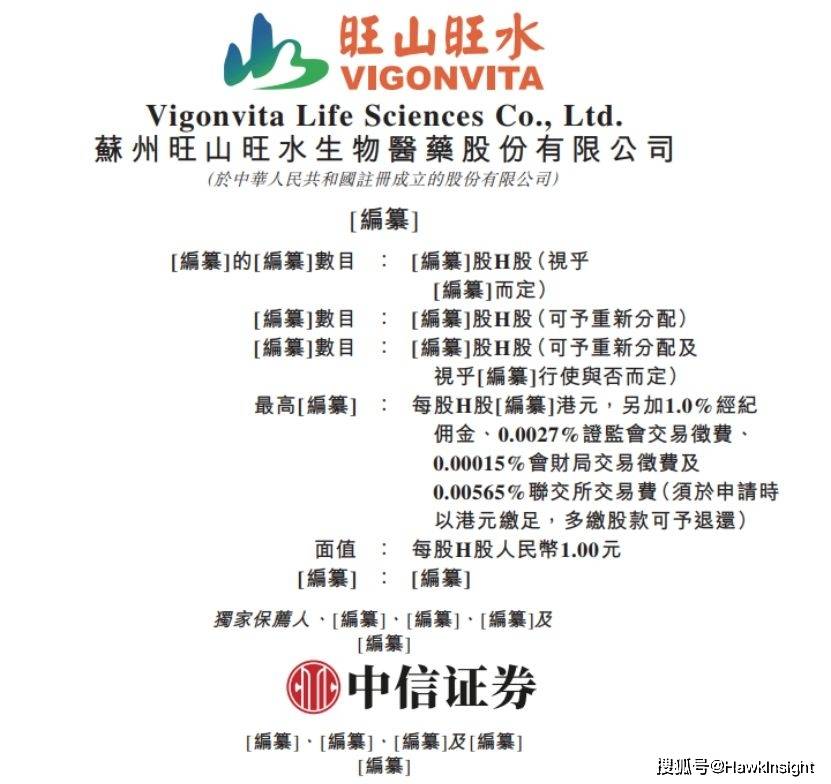
旺山旺水-B递交招股书,离真正旺起来只差一个港股IPO?
Sou Hu Cai Jing· 2025-08-06 09:12
Core Insights - The article discusses the recent IPO activities in the biopharmaceutical sector, highlighting the significant oversubscription of Zhonghui Biotech-B and introducing another new stock, Wangshan Wangshui-B, which focuses on innovative small molecule drug development targeting viral infections, neuropsychiatric disorders, and reproductive health [1]. Industry Overview - The biopharmaceutical sector is experiencing a surge in IPO activities, with Wangshan Wangshui-B submitting its prospectus for listing on the Hong Kong Stock Exchange [1]. - The market for central nervous system (CNS) diseases, such as Alzheimer's disease (AD) and Parkinson's disease (PD), presents a vast opportunity due to the large patient base and the increasing demand driven by an aging population [4]. Company Focus - Wangshan Wangshui-B is engaged in the discovery, acquisition, development, and commercialization of innovative small molecule drugs, specifically targeting three therapeutic areas: viral infections, neuropsychiatric disorders, and reproductive health [1]. - The company's lead pipeline candidate, WH-1, is an antibody targeting beta-amyloid (Aβ) for Alzheimer's disease, which is a validated pathological target in the field [5]. Clinical Development - WH-1 has shown promising safety and preliminary efficacy signals in early clinical studies, with the company aiming to differentiate itself through convenience of administration and safety profiles [6]. - WH-1 is currently in late-stage clinical trials (Phase II/III or III), which is a critical juncture for the pipeline's value and the company's overall valuation [6]. Market Potential - The global market potential for Alzheimer's disease treatments is substantial, estimated to be worth hundreds of billions of dollars, with existing therapies showing limited effectiveness, indicating a significant unmet clinical need [4]. Regulatory Environment - Global regulatory bodies, such as the FDA and NMPA, are supportive of innovative CNS drugs that address unmet needs, potentially offering expedited review pathways [4]. Financial Considerations - The company currently lacks a commercialized product and relies on continuous funding to support its clinical trials, which may lead to financial strain post-IPO [7]. - The IPO proceeds are expected to cover short-term operational costs, but the company will need to secure additional funding to sustain its long-term clinical development efforts [7].