生鲜连锁上市

Search documents
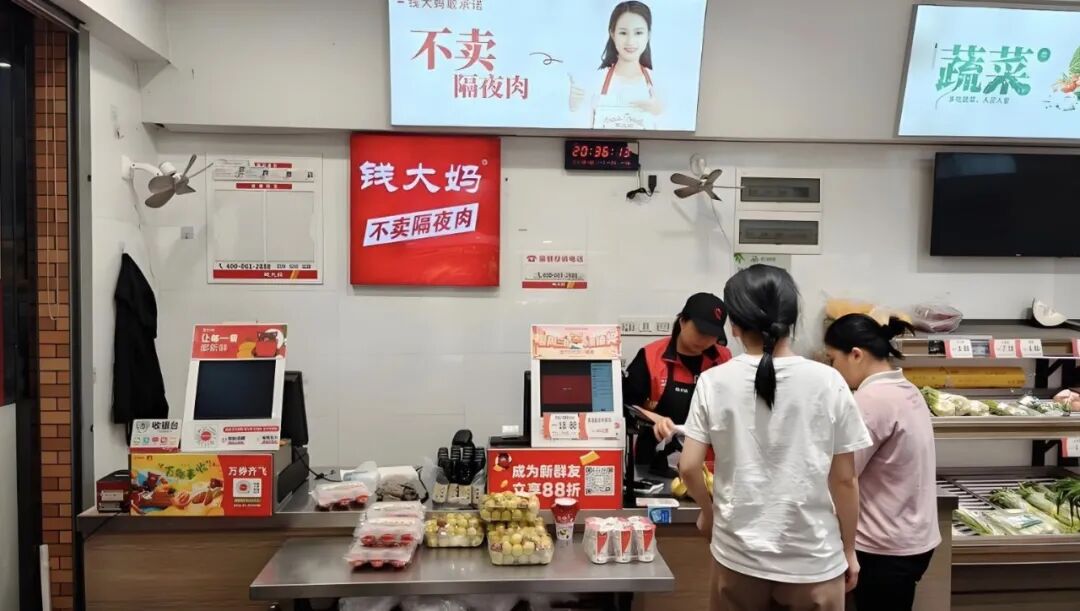
“不卖隔夜肉”的“她”,冲刺港股IPO!
Zheng Quan Shi Bao Wang· 2026-01-13 13:11
Core Viewpoint - Qian Dama International Holdings Limited has officially launched its IPO process in Hong Kong, aiming to raise funds for expanding its store network, enhancing product offerings, improving supply chain capabilities, and upgrading infrastructure [1][2] Group 1: Company Overview - Qian Dama has become the largest community fresh food chain in mainland China, with a projected GMV of 14.8 billion yuan for 2024 [1][2] - The company operates a unique discount model, where products are discounted starting at 7 PM, with further reductions every 30 minutes until products are given away for free by 11:30 PM [2] - As of September 30, 2025, Qian Dama plans to have 2,938 community stores and 1,754 franchisees across the country [2][3] Group 2: Market Position - Despite being a leader in the community fresh food sector, the industry remains highly fragmented, with the top five players holding only 7.3% of the market share, and Qian Dama accounting for 2.2% [2] - Key market entry barriers include store network, supply chain management, product diversity, and quality control [2] Group 3: Financial Performance - Qian Dama has experienced stagnant revenue growth, with revenues of 11.744 billion yuan in 2023, 11.788 billion yuan in 2024, and 8.359 billion yuan in the first nine months of 2025, reflecting a year-on-year decline of approximately 4.2% [4] - The company's gross margin improved from 9.8% in 2023 to 10.2% in 2024, reaching 11.3% in the first three quarters of 2025 [5] - The net profit for 2024 was 288 million yuan, a 71% increase year-on-year, but the company reported a loss of 288 million yuan in the first nine months of 2025 due to various factors [5]
烧钱年代散场后,钱大妈终于走到港股门前
3 6 Ke· 2026-01-13 04:30
Core Viewpoint - Qian Dama International Holdings Limited has officially submitted its prospectus to the Hong Kong Stock Exchange, marking the start of its IPO process after four years of speculation about its listing [1]. Group 1: Company Overview - Qian Dama is a leading community fresh food chain in China, known for its "discount day clearance" sales model and commitment to "not selling overnight meat" [3]. - As of September 30, 2025, the company operates 2,938 stores across 14 provinces and regions, with 98.6% being franchise stores [3]. - The company has maintained its position as the top community fresh food chain in China for five consecutive years, with a projected GMV of 14.8 billion RMB in 2024 [3]. Group 2: Financial Performance - For the fiscal years ending December 31, 2023, and 2024, Qian Dama reported revenues of 11.744 billion RMB and 11.788 billion RMB, respectively, with gross profits of 1.149 billion RMB and 1.201 billion RMB [4]. - In the first nine months of 2025, the company generated revenue of 8.359 billion RMB, a 4.2% decrease from the previous year's 8.730 billion RMB, while gross profit increased to 943 million RMB from 900 million RMB [5]. - The adjusted net profit for the first nine months of 2025 was 215 million RMB, indicating a decline compared to the previous year [5]. Group 3: Profitability Metrics - Qian Dama's gross margin has shown continuous improvement, rising from 9.8% in 2023 to 10.2% in 2024, and further to 11.3% in the first nine months of 2025 [6]. - The net profit margin for 2023 and 2024 was 1.4% and 2.4%, respectively, but dropped to -3.4% in the first nine months of 2025 [6]. Group 4: Investment and Financing History - Qian Dama has completed five rounds of financing, attracting investments from various firms, including Qichacha, which indicates strong market interest [7]. - The company was ranked 67th in the 2020 China Unicorn List, showcasing its growth potential and market position [9]. Group 5: Market Expansion and Challenges - Qian Dama has experienced rapid expansion since its inception in 2012, with significant growth in store numbers and market presence, particularly in Shanghai and other regions [10][11]. - However, the company faced challenges, including reports of franchisee losses and market withdrawals, leading to a strategic retreat to stabilize its operations [15][16].