
甲醇燃料

Search documents
杭氧集团新建新疆首个大型BOO供气项目;减排超90%,国内首艘甲醇单一燃料江海直达船成功首航丨智能制造日报
创业邦· 2026-02-15 03:59
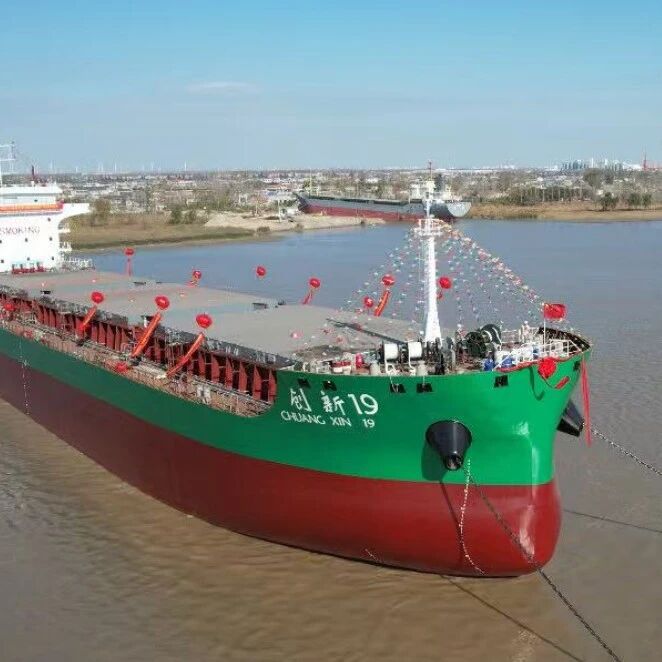
Group 1 - Hangyang Group has established a joint venture with Zhongrong New Energy to create Xinjiang's first large-scale BOO gas supply project, which will support the production of 1.8 million tons of fine chemicals and 4,000 tons of battery fuel hydrogen annually [2] - The "Innovation 19" vessel, the first methanol single-fuel river-sea direct ship in China, has successfully set sail, showcasing a significant advancement in the commercial application of methanol fuel in the shipping industry, with over 90% CO2 reduction potential when using green methanol [2] - The new solar-powered smart benches installed along the Grand Canal in Tongzhou District represent an integration of green technology into urban furniture, enhancing public services [2] Group 2 - Lanrui Optoelectronics has completed a C-round financing of several hundred million yuan, led by Guangzhou Yuexiu Industrial Investment Fund, with participation from various investment entities [2]



减排超90%,成功首航!
中国能源报· 2026-02-14 04:54
Core Viewpoint - The successful maiden voyage of the "Innovation 19" vessel, the first methanol-fueled ship in China, marks a significant step towards the commercialization of methanol fuel in the shipping industry, showcasing advanced technology and environmental benefits [3][5]. Group 1: Vessel and Technology - The "Innovation 19" is a 15,000-ton methanol single-fuel vessel, equipped with a domestically developed methanol engine that utilizes advanced direct injection technology, achieving over 90% methanol substitution [3][5]. - The engine has a rated power of 1,600 kW, maintaining performance comparable to traditional diesel engines while significantly reducing emissions: over 90% CO2 reduction, 60% reduction in nitrogen oxides, and 99% reduction in sulfur oxides when using green methanol [3][5]. Group 2: Industry Implications - The successful operation of the "Innovation 19" serves as a demonstration of the reliability and economic viability of methanol fuel technology, paving the way for broader adoption in coastal and inland shipping [5]. - The vessel is part of a batch of five methanol-powered ships, with the remaining four expected to be operational by May 2026, contributing to the formation of a green fleet [5]. - Approximately 10 ports across the country are already equipped to supply methanol fuel, indicating the initial establishment of a supply network [5]. Group 3: Future Outlook - Industry experts predict that such green vessels could significantly reduce logistics costs and improve shipping efficiency, particularly in the "river-sea direct" model, facilitating smoother and lower-carbon transportation for Chinese manufacturing [6].
技术竞赛再升级 动力电池进入“多核时代”?
Zheng Quan Ri Bao Zhi Sheng· 2025-04-29 18:42
Core Insights - The 2025 Shanghai International Automobile Industry Exhibition has marked the beginning of a new round of competition in power systems, driven by the "dual carbon" goals and innovations in battery technologies [1] Group 1: Battery Technology Developments - Numerous battery companies showcased their latest technologies and products, including Huizhou EVE Energy Co., Ltd. with its comprehensive battery solutions and BYD's solid-state battery models [2] - The focus on solid-state batteries, high-nickel ternary batteries, and lithium iron phosphate batteries indicates a diverse technological landscape, with solid-state batteries seen as the next generation of power batteries [2] - CATL introduced its dual-core battery technology, emphasizing the combination of different chemical systems to enhance performance across various conditions [3] Group 2: Market Trends and Competition - The entry into a "multi-core era" for power batteries signifies a shift from single-material competition to a collaborative approach among various battery technologies [4] - The competition is intensifying with advancements in sodium-ion batteries, hydrogen fuel cells, and methanol fuel technologies, which are expected to redefine market dynamics [5] - The introduction of a low-pressure, ambient temperature solid-state hydrogen storage fuel cell vehicle at the exhibition highlights the growing interest in hydrogen technology [6] Group 3: Future Outlook - The automotive power system competition is anticipated to become more intense by 2025, pushing the industry towards greener, smarter, and more efficient solutions [6] - Industry experts suggest that companies must enhance R&D efforts, improve product performance, and lower costs to meet market demands and foster collaboration for technological advancement [7]

