
电力行业数字化转型

Search documents
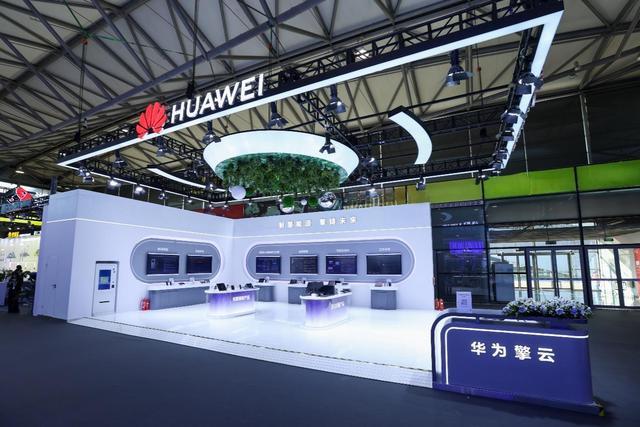
华为擎云“人本+数字”双安全,点亮电力转型新路径
Huan Qiu Wang Zi Xun· 2025-11-18 12:45
Core Viewpoint - The article emphasizes the critical role of electricity in modern society and highlights the dual security challenges faced by the power industry amid the digital transformation driven by the "dual carbon" goals. It discusses the need for a balance between efficiency and safety in the construction of a new power system focused on renewable energy [1]. Group 1: Industry Challenges - The power industry is undergoing a digital transformation that presents significant safety challenges, including health risks for frontline workers and vulnerabilities in the digital environment [1][3]. - Traditional management approaches in the power sector are reactive, lacking proactive measures to address sudden health issues or communication disruptions, which can lead to safety incidents [3]. Group 2: Huawei's Solutions - Huawei's Qingtian Cloud is introducing a comprehensive safety system that integrates "human safety" and "digital security" to support the digital transformation of the power industry [1][11]. - The Qingtian Cloud's health management solution utilizes commercial wearable devices to monitor frontline workers' health metrics in real-time, enabling dynamic tracking and immediate alerts for abnormal data [3][4]. - The mobile operation terminal from Qingtian Cloud features advanced AI algorithms and high-precision positioning, ensuring stable network connectivity even in remote areas [4][5]. Group 3: Digital Security Framework - The Qingtian Cloud's security terminal, based on HarmonyOS, employs a dual-system architecture to create a secure environment for sensitive operations, effectively preventing data breaches and unauthorized access [7][8]. - The introduction of a paperless meeting solution enhances data security during high-level meetings by implementing encryption, targeted distribution, and dynamic watermarking [8][9]. Group 4: Innovation and Future Outlook - Huawei's Qingtian Cloud demonstrates a deep understanding of the power industry's needs by providing a multi-dimensional safety system that integrates hardware and software solutions [11]. - The company's commitment to independent innovation ensures the security of the supply chain and data sovereignty in the critical infrastructure sector [11].

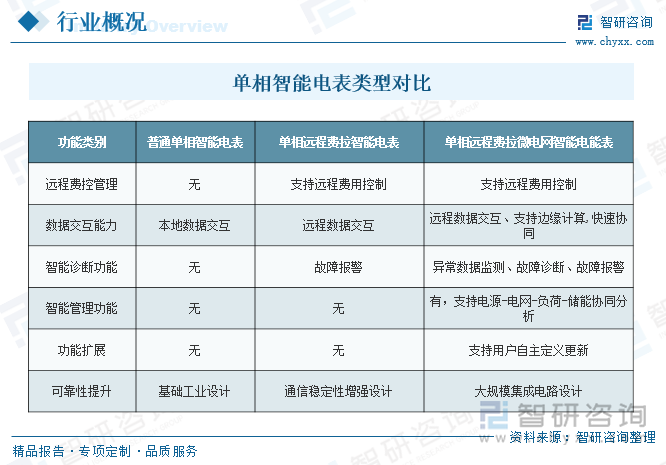
2025年中国单相智能电表行业生产工艺流程、产业链、需求量、重点企业分析及行业发展趋势研判:需求量将超1亿个,市场将迎来更加广阔的发展空间[图]
Chan Ye Xin Xi Wang· 2025-06-27 01:44
Core Viewpoint - The demand for single-phase smart meters in China is expected to grow significantly, driven by the ongoing development of smart grids and the digital transformation of the power industry, with projections indicating a demand of 11,195,200 units in 2024, an increase of 2,820,900 units from 2023 [1][6][8]. Group 1: Industry Overview - Smart meters are essential devices for data collection in smart grids, with single-phase smart meters dominating the market, accounting for over 80% of applications [1][8]. - The market for single-phase smart meters is projected to reach a scale of 9,482,330 units in 2024, up by 2,703,340 units from 2023, with expectations to reach 10,372,130 units by 2025 [1][8]. - The industry is characterized by continuous technological advancements, leading to improved precision, communication capabilities, and overall intelligence of smart meters [22]. Group 2: Industry Development Status - The smart meter industry is a crucial component of the Advanced Metering Infrastructure (AMI) system, enhancing operational efficiency, promoting energy conservation, and improving the stability of power systems [6]. - The increasing demand for smart meters is supported by technological progress and cost reductions, which enhance their functionality and performance [6][22]. Group 3: Industry Chain - The upstream of the single-phase smart meter industry includes raw materials such as electronic components, metal terminals, and flame-retardant plastics, while the midstream involves manufacturing and system integration [10]. - The downstream applications include major power grid companies like State Grid and Southern Power Grid, as well as emerging applications in distributed photovoltaics and smart homes [10]. Group 4: Competitive Landscape - The global smart meter market is fragmented, with major overseas companies focusing on high-end markets in developed countries, while Chinese companies leverage cost advantages to capture market share in developing countries [14]. - Key players in the domestic single-phase smart meter industry include Jiangsu Linyang Energy Co., Ltd., Yantai Dongfang Weiston Electric Co., Ltd., and others, who are enhancing their competitive edge through technology development and market expansion [14][15]. Group 5: Key Companies - Jiangsu Linyang Energy Co., Ltd. reported a production of 9,449,700 smart meters in 2024, an increase of 1,759,300 units from 2023, with a revenue of 2.704 billion yuan, up by 431 million yuan [18]. - Hangzhou Haixing Electric Technology Co., Ltd. achieved a production of 15,373,700 smart products in 2024, with a revenue of 4.535 billion yuan, an increase of 534 million yuan from 2023 [20].




国网江苏电力:书写国际ITU标准创制领域的辉煌篇章
Zhong Guo Neng Yuan Wang· 2025-04-23 00:46
Core Insights - State Grid Jiangsu Electric Power Company has made significant achievements in the field of international standardization, leading to the successful publication and initiation of several standards at the ITU-T SG20 and SG21 meetings in Geneva [1][2] - The standards developed by State Grid Jiangsu include models for data interaction in power equipment, disaster warning systems, and intelligent monitoring platforms, which enhance the efficiency and safety of power systems [1] - The company has also initiated standards focusing on intelligent operation and maintenance of new power systems, including IoT-based substation monitoring and AI-based distribution network analysis, addressing the needs of global energy transition [2] Group 1 - State Grid Jiangsu Electric Power Company has taken a leading role in the ITU standardization process, showcasing its strength and position in the industry [1] - The published standards will help improve the international standard system in the power sector, providing important references for global industry development [1] - The successful establishment of standards for new power systems will guide the application of new technologies such as IoT, AI, and blockchain in the power industry, promoting digital transformation [2] Group 2 - The election of employee She Jun as the deputy rapporteur of SG20 Q6 is a milestone for State Grid Jiangsu, reflecting the company's overall strength and enhancing its influence in international standard-setting [2] - The breakthroughs in standard creation by State Grid Jiangsu represent a combination of technical strength, innovation capability, and international vision, contributing positively to the global power industry [2] - The company is expected to continue its leadership in international standards, driving the power industry towards greater intelligence, sustainability, and efficiency [2]