电动汽车无线充电

Search documents
奥海科技:目前,公司的无线充电模组技术可应用于车载内部场景
Mei Ri Jing Ji Xin Wen· 2025-12-19 09:43
Core Viewpoint - The company has strategically entered the electric vehicle wireless charging sector and has achieved significant technological breakthroughs [2]. Group 1: Company Developments - The company has made substantial progress in wireless charging module technology applicable to in-vehicle scenarios [2]. - The company has successfully developed a high-power wireless charging technology, achieving an industry-leading level of 650W, laying a solid technical foundation for future applications in electric vehicle high-power wireless charging [2]. - The company plans to continue deepening its technology research and market expansion in this field [2].


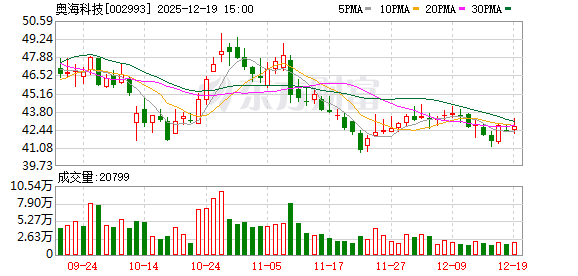
奥海科技:公司的无线充电模组技术可应用于车载内部场景
Zheng Quan Ri Bao Wang· 2025-12-19 08:40
Core Viewpoint - The company has strategically entered the electric vehicle wireless charging sector and has achieved significant technological breakthroughs [1] Group 1: Technological Advancements - The company's wireless charging module technology is applicable in in-vehicle scenarios [1] - The company has successfully developed a high-power wireless charging technology with an industry-leading capability of 650W, establishing a solid technical foundation for future applications in electric vehicle high-power wireless charging [1] Group 2: Future Plans - The company will continue to deepen its research and development in related technologies and expand its market presence [1]
威迈斯:公司正在推进对电动汽车无线充电系统等相关产品的研发和产业化进程
Zheng Quan Ri Bao Wang· 2025-11-26 13:41
Group 1 - The company is advancing the research and industrialization of electric vehicle wireless charging systems and related products based on current market demand [1] - The company aims to enrich its core technology and product system while continuously enhancing technological innovation [1]

研判2025!中国电动汽车无线充电行业发展背景、相关政策、市场动态及规模分析:技术不断突破,商业化应用尚需时日【图】
Chan Ye Xin Xi Wang· 2025-04-27 01:18
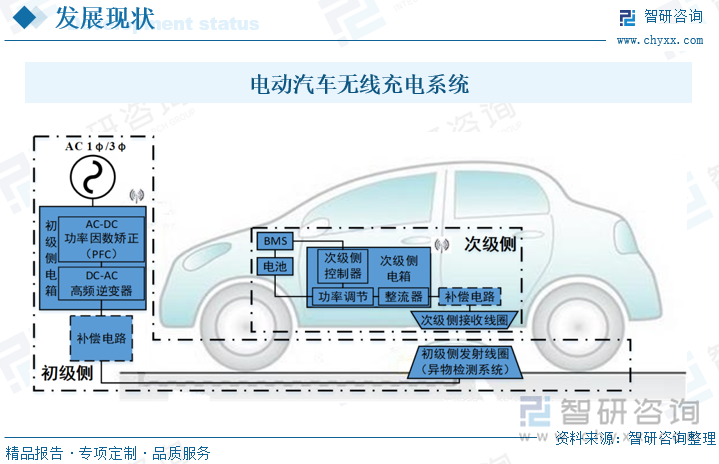
Group 1: Overview of Electric Vehicle Wireless Charging - Electric vehicle wireless charging technology transmits power through underground power rails using high-frequency alternating magnetic fields, allowing vehicles to receive energy without large battery packs, thus extending their range and enhancing safety and convenience [1][2][25] - The wireless charging technology is categorized into static and dynamic charging, with static charging allowing vehicles to charge automatically when parked, while dynamic charging enables vehicles to receive energy while in motion, significantly reducing range anxiety [4][10] Group 2: Market Development and Trends - The global electric vehicle wireless charging market reached a scale of $100 million in 2023 and is expected to exceed $200 million in 2024, indicating a growing market potential as the number of new energy vehicles increases and core technologies advance [25] - The development trends in wireless charging technology focus on achieving multi-vehicle charging capabilities, optimizing power transmission efficiency, and enhancing stability and safety during the charging process [27] Group 3: Industry Background and Policies - China's automotive industry has embraced electric and intelligent transformation, with significant achievements in the new energy vehicle sector, leading to a robust supply chain and a competitive international market presence [10][12] - The Chinese government has supported the exploration of wireless charging technology through various policies, emphasizing the need for new charging technologies to improve convenience and reliability [16][18] Group 4: Current Status and Key Players - Several automotive companies, including BMW, Tesla, and domestic brands like SAIC and BYD, have been actively developing and commercializing wireless charging technologies, with notable advancements in both static and dynamic charging solutions [21][23] - As of 2024, the number of electric vehicles in China is projected to reach 31.4 million, with a significant portion being pure electric vehicles, highlighting the increasing demand for charging infrastructure [12][14]