
电致变色

Search documents
小米入股电致变色产品供应商创欣材料
Qi Cha Cha· 2026-01-04 07:19
Core Insights - Xiaomi has invested in Suzhou Chuangxin Materials Technology Co., Ltd., a supplier of electrochromic (EC) products, by adding its affiliated company, Hanxing Venture Capital Co., Ltd., as a shareholder [1] Company Overview - Suzhou Chuangxin Materials was established in 2022 and specializes in the manufacturing and sales of optical glass and technical glass products [1] - The registered capital of Suzhou Chuangxin Materials has increased to 66.8015 million yuan [1]
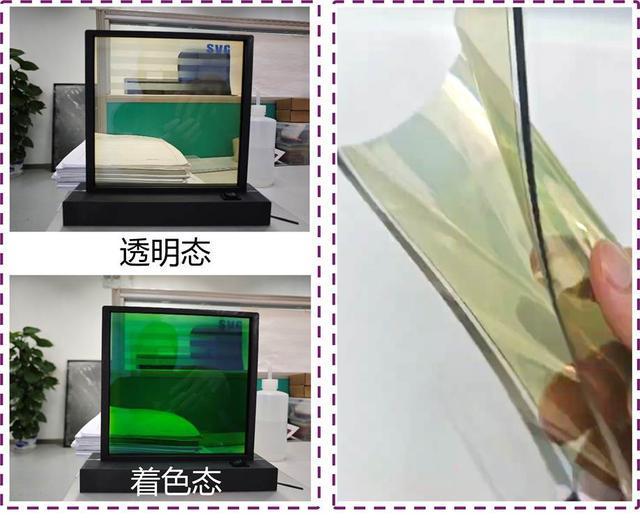
苏州科技大学:超薄三层架构电致变色调光膜问世,或将重构幕墙市场
Huan Qiu Wang Zi Xun· 2025-12-15 09:17
Core Insights - The flexible electrochromic dimming film technology developed by the Suzhou University of Science and Technology has made significant progress, addressing high manufacturing costs and complex construction processes in the electrochromic field [1][3] - The film has been successfully applied in smart curtain walls and energy-saving homes, with strategic partnerships established with several domestic companies [1][3] - The team plans to initiate market financing to promote this Chinese "smart film" in the international building energy-saving market [1] Technology and Innovation - The new technology relies on proprietary optical response materials and introduces a roll-to-roll three-layer composite structure, which simplifies the traditional five-layer structure [3] - The innovative material formulation allows for the self-synthesis of organic molecular materials, achieving a rapid response time of seconds and over 100,000 cycles of lifespan [3] - The three-layer device structure consists of a flexible substrate, an intelligent response layer, and a transparent conductor, paving the way for large-scale glass curtain wall renovations [3] Market Potential - There is a global demand for building energy efficiency, with hundreds of billions of square meters of traditional curtain walls needing upgrades [3] - The product is expected to enter a phase of large-scale production, with plans to expand the team and push the product into overseas markets [3]

AI眼镜电致变色专家会
2025-09-01 02:01
Summary of Key Points from the Conference Call Industry Overview - The conference focuses on the AI glasses industry, specifically the application of electrochromic (EC) technology in smart glasses, highlighting its advantages over photochromic technology in terms of control and intelligence [1][4][5]. Core Insights and Arguments - **Electrochromic Technology**: EC technology is favored for AR glasses due to its low power consumption, continuous adjustment, material stability, and long lifespan, despite its higher cost [1][5]. - **Market Adoption**: Xiaomi's AI glasses are expected to ship 400,000 units in 2025, with 30% featuring the electrochromic function. The shipment is projected to double to 1 million units in 2026, maintaining the same percentage for the electrochromic version [9][8]. - **Cost Structure**: The cost of the EC film is currently around $50, with expectations to drop to $30-$35 as production scales up and additional suppliers are introduced [2][24]. - **Meta's Product Launch**: Meta plans to release the "Super Nova" AR glasses with electrochromic functionality in September 2025, targeting a shipment of 200,000 units in Q4 2025 [10][13]. The overall shipment is expected to double to 10 million units in 2026 [11]. - **Supplier Strategy**: Both Xiaomi and Meta are exploring partnerships with non-listed companies for their electrochromic solutions, which may offer advantages in early customer engagement and specialized technology [25]. Additional Important Content - **Technical Differences**: The conference discusses the differences between electrochromic and photochromic technologies, emphasizing that electrochromic technology allows for active control of color changes, making it more suitable for smart glasses [3][4]. - **Future Trends**: The electrochromic technology is anticipated to become a trend in higher-end glasses priced around $300-$400, as these products can absorb the premium associated with the technology [23]. - **Competitive Landscape**: The AR glasses market is expected to remain stable in the next two years, with limited suppliers currently offering products with electrochromic features [28]. - **Huawei's Plans**: Huawei is set to release a smart glasses model in August 2026, which will utilize a similar technology route as competitors but with a cost reduction of 10%-15% due to local suppliers [30][31]. This summary encapsulates the key points discussed in the conference call, providing insights into the current state and future outlook of the AI glasses industry, particularly focusing on electrochromic technology.


智能光学材料“上车”:光羿科技柔性EC玻璃搭载小米YU7
Jing Ji Guan Cha Bao· 2025-06-28 01:38
Group 1 - Xiaomi's first mid-to-large SUV, YU7, features a large smart dimming canopy, highlighting the application of advanced optical materials in automotive design [1] - The core technology supplier for this feature is Guangyi Technology, which provides next-generation electrochromic (EC) smart glass with a shading rate of 99.85% and blocks 99.9% of UV and infrared rays [1] - Guangyi Technology, founded in 2017, is the only company globally capable of mass-producing EC smart glass, with its products already used in over 20 mass-produced vehicle models from brands like NIO, Zeekr, Audi, BYD, and Avita [1] Group 2 - Beyond automotive applications, Guangyi is expanding into building facades and consumer electronics, with its architectural products implemented in multiple green low-carbon demonstration projects in Shanghai and Zhejiang [2] - The company has established a complete technological closed loop from automotive-grade technology to mass production and system integration, positioning itself as a representative enterprise in China for breakthroughs in this field [2] - The industry anticipates that smart dimming glass will expand from automotive applications to aerospace, architecture, and consumer electronics over the next five years, driven by user experience and the demand for differentiated smart cockpits from automakers [2]