
小米YU7

Search documents
8点1氪丨全国猪价跌破5元创历史新低;雀巢12吨巧克力被盗;起诉小米汽车的“老头乐”企业致歉
3 6 Ke· 2026-03-30 00:00
Group 1 - The average price of lean pork in China has dropped to 9.71 yuan per kilogram, marking a historical low [1] - The price of lean pork has been declining for seven consecutive weeks, with the current price index reaching a new low since 2024 [2] - Historical data indicates that domestic pork prices have previously hit around 10 yuan per kilogram in 2009, 2014, 2018, and 2021, typically following a three to four-year cycle [2] Group 2 - Nestlé reported a theft of a truck carrying 12 tons of KitKat chocolate, which was en route for distribution across Europe [2] - The truck, containing 413,793 chocolate bars, was stolen in Italy, and the company acknowledged the rising issue of cargo theft affecting businesses [2] Group 3 - Industrial and Commercial Bank of China (ICBC) has become the first bank globally to surpass 50 trillion yuan in total assets, reaching 53.48 trillion yuan [4] - ICBC's performance reflects a commitment to serving the real economy while improving operational quality and efficiency [4] Group 4 - Xiaomi's automotive subsidiary faced a patent dispute with YLR New Energy, which has since apologized and retracted its invalidation request against Xiaomi's design patents [3] - The dispute involved key design features of Xiaomi's vehicles, marking the company's first patent conflict since its automotive launch [3] Group 5 - Sony announced a price increase for its PS5 and related products, effective April 2, 2026, due to ongoing economic pressures [8] - The price of the PS5 in the U.S. will rise from $549.99 to $649.99, with similar increases for the digital version and PS5 Pro [8] Group 6 - China National Airlines reported a significant net loss of 17.70 billion yuan for the year, despite a revenue increase of 2.87% to 1714.85 billion yuan [14] - The loss was attributed to adjustments in deferred tax assets, which increased tax expenses [14] Group 7 - China Petroleum announced a net profit of 157.3 billion yuan for 2025, with total revenue of approximately 2.86 trillion yuan, and plans to distribute 45.76 billion yuan in dividends [15] - The company experienced a revenue decline of 2.5% year-on-year [15] Group 8 - Transsion Holdings reported a net profit of 2.581 billion yuan for 2025, a decrease of 53.49% year-on-year, with a revenue drop of 4.55% to 65.591 billion yuan [15] - The company plans to distribute a cash dividend of 9.00 yuan per 10 shares [15]

小米、比亚迪、文远知行发布2025年财报!小鹏汽车改名小鹏集团!零跑A10、莲花FOR ME、铂智7上市!与众08、问界M6开启预售!丨一周大事件
电动车公社· 2026-03-29 16:06
New Car Launches - Toyota's Platinum 7 launched with a price range of 169,800 to 229,800 yuan [2] - Lotus FOR ME launched with a price range of 508,000 to 558,000 yuan [12] - Xiaopeng P7 Max version launched with a price range of 203,800 to 301,800 yuan [4] - Leap A10 launched with a price range of 65,800 to 86,800 yuan [5] - BYD Song Ultra EV launched with a price range of 151,900 to 179,900 yuan [36] - New Tengshi D9 pre-sale started with a price range of 389,800 to 489,800 yuan [7] - Aito M6 pre-sale started with a price range of 269,800 to 309,800 yuan [9] - Zhiji LS8 pre-sale started with a price range of 259,800 to 309,800 yuan [10] - With You 08 pre-sale started with a price range of 239,900 to 299,900 yuan [12] - FAW Audi A6L e-tron pre-sale started with a price range of 313,000 to 443,000 yuan [12] - Chery Wind Cloud T9L pre-sale started with a price range of 139,900 to 169,900 yuan [13] Company Developments - Xiaomi's automotive business revenue exceeded 100 billion yuan for the first time [102] - FREELANDER brand officially announced by Chery and Jaguar Land Rover [105] - WeRide projected revenue of 690 million yuan for 2025, a 123% year-on-year increase [108] - Xiaopeng Motors rebranded as Xiaopeng Group [111] - Changan Automobile's Brazil factory officially commenced production [114] - BYD reported 2025 revenue of 804 billion yuan, a 3.46% year-on-year increase [117]





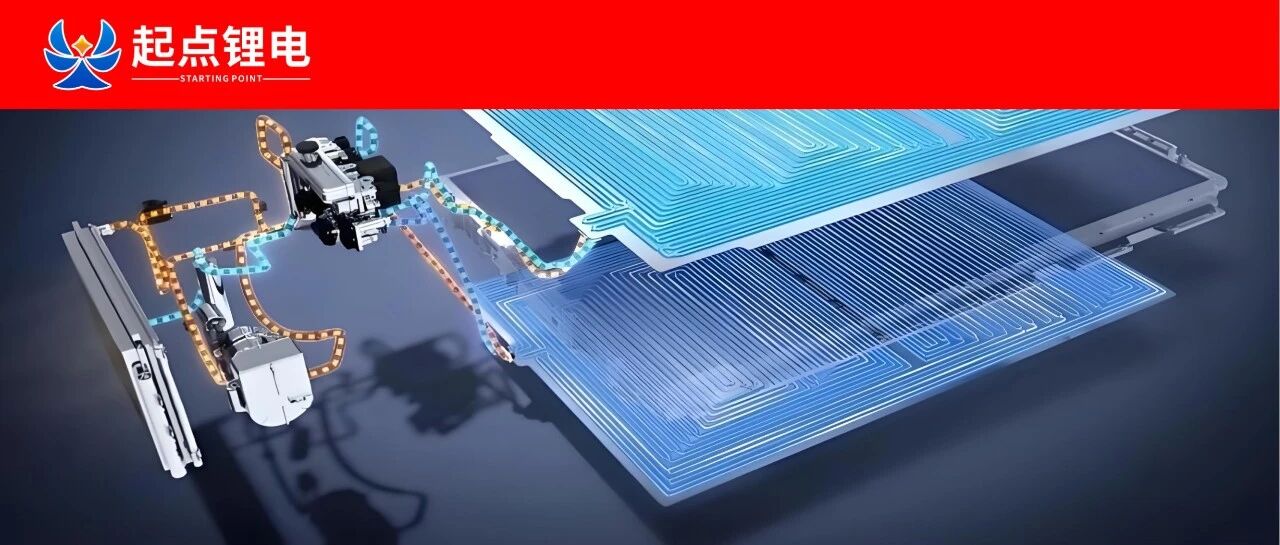
小米成比亚迪电池外供第一大客户!
起点锂电· 2026-03-26 05:33
Core Viewpoint - The article discusses the growth and strategic partnerships of BYD in the battery supply chain, particularly focusing on its collaboration with Xiaomi and the expansion of its production capacity in the context of the electric vehicle market. Group 1: BYD's Battery Supply and Market Position - BYD's domestic power battery installation totaled 11.9 GWh in January-February 2026, capturing approximately 17% market share, second only to CATL [3] - Among the installations, self-supply accounted for about 58.5%, while external supply reached 4.95 GWh, representing 41.5%, indicating a growing trend in external supply [4] - Xiaomi has become BYD's largest external customer, with a total installation volume of 2.1 GWh in early 2026, accounting for 17.6% of BYD's external supply [8] Group 2: Xiaomi's Automotive Growth - Xiaomi's automotive division delivered 411,000 vehicles in 2025, a 200.4% year-on-year increase, with revenue surpassing 100 billion yuan [9] - The Xiaomi SU7 model became the best-selling car in the 200,000 yuan segment in China, contributing significantly to the sales growth [9] - As of February 2026, Xiaomi's electric vehicle sales exceeded 600,000 units, with a strong monthly sales performance [9] Group 3: Production Capacity Expansion - BYD plans to increase its total battery production capacity to 810 GWh by 2026, with an additional 155-269 GWh expected [11] - The company is actively expanding its production facilities, including a new battery production base in Vietnam with a planned capacity of 6 GWh [14] - BYD's new production base in Shaanxi is set to achieve a capacity of 16 GWh, sufficient to support approximately 70,000 new energy vehicles [12][14] Group 4: Supply Chain Developments - BYD has established strategic partnerships for key materials, including lithium iron phosphate and electrolytes, to secure its supply chain [16] - Agreements with various suppliers ensure a steady supply of critical battery components, enhancing BYD's production capabilities [16] - The company has also launched the second-generation blade battery and fast-charging technology, marking a significant advancement in charging efficiency [17]

小米新款SU7发布,这次门口挤满了友商
远川研究所· 2026-03-22 13:12
Core Viewpoint - The article discusses the launch of the new Xiaomi SU7, highlighting its strategic positioning in the electric vehicle market, particularly focusing on performance and design differentiation in a competitive landscape [5][6][9]. Group 1: Product Launch and Market Positioning - The new Xiaomi SU7 is seen as a late but significant entry into the electric vehicle market, with a slight price increase of 4,000 yuan compared to its predecessor [5]. - The first-generation SU7 achieved impressive sales of 381,000 units from its launch in March 2024 until its discontinuation in February 2025, showcasing strong demand for a new car brand [5]. - Xiaomi's approach to the SU7 emphasizes a unique design that resembles traditional luxury fuel vehicles, with a focus on performance and comfort [6][7][11]. Group 2: Market Trends and Consumer Preferences - The article notes a shift in consumer preferences towards electric vehicles that resemble traditional fuel cars, with the penetration rate of new energy vehicles in China reaching 47.6% by 2024 [11][13]. - The market for non-family users has expanded, with their share in the automotive market increasing from 10% to 22% between 2014 and 2023, indicating a growing demand for personalized and performance-oriented vehicles [13][15]. - The SU7 targets younger consumers who prefer performance-oriented vehicles, providing an electric alternative to traditional high-performance brands like BMW and AMG [15][16]. Group 3: Strategic Insights and Marketing - Xiaomi's strategy involves significant investment in performance-related components, establishing a brand image centered around high performance and unique design [23]. - The company leverages its existing brand recognition to enhance market penetration, utilizing effective marketing strategies to communicate its brand identity and product offerings [24]. - The article emphasizes that while performance is a key selling point, consumer decisions are ultimately influenced by design and comfort features, which Xiaomi has prioritized in its marketing [17][25].

华为新车上市,要复刻小米爆款剧本
21世纪经济报道· 2026-03-21 08:26
Core Viewpoint - The article discusses the evolution of automotive culture and the emergence of new players like Xiaomi and Huawei in the electric vehicle market, emphasizing their focus on emotional value and user experience in their product offerings [4][9][13]. Group 1: Xiaomi's Success - Xiaomi's SU7 achieved over 88,898 pre-orders within 24 hours of its launch, setting a record for new car launches in China [5]. - The YU7 model also saw significant success, with 240,000 effective orders within 18 hours of its release [5]. - Xiaomi's branding emphasizes a spirit of "not settling for mediocrity," targeting users who aspire for a better lifestyle [9]. Group 2: Huawei's Entry - Huawei's new brand, Qian Kun, aims to create a "Dream Car" that resonates with young users, focusing on aesthetics, control, and emotional value [7][9]. - The GT7 model emphasizes a balance between stability and flair, appealing to users who desire both practicality and individuality [9][10]. - Huawei's approach includes extensive market research to understand user preferences, aiming to avoid compromises in design and functionality [9][10]. Group 3: Design and Aesthetics - Both Xiaomi and Huawei prioritize aesthetics in their vehicle designs, with Xiaomi's SU7 featuring nine color options and a focus on long-lasting paint quality [10][11]. - The GT7 from Huawei draws inspiration from travel destinations for its color palette, utilizing high-quality materials typically reserved for luxury vehicles [10][12]. - The design philosophy for both brands includes a low stance for a sporty appearance, with engineering efforts to achieve this without sacrificing interior space [11][12]. Group 4: Technology and Innovation - Huawei's GT7 will incorporate advanced technologies such as the latest generation of laser radar and intelligent driving systems, focusing on enhancing user experience rather than just technical specifications [13][16]. - The vehicle will also feature innovative lighting systems that convey emotional messages, further emphasizing the importance of emotional value in automotive design [16]. - Both companies are leveraging their existing technological expertise to enhance the driving experience, with Xiaomi focusing on performance testing and Huawei integrating its digital platform for seamless control [11][13]. Group 5: Market Positioning and Challenges - Xiaomi benefits from a strong brand loyalty established through its smartphone business, which may facilitate the acceptance of its automotive products [17]. - Huawei faces challenges in building brand recognition for its new automotive venture, as it is relatively new compared to its established smartphone and technology products [17][20]. - The competition between Huawei's Qian Kun and other emerging brands like Shangjie highlights the need for differentiation in a crowded market [18][20].
汽车早餐 | 国家发改委推出新一批重大外资项目;吉利汽车2025年核心归母净利润同比增36%;奇瑞汽车2025年营收超3000亿元
Zhong Guo Qi Che Bao Wang· 2026-03-19 01:50
Group 1: Domestic News - The National Development and Reform Commission has launched a new batch of 13 major foreign investment projects with a planned investment of $13.4 billion, focusing on manufacturing sectors such as electronics, chemicals, automotive, and electrical machinery [2] - Shanghai has recognized 30 new regional headquarters of multinational companies and 15 foreign research and development centers, primarily in key industries like biomedicine, integrated circuits, high-end equipment, automotive, and fashion consumer goods [3] - Chongqing has established the first mandatory insurance mechanism for low-altitude economy, providing risk coverage of 42.6 million yuan for 194 drones operated by Aerospace Technology Group [4] Group 2: Automotive Industry - The China Passenger Car Association reported that from March 1 to 15, retail sales of passenger cars in China reached 561,000 units, a year-on-year decline of 21%, while retail sales of new energy vehicles during the same period were 285,000 units, down 28% year-on-year [5] - Chery Automobile announced a total revenue of 300.29 billion yuan for 2025, with a year-on-year growth of 11.3% and a net profit of 19.51 billion yuan, reflecting a net profit margin increase from 5.3% to 6.5% [12] - Geely Automobile reported a total revenue of 345.2 billion yuan for 2025, a year-on-year increase of 25%, with a core net profit of 14.41 billion yuan, marking a 36% growth [13] - Zotye Automobile's wholly-owned subsidiary, Zhejiang Shenkang Automotive Body Mould Co., has resumed production, although the company faces significant financial pressure and uncertainty regarding the full recovery of its vehicle business [11] Group 3: Technology and Innovation - Xiaomi's ultra-strong steel, with a strength of 2200 MPa, has won the "Science and Technology Innovation Achievement First Prize" from the China Association for the Promotion of Industry-Academia-Research Cooperation, and is now in mass production for new models [14] - GAC Toyota has initiated its first large-scale OTA upgrade for the Platinum 3X model, available for all owners free of charge [15] - The new automotive brand AISTALAND, created by Huawei and GAC, was officially announced, emphasizing the integration of AI in automotive travel [16]



2月终端销量榜 | 新能源汽车高端化趋势明显
数说新能源· 2026-03-17 02:31
Overall Situation - In February 2026, China's passenger car terminal sales reached 1.123 million units, a month-on-month decrease of 35.3% [2] - Total sales of new energy passenger vehicles were 431,000 units, down 31.3% month-on-month [2] - Breakdown of new energy vehicle sales: pure electric vehicles (EVs) sold 262,000 units (down 32.1%), plug-in hybrid vehicles (PHEVs) sold 112,100 units (down 25.6%), and range-extended vehicles sold 47,300 units (down 43.6%) [2] - The penetration rate of new energy vehicles in the passenger car market was 38.4%, slightly up from 36.3% the previous month [2] Market Overview - The passenger car market showed differentiated growth due to the impact of the Spring Festival, with overall performance of new energy vehicles being average [4] - Factors such as the reduction of purchase tax incentives and the phasing out of trade-in policies have led to lower consumer purchasing intentions [4] - The high-end new energy vehicle segment saw an increase, with C-class passenger vehicles accounting for 59% of the market, indicating a trend towards higher quality development in the car market [4] - Predictions for March 2026 suggest a recovery in market demand, driven by new vehicle launches from companies like Xiaomi and Li Auto, alongside the upcoming Beijing Auto Show [4] Brand Rankings - The top-selling pure electric models in February 2026 included Xiaomi YU7 (20,000 units), Tesla Model Y (18,000 units), and Li Auto i6 (16,000 units) [8] - The leading plug-in hybrid models were the Ti7 (111,000 units), BYD Song Pro (93,000 units), and BYD Zhao PLUS (53,000 units) [9]

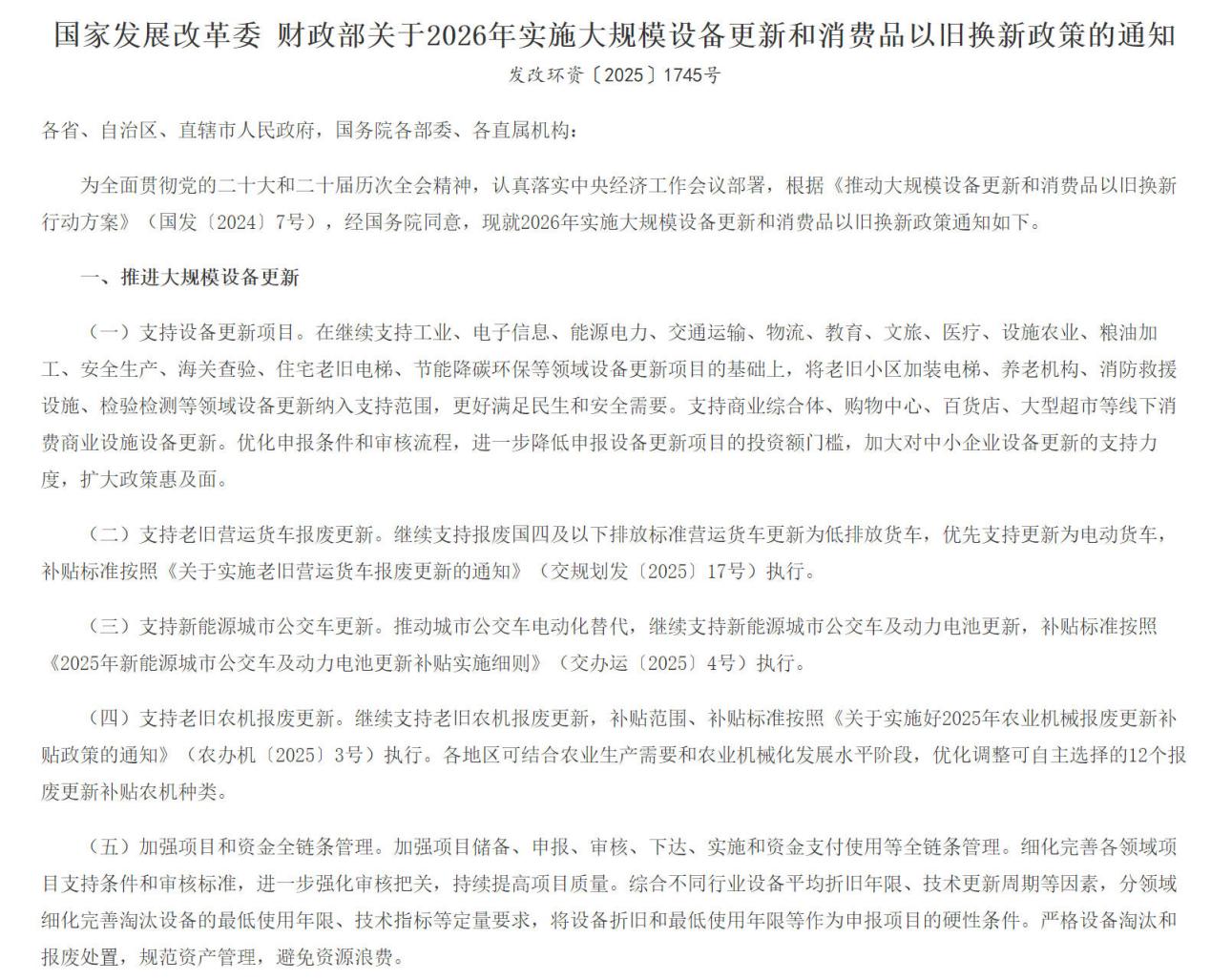
2026国补新政启幕 比亚迪、零跑等车企推出专属购车福利
Zhong Guo Zhi Liang Xin Wen Wang· 2026-03-12 04:35
Core Viewpoint - The 2026 national automotive subsidy policy has been fully implemented, marking a shift towards "precise regulation and quality improvement" to stimulate automotive consumption and promote industry upgrades [1] Group 1: Subsidy Structure - The most significant change in the 2026 automotive subsidy policy is the transition from a fixed amount subsidy model to a proportional subsidy model linked to the new car price, divided into scrapping and replacement categories [2] - The national subsidy standard will be uniformly executed throughout the year 2026, limited to individual consumers, with a cap of one subsidy per person per year, and scrapping and replacement subsidies cannot be combined [2] Group 2: Specific Subsidy Details - For scrapping subsidies, consumers can receive 12% of the new car price (up to 20,000 yuan) for purchasing eligible new energy vehicles after scrapping old vehicles registered before specified dates [5] - For replacement subsidies, consumers can receive 8% of the new car price (up to 15,000 yuan) for purchasing eligible new energy vehicles after transferring old vehicles [5] - Additional benefits include a 50% reduction in purchase tax for eligible new energy vehicles (up to 15,000 yuan) and exemptions from vehicle and vessel tax for compliant new energy vehicles [5] Group 3: Consumer Eligibility and Application - Consumers must meet specific criteria for their old vehicles and new purchases to qualify for the subsidies, ensuring clarity and reducing potential misuse of funds [8] Group 4: Industry Response - Major automotive companies are launching complementary subsidy policies that enhance the national subsidy, creating a favorable consumption environment and stimulating the automotive market [9] - Companies like BYD, Tesla, and Geely are offering additional cash subsidies, low-interest financing options, and promotional events to attract consumers [11][12][14]
信达国际控股港股晨报-20260312
Xin Da Guo Ji Kong Gu· 2026-03-12 02:43
Market Overview - The Hang Seng Index (HSI) faces short-term resistance at 26,500 points, with geopolitical uncertainties causing volatility in international oil prices and potential capital outflows from Asian markets [2] - The Chinese government has slightly lowered its economic growth target for the year to a range of 4.5% to 5%, aligning with expectations, while the overall economic data remains stable [2] - The HSI has formed a head-and-shoulders pattern since January, recently testing support at 25,000 points, with a short-term rebound resistance around the 50-day moving average at approximately 26,500 points [2] Sector Focus - AI Stocks: The semiconductor industry is experiencing rapid growth due to intensive upgrades in AI large models [3] - The People's Bank of China emphasizes the need for a cautious and orderly advancement of AI applications in the financial sector, aiming to enhance digital and intelligent development momentum [6] Company News - Cathay Pacific reported a 9.5% increase in profits last year, exceeding expectations [3] - Guohua Technology is set to raise up to 3.3 billion HKD through its IPO starting today [3] - Several companies, including Oriental Overseas and Li Auto, are expected to announce their earnings today [3] Economic Indicators - The U.S. Consumer Price Index (CPI) rose by 2.4% year-on-year in February, meeting expectations [7] - The U.S. fiscal deficit surpassed 1 trillion USD as of February, although it has decreased significantly compared to the previous year [7] - The International Energy Agency (IEA) member countries agreed to release 400 million barrels of oil reserves to address market disruptions caused by geopolitical tensions [8] Investment Recommendations - There are suggestions to lower the eligibility threshold for investors in the Hong Kong Stock Connect program to enhance market liquidity and attract international capital [6]




汽车早报|比亚迪加入国际汽车工作组(IATF) 特斯拉上海超级工厂2月交付同比增长91%
Xin Lang Cai Jing· 2026-03-12 00:38
Group 1: Industry Overview - In February, the sales of new energy vehicles in China reached 765,000 units, representing a year-on-year decline of 14.2% [1] - The production and sales of new energy vehicles were 694,000 units and 765,000 units respectively, with a year-on-year decrease of 21.8% and 14.2% [1] - New energy vehicles accounted for 42.4% of total new car sales in February [1] Group 2: Company Updates - BYD officially joined the International Automotive Task Force (IATF) as a new member [2] - Tesla's Shanghai Gigafactory delivered 58,600 units in February, marking a significant year-on-year increase of 91% [2] - Xiaomi's YU7 model sold 20,196 units in February, ranking among the top three in national passenger car sales [2] Group 3: Material Costs and Pricing - NIO's founder Li Bin stated that rising prices of memory and other raw materials could increase costs for high-end models by approximately 3,000 to 5,000 yuan, totaling nearly 10,000 yuan [3] - NIO currently has no plans to adjust prices despite the cost pressures [3] Group 4: Sales Performance - JAC Motors reported a sales figure of 20,300 units in February, reflecting a year-on-year decline of 24.51% [4] - Cumulatively, JAC's sales for January and February reached 55,100 units, down 11.78% compared to the same period last year [4] - Aion's i60 model has achieved cumulative sales of over 28,000 units since its launch [5] Group 5: Innovations and Patents - Xiaomi Automotive applied for a patent related to a method for determining parking spaces, which can identify parking spots even when obstructed by obstacles [6] Group 6: Recalls and Safety - BMW China announced a recall of 147,830 imported vehicles due to potential issues with the starter motor that could lead to starting difficulties and fire risks [7] - BMW will replace the affected starter motors free of charge to eliminate safety hazards [8] Group 7: Management Changes - BMW Group appointed Raymond Wittmann as the new member of the management board responsible for production, effective May 13 [9]