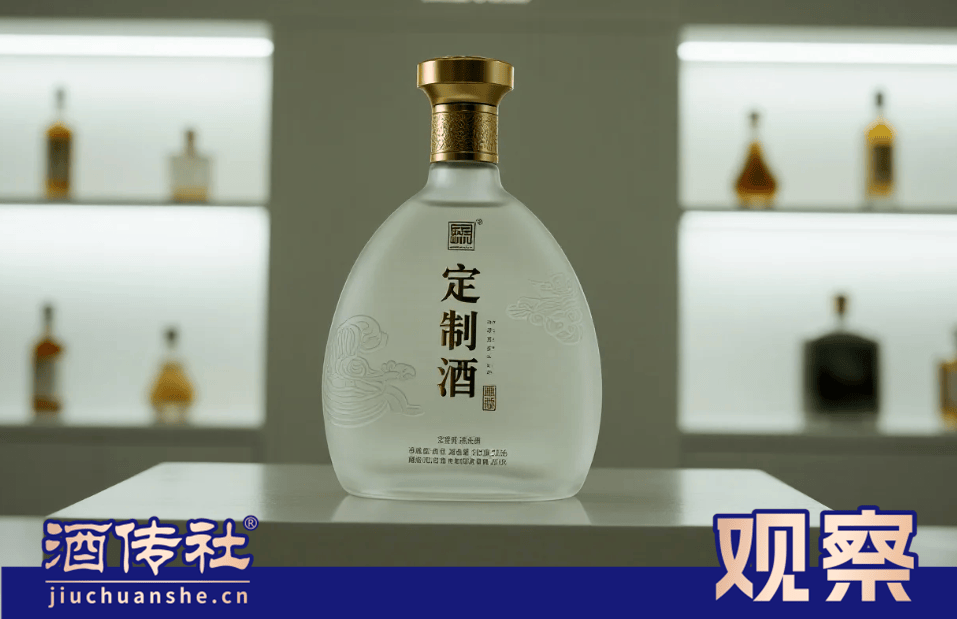
白酒定制模式变革

Search documents
白酒定制门槛骤降:从“百箱起”到“1瓶起”的行业之变!
Sou Hu Cai Jing· 2025-11-11 05:04
Core Viewpoint - The custom liquor industry is shifting from bulk production for enterprises to personalized customization for individuals, marking a significant transformation in the market dynamics [2]. Group 1: Survival Logic Behind Low-Threshold Customization - The drastic reduction in customization thresholds is a strategic response to the dual pressures of economic slowdown and high inventory levels, prompting companies to adopt flexible strategies for inventory reduction and cash flow management [3][5]. - The younger generation, now the main consumer force, seeks personalized and diverse experiences, making low-threshold customization a necessary choice for companies to meet evolving consumer demands [5][6]. - Customization has emerged as a new profit growth point for liquor companies, with some reporting that customized business accounts for over 30% of their total revenue [5][6]. Group 2: Market Status - Opportunities and Challenges - Low-threshold customization is becoming a key strategy for the liquor industry, driven by a dual model of strong supply for B-end distributors and enhanced experience for C-end consumers [7]. - Companies are adopting innovative approaches to meet diverse consumer needs, such as personalized commemorative liquor and small-scale enterprise culture liquor, while also refreshing brand images [9]. - Despite the opportunities, the market faces challenges such as quality control and the risk of low-quality competition, which could hinder healthy market development [11]. Group 3: Future Outlook - Value-Centric Customization - The future of liquor customization will expand beyond superficial aspects like bottle design to include personalized choices regarding flavor, alcohol content, and aroma, aiming for a comprehensive consumer experience [10]. - Customization will not replace standard products but will serve as a vital supplement for brands seeking to modernize and diversify their channels and profit structures [10]. - The industry will likely evolve into a more diverse and creative space, where success will depend on brands' ability to understand consumer emotions and deliver unique drinking experiences [10].