白酒行业供给侧结构性改革

Search documents
400亿分红!白酒市场信心获提振 顺价求生能否重写生存法则
Xin Hua Cai Jing· 2025-12-11 06:54
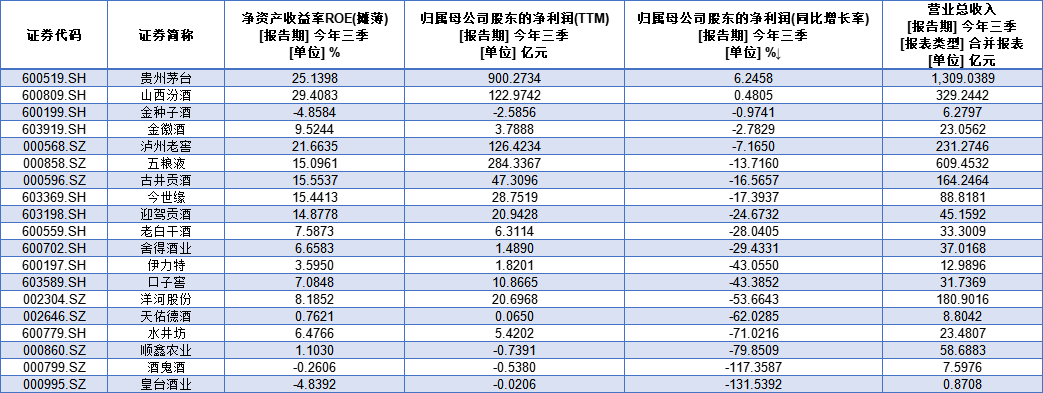
Core Viewpoint - The Chinese liquor industry is undergoing a significant value reshaping in 2025, with high-end liquor prices facing downward pressure and a structural reform in supply-side management [1][2]. Industry Overview - The liquor industry is experiencing a deep adjustment driven by fundamental changes in demand, leading to challenges such as inventory buildup, price inversions, and slowing growth indicators [2][8]. - The A-share liquor index has dropped nearly 14% this year, contrasting with the overall market's upward trend, indicating a significant decline in the once "star" sector [2]. Financial Performance - In the first three quarters of 2025, only Kweichow Moutai and Shanxi Fenjiu reported growth in net profit attributable to shareholders, highlighting the financial struggles of many liquor companies [2]. - Major liquor companies, including Kweichow Moutai and Wuliangye, announced over 40 billion yuan in dividends for the mid-2025 period, maintaining a tradition of shareholder returns despite industry challenges [2][3]. Profitability and Market Share - The six major liquor companies (Moutai, Wuliangye, Fenjiu, Yanghe, Luzhou Laojiao, and Gujing Gongjiu) collectively accounted for over 90% of the industry's total revenue and profit, showcasing their strong pricing power and risk resilience [3][4]. - The average net profit margin for these companies exceeds 20%, making them rare quality assets in the A-share market [3]. Market Dynamics - Wuliangye's recent price cuts are seen as a potential catalyst for broader market changes, aimed at reducing inventory and supporting distributors [7][9]. - The industry is in a "proactive destocking" phase, with companies like Moutai controlling shipments to alleviate distributor inventory pressure [8][9]. Future Outlook - Analysts predict that the current industry adjustment may last until spring 2026, with a focus on maintaining channel health and promoting genuine consumption [8][10]. - The industry is expected to undergo a transformation, with a shift towards quality innovation and targeting younger demographics, as well as integrating online and offline marketing strategies [10][11].




2025年中国白酒行业发展状况与消费行为调查数据
Sou Hu Cai Jing· 2025-08-03 08:14
Group 1 - The Chinese liquor industry is undergoing significant changes, with a focus on quality over quantity as companies adapt to market conditions and consumer preferences [1][4]. - In 2024, the total production of large-scale liquor enterprises was 4.145 million kiloliters, a year-on-year decrease of 1.8%, while sales revenue and total profit increased, indicating a trend of "shrinking volume and rising profits" [1][2]. - The top six companies (CR6) accounted for 86% of the industry's total profit, highlighting the dominance of leading firms like Moutai and Wuliangye, which achieved revenue growth rates exceeding 5% [1][2]. Group 2 - By the first quarter of 2025, liquor production fell to 1.032 million kiloliters, a 7.2% year-on-year decline, marking the potential for the eighth consecutive year of production decrease [2][3]. - In the first quarter of 2025, listed companies reported revenue of 153.42 billion yuan, a modest increase of 1.7%, with net profit rising by 2.3% to 64.91 billion yuan [2][3]. - A survey indicated that 59.7% of liquor companies experienced reduced operating profits, and 50.9% reported declining revenues, primarily due to a decrease in customer numbers and average transaction values [2][3]. Group 3 - Policy adjustments have led to a structural shift in consumption scenarios, with a decline in business dining and a rise in family gatherings and weddings, prompting companies to adjust their product strategies [3][4]. - The average inventory turnover days reached 900 days, an increase of 10% year-on-year, with 60% of companies facing price inversion, particularly in the 800-1500 yuan price range [2][3]. - The younger consumer demographic (born between 1985 and 1994) is becoming a key market segment, with a shift towards high cost-performance products as the main price segment moves from 300-500 yuan to 100-300 yuan [3][4]. Group 4 - The industry is urged to focus on quality production and avoid blind expansion, with leading companies accelerating direct sales models and enhancing online sales channels [4]. - In the first five months of 2025, online sales exceeded 30 billion yuan, with 42.9% of companies reporting growth in online business [4]. - Internationally, liquor exports reached 200 million USD in the first quarter of 2025, a 30% increase year-on-year, with the Asia-Pacific region being the primary market [4].