盐穴资源再利用

Search documents
湖南31个储能电站亏损2000万,揭开了储能市场最真实的一角
3 6 Ke· 2025-08-11 03:39
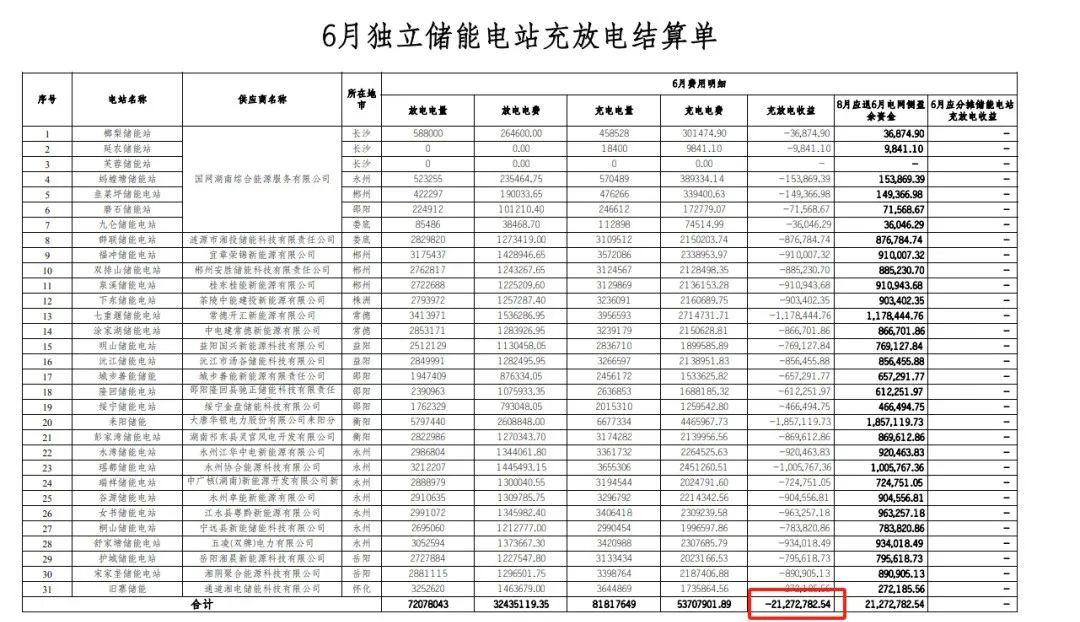
Core Viewpoint - Hunan Province, a leading region in energy storage capacity, is facing significant financial losses in its energy storage projects, raising concerns about the sustainability and profitability of the energy storage industry in China [1][2]. Group 1: Financial Performance - In June, Hunan's independent energy storage stations reported a total charging and discharging revenue of -21.27 million yuan, indicating widespread financial losses across 31 energy storage stations [1][3]. - The average charging price was approximately 0.66 yuan/kWh, while the average discharging price was only 0.45 yuan/kWh, leading to a negative price differential [7][8]. - Companies like Xue Tian Salt Industry and Hua Zi Technology have reported significant losses, with Xue Tian terminating a major energy storage project due to poor revenue expectations [5][6]. Group 2: Market Conditions - The energy storage market in Hunan is characterized by oversupply and intense competition, with low rental prices for capacity leading to reduced revenues for energy storage projects [8][9]. - The weighted average rental price for capacity in Hunan dropped from 126 yuan/kWh·year in the first half of 2023 to 60 yuan/kWh·year in 2024, reflecting a significant decline in market value [9][14]. - The rapid increase in energy storage installations has resulted in a supply surplus, with Hunan's new energy storage capacity reaching 273.3 MW by September 2024 [9]. Group 3: Industry Implications - The widespread losses in Hunan's energy storage sector serve as a warning for the national energy storage industry, highlighting the risks of over-investment and the need for regulatory intervention [11][12]. - Other provinces, such as Guangdong, are beginning to implement restrictions on new energy storage projects to prevent oversaturation in the market [12][13]. - The decline in capacity rental prices across various regions indicates a broader trend that could threaten the profitability of energy storage investments nationwide [14].


中国压气储能率先进入350兆瓦时代 90%以上盐穴资源有望盘活
Xin Lang Cai Jing· 2025-07-11 08:02
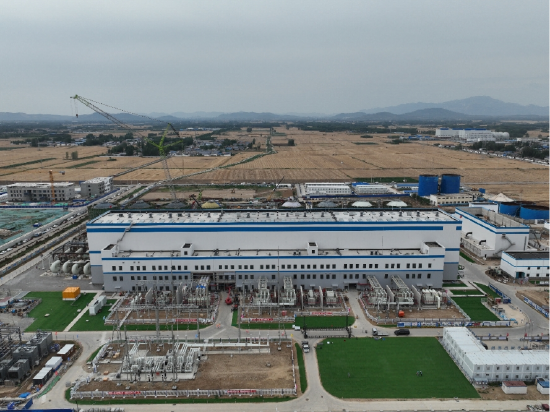
Core Insights - The "Energy Storage No. 1" project in Tai'an, Shandong, is the world's largest single-unit compressed air energy storage project, with a capacity of 350 megawatts, aiming for full capacity grid connection by the end of 2025 [1][2][5] - This project represents a significant breakthrough for China Energy Construction in the field of compressed air energy storage, showcasing both original innovation and large-scale application [2][6] - The project utilizes abandoned salt caverns for energy storage, enhancing the reliability of the regional power grid and promoting the upgrade of traditional industries [2][6] Project Details - The project has completed key milestones including construction, equipment installation, and quality inspections, and is currently in the equipment debugging phase [1] - It is designed to store energy for 8 hours and release it for 4 hours, with a potential extension to 6 hours, generating an annual output of 460 million kilowatt-hours, sufficient for over 200,000 households [1][5] - The innovative use of underground salt caverns as gas storage facilities allows for efficient energy management, particularly during peak and off-peak electricity usage [1][6] Technological Innovations - The project has achieved a breakthrough in non-combustion heating technology, eliminating the need for fossil fuels and thus preventing pollution [6][9] - It employs advanced drilling techniques to create large energy channels at depths equivalent to 300 floors, addressing challenges posed by complex geological conditions [7] - The successful implementation of this project could lead to the utilization of over 90% of China's salt cavern resources, significantly enhancing energy storage capabilities [7][8] Market Potential - The compressed air energy storage technology is gaining traction globally, with interest from international investors and energy authorities from countries like the USA, Netherlands, and South Africa [8][9] - The project aims to position China as a leader in green energy solutions, with plans to export technology and comprehensive solutions to the global market [9]