监管服务并重

Search documents
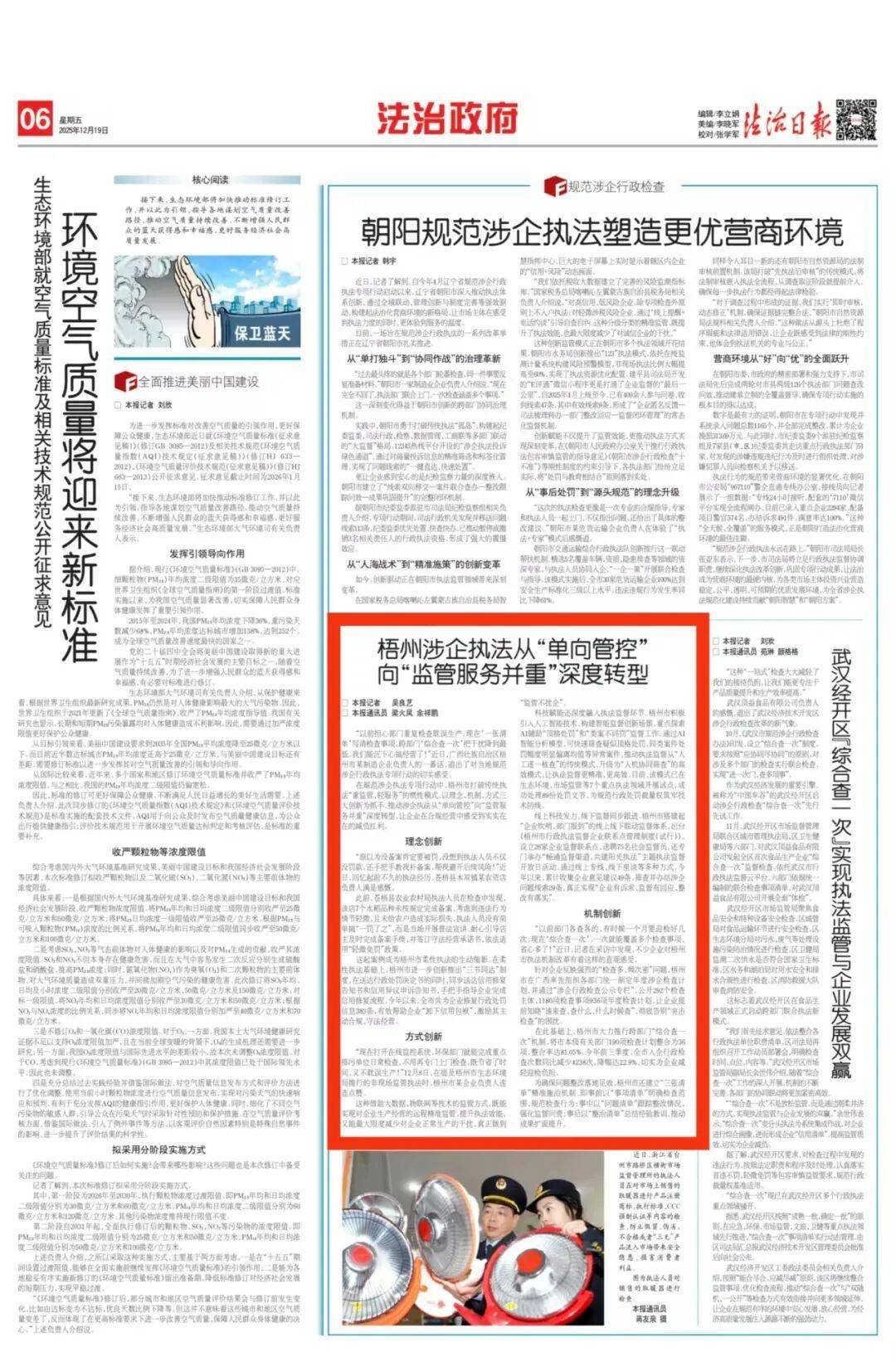
梧州涉企执法从“单向管控”向“监管服务并重”深度转型
Sou Hu Cai Jing· 2025-12-19 09:31
Group 1 - The article discusses the ongoing efforts in China to improve air quality standards and the implementation of stricter regulations to protect public health [3][4][5] - The revised air quality standards aim to reduce the annual average concentration of PM2.5 to 25 micrograms per cubic meter by 2030, with current levels in many cities exceeding this target [4][5] - The new standards will be implemented in phases, with the first phase starting in 2028 and the second phase in 2031, focusing on various pollutants including PM2.5 and nitrogen oxides [5][6] Group 2 - The article highlights the importance of public participation and transparency in the air quality improvement process, emphasizing the need for timely information dissemination regarding air quality [3][4] - It mentions the role of technology in monitoring air quality and enforcing regulations, including the use of AI for analyzing compliance and potential violations [5][6] - The article also points out the challenges faced in aligning domestic air quality standards with international benchmarks, indicating a need for further research and adjustments [5][6]