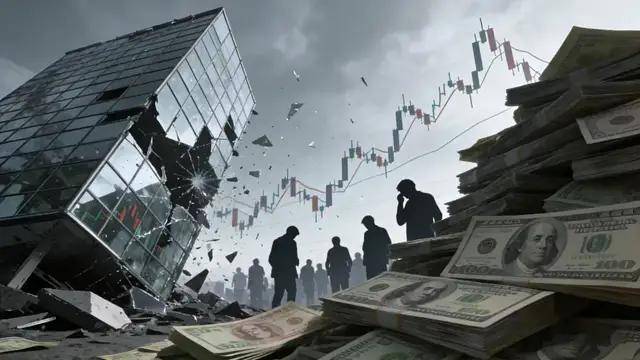
监管缺失

Search documents
李明老师解构交易的底层逻辑!怎么样在交易中稳定持续的获利
Sou Hu Cai Jing· 2026-01-20 10:05
Core Insights - The article discusses the historical context of the 2008 financial crisis and draws parallels to current financial challenges in the U.S. market, emphasizing the need for enhanced awareness to seize investment opportunities [3][8]. Group 1: Historical Context of the 2008 Financial Crisis - The 2008 financial crisis was a global financial storm rooted in a complex interplay of factors, primarily driven by a housing bubble and uncontrolled financial innovation [3]. - Low interest rates post-2000 led to a significant housing bubble in the U.S., creating a widespread illusion that housing prices would only rise [3]. - The proliferation of high-risk subprime mortgages, particularly adjustable-rate mortgages, contributed to widespread defaults as borrowers faced rising payments [4]. - Financial derivatives, such as mortgage-backed securities (MBS) and collateralized debt obligations (CDOs), were misrated by agencies, leading to a false sense of security among global investors [5]. - A lack of effective regulation in the financial sector allowed for excessive risk-taking, with various stakeholders prioritizing short-term profits over long-term stability [6]. Group 2: Crisis Trigger and Transmission - The Federal Reserve's interest rate hikes from 2004 to 2006 led to a wave of defaults among subprime borrowers, initiating a downward spiral in housing prices [7]. - The resulting "death spiral" of falling home prices and increasing defaults caused significant losses for financial institutions, leading to a freeze in interbank lending and a broader financial panic [7]. - The bankruptcy of Lehman Brothers in September 2008 marked a critical point, triggering widespread fear and a global economic downturn [7]. Group 3: Current Financial Landscape - The current U.S. financial system faces structural issues, including a fiscal crisis characterized by unsustainable debt levels and a weakening dollar [8][12]. - The federal debt has surpassed $36 trillion, with annual deficits exceeding $1 trillion, raising concerns about the long-term sustainability of U.S. fiscal policy [12]. - The recent "Tax and Spending Act" is projected to increase debt by $3.4 trillion over the next decade, exacerbating existing fiscal challenges [12]. - The dollar's status as a global reserve currency is threatened by rising debt levels and policy missteps, leading to a potential loss of confidence in U.S. financial assets [12][17]. Group 4: Market Risks and Opportunities - The U.S. stock market is heavily concentrated in a few technology stocks, raising concerns about potential valuation bubbles [13]. - Economic recession risks are heightened by policy uncertainties, with predictions of significant downturns if current trends continue [13]. - The article suggests that gold may present a viable investment opportunity amidst these challenges, with expectations of a market surge by the end of the year [16].