
盛唐文化

Search documents
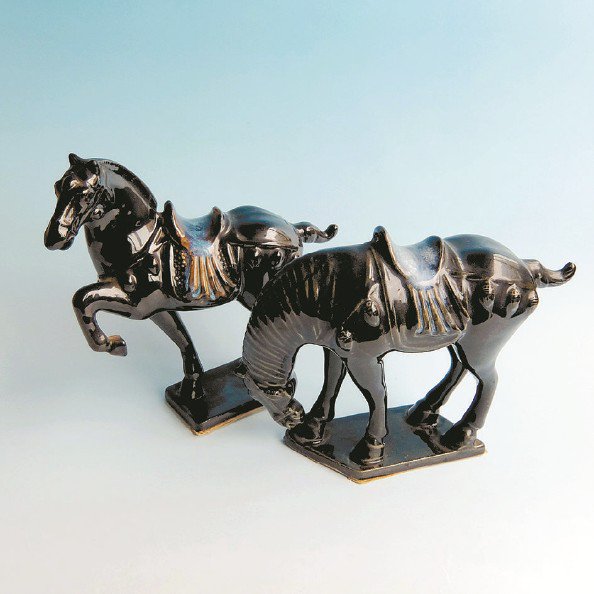
唐三彩·黑釉马
Xin Lang Cai Jing· 2026-01-17 07:28
Core Perspective - The article highlights the cultural and artistic significance of Tang Sancai black-glazed horses, emphasizing their historical context and the craftsmanship involved in their creation [2][4]. Group 1: Historical Context - Tang Sancai, originating from the Tang Dynasty, represents a peak in Chinese ceramic art, characterized by its vibrant colors and intricate designs [2][3]. - The black-glazed horses are a product of skilled artisans from Luoyang, who innovated the low-temperature multi-colored glaze technique, contributing to the legacy of Tang Sancai [2][4]. Group 2: Artistic Significance - The black-glazed horses are described as rare treasures within the Tang Sancai family, embodying strength and elegance, and reflecting the opulence of the Tang era [4]. - Each piece of Tang Sancai serves as a window into the grandeur and romance of the Tang Dynasty, showcasing lifelike figures and vibrant glazes that capture the essence of the time [3][4]. Group 3: Cultural Legacy - The craftsmanship of Tang Sancai has influenced various cultures along the Silk Road, spreading its artistic techniques to regions such as West Asia and North Africa [3]. - The enduring presence of the black-glazed horses symbolizes the importance of cultural heritage and the need for spiritual strength in facing contemporary challenges [4].

唐玄宗与音乐
Xin Lang Cai Jing· 2025-12-25 19:23
Core Viewpoint - The article explores the musical achievements and cultural significance of Emperor Xuanzong of Tang, highlighting his contributions to music and dance during the Tang Dynasty, particularly through the creation of the famous piece "Ni Chang Yu Yi Qu" (霓裳羽衣曲) and the establishment of music institutions like the Pear Garden and the Teaching Workshop [1][2][4][6]. Group 1: Musical Contributions - Emperor Xuanzong was known for his exceptional musical talent, having composed over forty new pieces, including the renowned "Ni Chang Yu Yi Qu" [2]. - His compositions were often spontaneous, showcasing his deep understanding of music theory and practice [2]. - The emperor's musical endeavors were influenced by his family background, with a strong tradition of music appreciation and performance [1]. Group 2: Cultural Institutions - The establishment of the Pear Garden and the Teaching Workshop under Xuanzong's reign played a crucial role in nurturing musical talent and promoting the arts [3][4]. - The Pear Garden was specifically designed for training musicians, while the Teaching Workshop focused on teaching popular music [3]. - Xuanzong's efforts in expanding these institutions contributed to the flourishing of Tang Dynasty's music and dance culture [4]. Group 3: Historical Context - The article discusses the impact of the An Lushan Rebellion on Xuanzong's musical legacy, noting how the chaos disrupted the cultural achievements of the era [6]. - The emotional connection between Xuanzong's music and his personal experiences, such as the loss of his beloved consort Yang Guifei, is highlighted as a significant influence on his compositions [3][6]. - The narrative also reflects on the broader implications of Xuanzong's indulgence in the arts, linking it to political consequences and societal issues [7].
透过文物看盛唐
Ren Min Ri Bao· 2025-12-10 22:30
Core Viewpoint - The documentary "Millennium Artifacts: The Great Tang Dynasty" showcases historical artifacts in high detail, emphasizing the cultural and economic prosperity of the Tang Dynasty through various artifacts and their historical significance [1][2][3] Group 1: Cultural Significance - The Tang Dynasty's charm lies in aesthetic innovation and cultural integration, with artifacts like gold and silver wares, Tang Sancai, murals, and inscriptions reflecting the era's artistic excellence [2] - The documentary highlights the exchange of craftsmanship between East and West, exemplified by a Byzantine glass bottle that traveled 6,000 kilometers to Chang'an, symbolizing cultural interactions [2] Group 2: Economic and Social Insights - Artifacts such as the "Huai Ji Silver Cake" illustrate the economic systems of the Tang Dynasty, including the transition from traditional tax methods to silver-based systems, showcasing the sophistication of the era's economy [1] - The documentary reveals the bustling commercial life in Chang'an, with over 200 industries and thousands of shops, reflecting the vibrant social atmosphere of the time [3] Group 3: Individual Contributions and Innovations - The documentary emphasizes the respect for individual value and innovation during the Tang Dynasty, showcasing the contributions of various societal roles, from nobles to craftsmen [3] - Historical figures like Xuanzang and Yi Xing are highlighted for their contributions to knowledge and technology, demonstrating the era's thirst for exploration and learning [3] Group 4: Modern Relevance - The documentary aims to activate the cultural genes of the past using modern technology and archaeology, helping contemporary audiences understand the deep roots of Chinese culture [3] - By narrating the stories behind artifacts, the documentary seeks to explore the living heritage of cultural assets, suggesting that these narratives can rejuvenate cultural appreciation in the modern era [3]