
文化遗产活态传承

Search documents
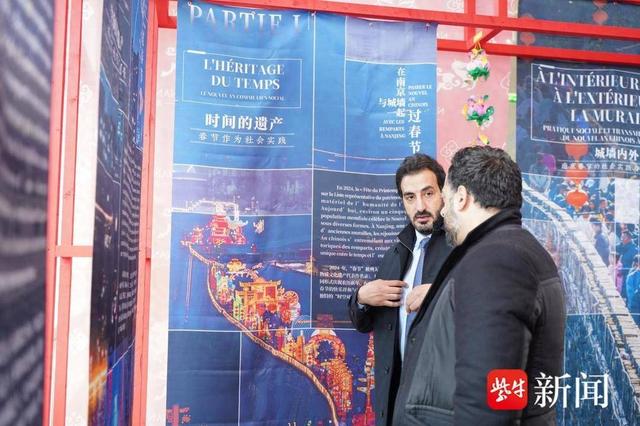
南京城墙“走进”巴黎:讲述文化遗产活态传承的中国实践
Xin Lang Cai Jing· 2026-02-14 13:30
Core Viewpoint - The "Encounter·Appreciation" Chinese Spring Festival themed event in Paris showcases Nanjing's cultural heritage, particularly its 660-year-old city wall, emphasizing its integration into contemporary life and global dialogue [1][14]. Group 1: Exhibition Highlights - The exhibition "Inside and Outside the City Wall: Social Practices and Living Heritage of Nanjing Spring Festival" creatively combines tangible and intangible cultural heritage, illustrating how the ancient city wall integrates into modern community celebrations [1]. - The display of the "Grain Returns to Warehouse" brick recycling project highlights community involvement, showcasing the collection of nearly 600,000 scattered bricks over a decade, which won a UNESCO award for innovative heritage education [1]. - An interactive experience area allows participants to create imprints of ancient bricks, connecting them with historical craftsmanship and cultural narratives, enhancing the understanding of Chinese culture [4]. Group 2: International Cultural Exchange - Nanjing's city wall has developed a multi-layered international cultural exchange network, moving beyond simple exhibitions to include heritage cooperation and multi-city platforms [9]. - Partnerships with similar heritage sites, such as Germany's King Rock Fortress, have been established, facilitating deep exchanges and collaborative exhibitions [9]. - Nanjing shares its urban wisdom in heritage protection through international dialogues, enhancing its global reputation as a model for community participation in heritage conservation [9][11]. Group 3: Youth Engagement and Innovation - The "Common Heritage, Common World" global youth co-creation project engages students from China, Italy, and Egypt, resulting in innovative design proposals for the city wall that emphasize inclusivity and technological imagination [13]. - Local initiatives like the "City Wall Guardians" volunteer program and forums encourage youth involvement in heritage protection, blending international collaboration with local practices [13]. - This combination of global youth creativity and local engagement is revitalizing the ancient city wall, ensuring its ongoing relevance and vitality [13].

在福建泉州,过一场非遗中国年(神州看点)
Ren Min Ri Bao· 2026-02-11 23:27
Core Viewpoint - The article highlights the vibrant cultural and culinary celebrations in Quanzhou during the Spring Festival, showcasing its recognition as a "World Food City" and the integration of historical heritage with modern festivities [1][5]. Group 1: Cultural Events - Quanzhou is hosting various cultural events during the Spring Festival, including a light show titled "Song Bridge Reflects the Year," which aims to bring historical heritage to life through modern artistic expressions [1]. - The "Ancient Bridge Echoes: New Year Music Concert" features a blend of traditional and contemporary music, showcasing local talent and creating a festive atmosphere for both residents and visitors [2]. - Over 280 themed street performances will take place across 40 landmark areas, emphasizing the significance of street culture in Quanzhou's collective memory [2]. Group 2: Culinary Highlights - Quanzhou's designation as a "World Food City" is celebrated through a vibrant food market, where local delicacies evoke nostalgia and cultural identity [3][4]. - Traditional dishes such as "Qun Tiao" and "Ginger Duck" are highlighted, reflecting the region's culinary diversity and the importance of food in family gatherings during the New Year [4]. - The article emphasizes that food serves as a medium for cultural fusion and community bonding, illustrating how culinary traditions are integral to the local identity [5].
400年“西天梵境”将恢复全貌
Xin Lang Cai Jing· 2026-01-22 06:51
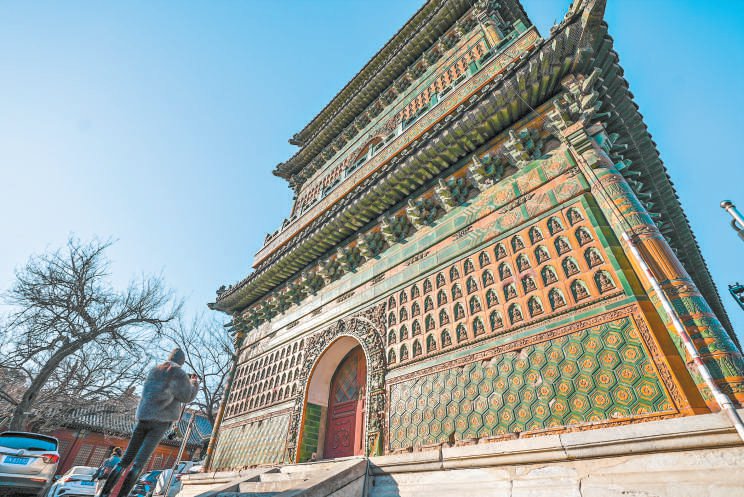
Core Points - The signing of the transfer agreement for the Liuli Pavilion courtyard marks the return of this historical site to Beihai Park after over 70 years, restoring the complete appearance of the "Western Paradise" which has a history of over 400 years [1][2] - The Liuli Pavilion courtyard, built in 1759 during the Qianlong era, is a key part of the architectural complex in Beihai Park, showcasing exemplary mid-Qing royal garden architecture [1] - The pavilion features 1,424 glazed figures of the Infinite Life Buddha, making it a rare example of Qing dynasty official glazed architecture, and the Seven Buddha Pagoda Pavilion contains inscriptions that highlight ancient Chinese architectural skills [1] Industry and Policy Context - The transfer of the Liuli Pavilion to Beihai Park is a significant achievement in the second batch of cultural relics transfer and protection projects in the core functional area of the capital, aligning with the implementation of the Beijing Urban Master Plan (2016-2035) [2] - The Beijing Municipal Bureau of Cultural Heritage aims to enhance overall protection of the old city and collaborate with the Municipal Bureau of Landscape and Forestry to facilitate the early public opening of the Liuli Pavilion courtyard, promoting the living heritage of cultural assets [2]
透过文物看盛唐
Ren Min Ri Bao· 2025-12-10 22:30
Core Viewpoint - The documentary "Millennium Artifacts: The Great Tang Dynasty" showcases historical artifacts in high detail, emphasizing the cultural and economic prosperity of the Tang Dynasty through various artifacts and their historical significance [1][2][3] Group 1: Cultural Significance - The Tang Dynasty's charm lies in aesthetic innovation and cultural integration, with artifacts like gold and silver wares, Tang Sancai, murals, and inscriptions reflecting the era's artistic excellence [2] - The documentary highlights the exchange of craftsmanship between East and West, exemplified by a Byzantine glass bottle that traveled 6,000 kilometers to Chang'an, symbolizing cultural interactions [2] Group 2: Economic and Social Insights - Artifacts such as the "Huai Ji Silver Cake" illustrate the economic systems of the Tang Dynasty, including the transition from traditional tax methods to silver-based systems, showcasing the sophistication of the era's economy [1] - The documentary reveals the bustling commercial life in Chang'an, with over 200 industries and thousands of shops, reflecting the vibrant social atmosphere of the time [3] Group 3: Individual Contributions and Innovations - The documentary emphasizes the respect for individual value and innovation during the Tang Dynasty, showcasing the contributions of various societal roles, from nobles to craftsmen [3] - Historical figures like Xuanzang and Yi Xing are highlighted for their contributions to knowledge and technology, demonstrating the era's thirst for exploration and learning [3] Group 4: Modern Relevance - The documentary aims to activate the cultural genes of the past using modern technology and archaeology, helping contemporary audiences understand the deep roots of Chinese culture [3] - By narrating the stories behind artifacts, the documentary seeks to explore the living heritage of cultural assets, suggesting that these narratives can rejuvenate cultural appreciation in the modern era [3]
让文化遗产“活”在社区里(传承之光)
Ren Min Ri Bao· 2025-11-11 00:56
Core Viewpoint - The article emphasizes the importance of community involvement in the protection and development of cultural heritage, highlighting that sustainable development can be achieved when residents transition from "bystanders" to "co-builders" of cultural heritage [1][2]. Group 1: Community Engagement - The Liangzhu Cultural Village has fostered a sense of community by creating a "villagers' convention" in 2011, which includes 26 civilized agreements, enhancing residents' spiritual identity [2]. - The Liangzhu Ancient City site park has actively promoted community co-creation, with nearly 60 community-led activities during the 2025 "Liangzhu Autumn Festival" [2]. - An innovative deliberation mechanism called the "Sunshine Deliberation Group" has been established, achieving a problem-solving rate of over 95% through online and offline discussions [2]. Group 2: Innovative Protection Mechanisms - A balanced approach to protection and living conditions has been implemented, including a "classified and batch centralized application" mechanism for housing plans, ensuring both site safety and residents' housing needs [2]. - The "flying land" model has been introduced, allowing for development outside the protection zone to alleviate pressure on the heritage site while promoting economic growth [2]. - A multi-party governance system has been established, integrating community, property management, and residents' committees to enhance resource coordination and community services [2]. Group 3: Cultural and Economic Integration - The Liangzhu site management area focuses on transforming cultural resources into economic development, launching the "Liangzhu MEI" lifestyle aesthetics project, which has developed over 600 cultural products with projected sales of 270 million yuan in 2024 [3]. - The establishment of the Liangzhu Cultural Corridor has attracted over 1,000 enterprises, particularly in digital content and animation, contributing to rural revitalization [3]. - The integration of cultural heritage protection with community development has proven successful, transitioning from "static protection" to "dynamic inheritance" [3][5]. Group 4: Community Benefits and Cultural Identity - Cultural heritage serves as a "golden business card" for communities, enhancing cultural pride and cohesion among residents of diverse backgrounds [5]. - Heritage protection projects often lead to infrastructure upgrades and improved living conditions, creating a more livable environment for residents [5]. - Residents become active participants in heritage protection, contributing to the transmission of traditional skills and local history, which enriches archaeological research [5][6].
全球性荣誉! 兴化东罗村获世界认可
Yang Zi Wan Bao Wang· 2025-10-17 15:39
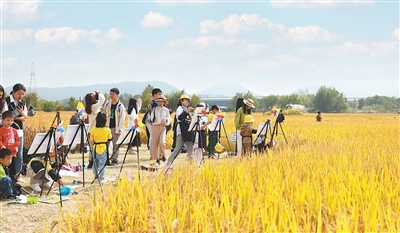
Core Points - The United Nations World Tourism Organization held an award ceremony for the "Best Tourism Villages" in Huzhou, Zhejiang Province, announcing the inclusion of four villages in the 2025 list, with Dongluo Village from Jiangsu Province being the only one from the province to receive this honor [1][4] - Dongluo Village is located in a region rich in agricultural heritage and irrigation engineering, benefiting from its unique geographical and ecological advantages, which have fostered a harmonious relationship between nature and economic development [1][3] - The village has successfully transformed its cultural and agricultural heritage into attractive tourism products, enhancing its market appeal and achieving sustainable development [2][3] Group 1 - The "Best Tourism Villages" award aims to promote cultural heritage preservation and comprehensive socio-economic development through tourism [4] - Dongluo Village has implemented a collaborative model involving government, social capital, and village collectives, which has provided sustainable internal motivation for rural development [3] - In 2024, Dongluo Village achieved a collective economic disposable income of 2.85 million yuan, a growth of 5%, and a per capita disposable income of 34,066 yuan, a growth of 8.1% [3]
科技赋能 西安城墙保护取得新成果
Zhong Guo Fa Zhan Wang· 2025-06-23 15:20
Group 1 - The core viewpoint of the articles highlights the successful integration of digital technology in the preservation of cultural heritage, specifically the Xi'an City Wall, which has been recognized for its innovative approach in safeguarding historical sites [1][2][3] - The Xi'an City Wall Management Committee's project, "Digital Empowerment Revitalizes the City Wall," was selected as a high-quality development case for cultural heritage in 2024, showcasing its effective use of digital tools to protect cultural assets [1] - The project has established a systematic and scientific preventive protection system, leveraging advanced technologies such as geological radar and AI algorithms to monitor and assess the health of the city wall [2][3] Group 2 - The digital monitoring system includes over 3,000 deformation monitoring points and 1,300 intelligent sensing devices, achieving a prediction accuracy of over 92% for structural damage trends [2] - Collaboration with local universities has led to the establishment of a joint laboratory focused on key technologies for cultural heritage protection, enhancing the overall digital protection network in the region [3] - The initiative has transformed cultural heritage protection into a public service that is perceivable, participatory, and beneficial to the community [3]