
盲盒七天无理由退换规则

Search documents
盲盒不能七天无理由退换,合法吗?
Zhong Guo Xin Wen Wang· 2026-02-25 14:05
Core Viewpoint - The article discusses the legality and consumer rights regarding the return policy of blind boxes, particularly the common practice of not allowing returns within seven days without reason, which raises questions about potential unfair terms in consumer contracts [1][8]. Group 1: Consumer Complaints and Industry Practices - Many consumers have reported issues with returning blind boxes purchased online, with merchants frequently denying refund requests [1][8]. - A significant number of online stores, including popular brands like Pop Mart and Disney, have adopted a standard policy of stating "no seven-day unconditional returns" for blind box products [5][8]. - The lack of clarity in return policies across major e-commerce platforms like Taobao and JD.com regarding blind boxes has been noted, with no specific mention of blind boxes in their return categories [6][8]. Group 2: Legal Interpretations and Consumer Rights - Legal experts suggest that the unique nature of blind boxes, which relies on the element of surprise, complicates the application of the seven-day return policy. If a blind box is opened, its core value is considered consumed, thus typically not eligible for return [9][10]. - For unopened blind boxes, there is a theoretical basis for applying the seven-day return policy, but practical enforcement is challenging due to potential methods consumers might use to identify contents before opening [9][10]. - Legal advice emphasizes that merchants must clearly inform consumers about the return policy and ensure that consumers acknowledge this policy during the purchase process [11]. Group 3: Recommendations for Consumers - Consumers are advised to avoid opening blind boxes online to maintain their rights for potential returns, and to document the condition of the packaging upon receipt [11]. - In cases where a blind box has not been opened and the product has not been shipped, consumers retain the right to request a refund unless it is a customized item [11].

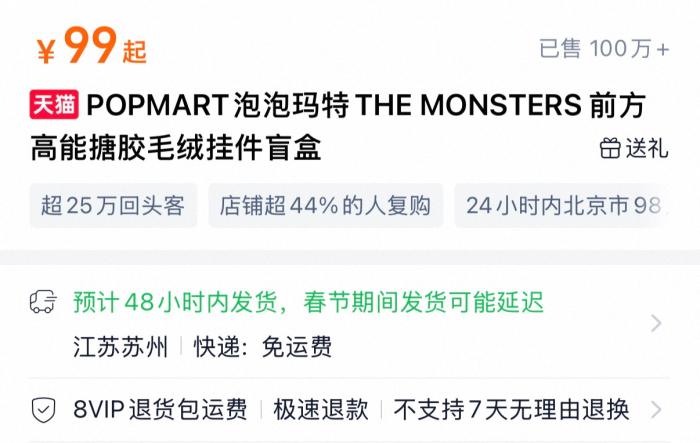
盲盒不能七天无理由退换 合法吗?
Zhong Guo Xin Wen Wang· 2026-02-25 13:59
Core Viewpoint - The rise in blind box consumption is accompanied by an increase in consumer disputes, particularly regarding the refusal of merchants to accept returns and refunds for blind box purchases, raising questions about the legality of "no return" policies [1][10]. Group 1: Consumer Complaints - Many consumers report being denied refunds for blind boxes purchased online, even when the boxes remain unopened [1][10]. - Complaints are primarily focused on three scenarios: opened blind boxes being denied returns, unopened blind boxes being refused refunds, and refund requests for orders that have not yet shipped [10]. - Consumers express concerns that the blanket "no return" policy infringes on their rights, labeling it as an unfair practice [10][12]. Group 2: Industry Practices - Major brands and platforms, including Pop Mart, Miniso, and Disney, commonly state "no returns" for blind box products, making this a standard practice in the industry [4]. - The lack of clear categorization for blind boxes in return policies on platforms like Taobao and JD indicates a gap in consumer protection [6][8]. - The unique nature of blind boxes, which relies on the element of surprise, complicates the application of standard return policies [11]. Group 3: Legal Perspectives - Legal experts suggest that the core value of blind boxes is tied to their unopened state, and once opened, they typically do not qualify for returns under consumer protection laws [11]. - For unopened blind boxes, there is a theoretical basis for applying the seven-day return policy, but practical enforcement is challenging due to potential pre-purchase knowledge of contents [11][12]. - Lawyers recommend that merchants must clearly inform consumers about return policies and ensure that consumers acknowledge these terms during purchase [13]. Group 4: Consumer Recommendations - Consumers are advised to avoid opening blind boxes online to maintain their rights to refunds and to document the condition of the packaging upon receipt [13]. - In cases where refunds are denied, consumers should escalate complaints to e-commerce platforms or regulatory authorities for resolution [13].