
盲盒

Search documents
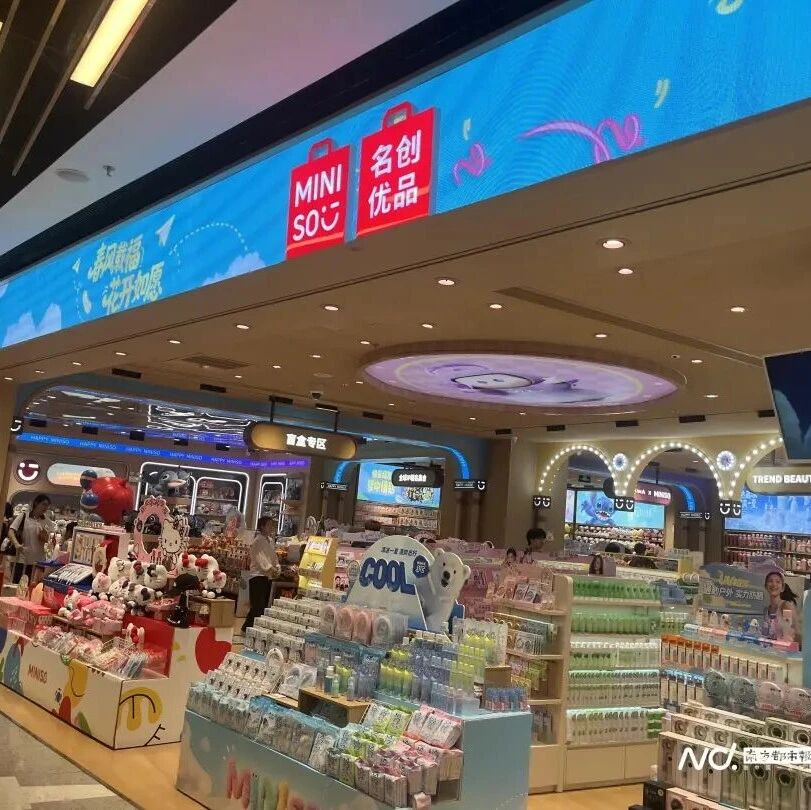
网友吐槽“不交出手机号,无法完整购物”,知名连锁店回应!店员透露,原因很无奈……
新浪财经· 2026-03-29 07:48
Core Viewpoint - Recent controversies have arisen regarding MINISO's membership policy, where customers are required to register as members to complete purchases, particularly for certain products like blind boxes [2][3][6]. Group 1: Membership Policy - MINISO has implemented a membership requirement for purchasing certain products, with reports indicating that customers must provide their phone numbers to register as members before checkout [3][4]. - Starting from December 15, 2025, MINISO will enforce a member-exclusive purchase policy for its trendy toy products across all stores and online channels [6]. - A notice at the checkout counters indicates that only MINISO members can purchase trendy toy products, with a limit of two sets per member per day to prevent scalping [6][8]. Group 2: Customer Reactions - Customers have expressed frustration over the new policy, stating that it complicates the shopping experience and discourages purchases due to the requirement to register as members [4][8]. - Some customers reported being asked for membership even when purchasing everyday items, leading to confusion about the policy's scope [5][10]. - Employees have also commented on the inconvenience of the new policy, noting that it has made the purchasing process cumbersome for customers [8][9].


泡泡玛特(09992):持续夯实IP为核心的商业框架,厚积薄发
GF SECURITIES· 2026-03-27 10:09
Investment Rating - The report maintains a "Buy" rating for the company, with a target price of 255.83 HKD per share based on a 20x PE ratio for the adjusted net profit in 2026 [7]. Core Insights - The company is focusing on solidifying its IP-centric business framework, which is expected to drive long-term growth. The core growth engines for 2025 include plush toys, store expansion, and improved store efficiency [7]. - The company achieved a total revenue of 37.1 billion HKD in 2025, representing a year-on-year growth of 185%, with a non-GAAP net profit of 13.08 billion HKD, up 285% year-on-year [7]. - The gross margin improved by 5.3 percentage points to 72.1%, primarily due to a decrease in the cost of goods sold as a percentage of revenue [7]. Financial Summary - **Revenue Forecast**: - 2024: 13.038 billion HKD - 2025: 37.12 billion HKD - 2026: 44.581 billion HKD - 2027: 52.693 billion HKD - 2028: 59.283 billion HKD - **Growth Rates**: - 2024: 106.9% - 2025: 184.7% - 2026: 20.1% - 2027: 18.2% - 2028: 12.5% [2] - **EBITDA**: - 2024: 5.017 billion HKD - 2025: 17.611 billion HKD - 2026: 20.219 billion HKD - 2027: 24.089 billion HKD - 2028: 27.839 billion HKD [2] - **Net Profit**: - 2024: 3.403 billion HKD - 2025: 13.084 billion HKD - 2026: 15.106 billion HKD - 2027: 18.116 billion HKD - 2028: 20.975 billion HKD [2] - **EPS**: - 2024: 2.54 HKD - 2025: 9.84 HKD - 2026: 11.26 HKD - 2027: 13.51 HKD - 2028: 15.64 HKD [2] - **PE Ratio**: - 2024: 32.6x - 2025: 13.5x - 2026: 11.8x - 2027: 9.8x - 2028: 8.5x [2] - **ROE**: - 2024: 30.1% - 2025: 57.7% - 2026: 59.9% - 2027: 58.1% - 2028: 55.3% [2] Business Model and Strategy - The company’s business framework is built around three dimensions: IP, products, and consumer scenarios. This framework aims to expand the monetization pathways for its IP [14]. - The company has transitioned from a single IP model to a diversified IP matrix, aiming for a global presence in the collectible toy market [18]. - The organization has undergone structural adjustments to enhance product innovation and market responsiveness, particularly in the context of its international expansion [22]. Product Development - The company has seen a significant increase in its plush toy category, which accounted for over 50% of total revenue in 2025, with a year-on-year growth of 561% [66]. - The number of new product launches in 2025 reached 415, with a focus on plush toys and a reduction in blind box offerings [25]. - The company is actively exploring new IP collaborations and product innovations to maintain its competitive edge in the market [44].

东吴证券晨会纪要-20260327
Soochow Securities· 2026-03-27 01:23
Macro Strategy - The report highlights that the recent rise in oil prices has a "U-shaped" impact on China's exports, with potential negative growth in exports if oil prices reach $100 per barrel, while a price range of $80 to $120 per barrel could lead to a 1% growth in exports [23][24]. - The analysis indicates that China's ample oil reserves and reduced dependence on external energy sources will mitigate the impact of rising oil prices compared to other economies [23]. Fixed Income - The report notes that the yield on the 10-year government bond increased from 1.8225% to 1.8365% during the week of March 16-20, 2026, reflecting market reactions to geopolitical tensions and inflation expectations [25][27]. - It suggests a shift in investment strategy from long-term holdings to short-term trading of core assets, emphasizing the need to monitor evolving market narratives [30]. - The issuance of green bonds decreased to 171.29 billion yuan, while trading volume in the secondary market increased to 704 billion yuan during the same period [31][32]. Company Analysis - China Taiping (00966.HK) reported a significant increase in net profit by 223% year-on-year, with a dividend yield of 5.8%, and maintains a "buy" rating with adjusted profit forecasts for 2026-2028 [9]. - Gu Ming (01364.HK) is recognized for its strong profit performance and rapid store expansion, leading to an upward revision of profit forecasts for 2026-2028 [10]. - Yihai International (01579.HK) is noted for its robust growth driven by third-party contributions and overseas expansion, with a focus on B-end markets [11]. - Lin Qingxuan (02657.HK) achieved a 92.9% increase in net profit, driven by online sales growth, and is projected to maintain strong growth in the coming years [12]. - Puyuan Precision (688337) met profit expectations, with core product lines showing significant growth, and maintains an "overweight" rating [14]. - Jingjin Equipment (603279) is highlighted for its long-term growth potential, despite short-term profit forecast adjustments due to market conditions [15]. - Shanghai Jahwa (600315) turned profitable in 2025, with a focus on high-growth beauty products and a commitment to double-digit revenue growth in 2026 [16]. - H&H International (01112.HK) is recognized for its long-term strategy and solid sales growth, with profit forecasts adjusted upward for 2026-2028 [17]. - Huatai Medical (688617) reported steady growth in revenue and profit, with a focus on core product promotion and market penetration [18]. - China Life (601628) showed high growth in net profit and new business value, maintaining a "buy" rating despite profit forecast adjustments [20]. - WuXi AppTec (02268.HK) continues to experience strong growth, with profit forecasts adjusted for 2026-2028 [21]. - Hutchison China MediTech (00013.HK) is expected to see steady sales growth, with an emphasis on its ATTC platform as a long-term growth driver [22].
两天重挫30%!潮玩巨头为何暴跌?已有机构提前减仓
券商中国· 2026-03-26 13:12
Core Viewpoint - The recent financial data of Pop Mart, once a favorite among young consumers for its blind box products, fell short of expectations, leading to a significant stock price drop of 30% over two trading days, and a halving from its historical peak [1][3]. Financial Performance - For the fiscal year 2025, Pop Mart reported revenues of 37.12 billion yuan, a year-on-year increase of 184.71%, and a net profit of 12.776 billion yuan, up 308.76%. However, these figures did not meet the market expectation of 38 billion yuan, raising concerns about the company's reliance on a single popular IP for growth [3]. Stock Market Reaction - Following the disappointing earnings report, Pop Mart's stock price fell over 22% on March 25, with a trading volume of 24.5 billion HKD, marking a historical high. The decline continued on March 26, with an additional drop of over 10%, bringing the total decline to over 30% in two days [3][4]. Analyst Reactions - Multiple investment banks have revised their target prices for Pop Mart. Goldman Sachs cut its earnings forecast for 2026-2027 by 18%, lowering the target price from 300 HKD to 184 HKD, while maintaining a neutral rating. Morgan Stanley reduced its revenue forecast by 4%-5% and net profit forecast by about 4%, adjusting the target price from 325 HKD to 278 HKD but kept an overweight rating [3]. Fund Manager Perspectives - Some fund managers have significantly lowered their earnings expectations for new consumer stocks, emphasizing the importance of free cash flow, risk management, and feasible dividend buyback plans. A notable decline in the number of funds holding Pop Mart shares was observed, dropping from 180 to 123 in the last quarter of 2025 [2][5]. Market Trends - The shift in consumer demographics, particularly among the "90s" and "00s" generations, is driving new consumption demands focused on personalization and social attributes. This trend is fostering the emergence of new consumer brands that are agile and capable of adapting to rapid market changes [6]. Global Expansion as a Key Variable - Analysts suggest that the underperformance in overseas growth is a significant factor in Pop Mart's stock decline. The current economic environment in China emphasizes high-quality development, making international market expansion crucial for sustaining growth. Companies that can enhance their brand value and global competitiveness are increasingly attractive [7].

对比三类公司看泡泡玛特做家电:从IP到平台的跃迁|估值叙事06
IPO早知道· 2026-03-26 01:18
Core Viewpoint - Bubble Mart is set to launch home appliance products in April 2026, expanding its business model beyond collectibles to include practical consumer goods, leveraging its existing IP and brand recognition [6][30]. Financial Performance - In 2025, Bubble Mart achieved revenue of 37.12 billion yuan, a year-on-year increase of 184.7%, with an adjusted net profit of 13.08 billion yuan, up 284.5%, and a gross margin of 72.1% [6]. - The LABUBU family contributed 14.16 billion yuan to the total revenue, accounting for approximately 38.1% [6]. - Revenue from the Chinese market was 20.85 billion yuan, up 134.6%, while the Asia-Pacific market generated 8.01 billion yuan, increasing by 157.6% [7]. Market Expansion - Bubble Mart's revenue in the Americas reached 6.81 billion yuan, a staggering increase of 748.4%, and in Europe and other regions, it was 1.45 billion yuan, up 506.3% [7][26]. - The company has over 700 global stores and more than 100 million registered members, indicating a strong market presence [8]. Industry Insights - The small appliance industry is characterized by rapid product updates and short life cycles, with companies relying on continuous new product launches to maintain consumer interest [10][11]. - The demand for small appliances is increasingly driven by emotional value and lifestyle preferences rather than just functionality, particularly among younger consumers [14][16]. Competitive Landscape - Companies like Bear Electric and Beiding Co. exemplify different business models within the small appliance sector, with Bear focusing on mid-range products and Beiding on high-margin, lifestyle-oriented offerings [12][13]. - Traditional appliance giants like Midea and Supor leverage scale and distribution efficiency, focusing on broad market coverage rather than high-margin niche products [27][29]. Future Outlook - Bubble Mart's entry into the small appliance market is seen as a strategic move to validate its ability to extend its brand into new categories, potentially transforming its revenue structure and market perception [32]. - The company's high gross margin of 72% suggests a strong pricing power, but the sustainability of this margin in the appliance sector remains to be seen [32].

沪指收复3900点,电力掀涨停,算力硬件大涨,恒科指午后大涨2%,美团涨超10%,泡泡玛特跌超15%
Sou Hu Cai Jing· 2026-03-25 07:29
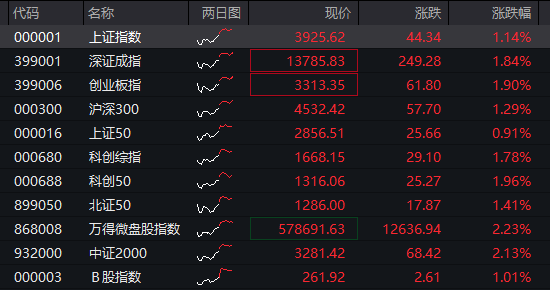
Group 1: Market Overview - A-shares experienced a surge, with the Shanghai Composite Index rising over 1% and returning above 3900 points, while the ChiNext and Shenzhen Composite Indexes approached a 2% increase [1][2] - The Hong Kong market also saw gains, with the Hang Seng Index up nearly 1% and the Hang Seng Tech Index rising 2%, driven by strong performances from tech stocks like Meituan and Alibaba [1][5] Group 2: Sector Performance - The power sector saw a significant rally, with multiple stocks hitting the daily limit up, including Huadian Liao Energy and Guangdong Power, both up 10.03% [16][14] - The computing hardware sector exploded, with companies like Aorede and Erli San hitting the daily limit up, driven by strong demand for AI computing [17][20] - The light communication sector continued its strong performance, with stocks like Tongding Interconnection and Mingpu Optical Magnet also reaching the daily limit up [17][20] Group 3: Commodity Market - In the commodity market, domestic metal futures saw an increase, while oil and fuel futures experienced significant declines, with crude oil and fuel dropping over 7% [4][22] - Silver futures rose by 9%, while platinum and palladium increased by over 7%, indicating a mixed performance across different commodities [4] Group 4: Token Economy and AI - The token economy is rapidly evolving, with the average daily token usage projected to increase from 100 billion at the beginning of 2024 to 100 trillion by the end of 2025, and it has already surpassed 140 trillion in March 2026 [19][18] - The integration of AI and token usage is accelerating, with a shift from selling capabilities to selling usage, creating a new value system around token distribution and settlement [19] Group 5: Industry Developments - The Shenzhen Municipal Bureau of Industry and Information Technology has launched an action plan to accelerate the high-quality development of the AI server industry chain, aiming for significant growth in production capacity and market share by 2028 [21] - Recent breakthroughs in optical communication technology have been achieved, including a record transmission capacity of 2.5 petabits per second over a 10.3 km single-mode fiber, highlighting advancements in the sector [21]

西部消费品牌出海专题一(美国篇):短看政策刺激地产周期,长看生意模型修复估值
Western Securities· 2026-03-11 08:24
Investment Rating - The report suggests a long-term focus on companies exporting to the U.S., particularly those with proprietary brands, indicating a potential for valuation premium under similar conditions [7]. Core Insights - The U.S. market offers significant opportunities due to its large capacity, high prices, and stable business models across various sectors, making it attractive for companies looking to expand internationally [5][6]. - The report highlights the impact of U.S. monetary policy, particularly interest rate cuts, which are expected to improve the economic outlook for related industries such as home appliances and tools [9]. - The report emphasizes the importance of companies adapting their business models from "manufacturing export" to "brand export," focusing on operational and technological advantages to enhance brand value [15]. Summary by Sections Short-term Outlook - Companies are currently facing challenges due to tariff impacts but are expected to see gradual improvement post-Q2 2026 [8]. - The anticipated rise in U.S. real estate market conditions is expected to benefit related sectors [9]. - After the currency depreciation effects are fully realized, valuations are expected to become more attractive [10]. Long-term Outlook - Companies with high dividend yields and potential for pricing power in overseas markets are recommended for long-term investment [16]. - Focus on companies leading in product/technology innovation and market share consolidation is advised [16]. Company Profiles - The report identifies several types of companies that are well-positioned for success in the U.S. market, including those with supply chain delivery barriers, channel innovation, and product/technology-driven advantages [14]. - Specific companies highlighted include: - 泉峰控股 (Qianfeng Holdings) with a projected CAGR of 21.11% from 2024 to 2027 [15]. - 创科实业 (Techtronic Industries) with a projected CAGR of 12.20% [15]. - 巨星科技 (Giant Star Technology) with a projected CAGR of 17.63% [15]. Market Opportunities - The U.S. economy's size and the openness of younger generations to Chinese brands present significant opportunities for growth [19]. - The report notes a dual opportunity in the K-shaped economy, where both inflation-sensitive and high-experience consumption segments are thriving [24]. Challenges - Tariffs imposed by the U.S. pose challenges for Chinese companies in terms of global capacity layout and cost management [34]. - The retail channel structure in the U.S. is highly concentrated, making it difficult for new entrants to penetrate mainstream channels [41][42]. - Regulatory scrutiny and political trends are increasingly affecting market access for foreign companies [49][52].



年味里的消费迁移:2026春节消费趋势报告-知萌
Sou Hu Cai Jing· 2026-02-28 00:55
Core Insights - The 2026 Spring Festival consumption market shows a clear shift from functional satisfaction to a focus on "meaning and value," with a notable increase in both rational and emotional spending [1][20] - Daily sales revenue in consumption-related industries increased by 13.7% year-on-year, with significant growth in sectors such as cultural tourism, dining, and smart green consumption [1][26] - The "old-for-new" policy benefited 27.56 million people, indicating a new growth point in the market for smart and green products [1][17] Group 1: Consumption Trends - The report identifies 12 core trends in Spring Festival consumption, reflecting deep changes in the market, including the emergence of a new "reunion economy" and the rise of the Z generation as the main decision-makers in family consumption [2][28] - Consumers are increasingly prioritizing emotional healing and satisfaction over mere functionality, with "heart-price ratio" becoming a key consideration [11][12] - Local culture is becoming a new engine for consumption, with traditional experiences and local specialties gaining popularity among younger consumers [13][14] Group 2: Service and Retail Dynamics - Service consumption has seen explosive growth, with consumers willing to pay for time-saving and immediate gratification services, indicating a shift from buying products to buying time [19][20] - Instant retail is replacing traditional bulk purchasing for the Spring Festival, aligning with rational consumption trends [2][28] - The demand for pet-related services has surged, with pets becoming integral to family celebrations, reflecting a broader trend of emotional consumption [19][20] Group 3: Policy and Economic Impact - The "old-for-new" policy has significantly impacted consumer behavior, with a total sales volume of 193.09 billion yuan generated from this initiative, particularly in the automotive sector [17][27] - The overall consumption landscape is evolving, with a focus on quality upgrades and green products, driven by consumer awareness and policy support [15][17] - The Spring Festival period has highlighted the importance of understanding new consumption paradigms, emphasizing emotional fulfillment and real value over mere traffic competition [3][20]

顶流潮玩齐亮相
Xin Lang Cai Jing· 2026-02-26 17:40
Core Viewpoint - The opening of the "SUPER MINISO" flagship store in Nanjing marks a significant expansion for the company, showcasing a diverse range of popular IP products and establishing itself as a hub for trendy toys and collectibles [1] Company Summary - The new flagship store covers nearly 1,000 square meters, making it the largest潮玩展示区 in Nanjing [1] - The store features a collection of top IPs including Zootopia, Chiikawa, and Sanrio characters, indicating a strategic focus on popular culture and consumer trends [1] - The store offers a variety of products such as blind boxes and figurines, catering to the growing demand for collectible items among consumers [1] Industry Summary - The潮玩市场 is experiencing growth, with flagship stores like "SUPER MINISO" capitalizing on the trend by providing a wide array of trendy and collectible products [1] - The integration of multiple popular IPs in one location enhances the shopping experience and attracts a diverse customer base, positioning the company favorably within the competitive landscape [1]
兴业证券:啤酒积极发力节庆营销 餐饮回暖有望驱动量价弹性
Zhi Tong Cai Jing· 2026-02-26 06:24
Group 1 - The core viewpoint is that short-term beer consumption is expected to improve due to the gradual recovery of the dining sector and moderate inflation expectations, while long-term trends indicate a stable beer consumption volume supported by core consumer demographics and a shift towards premiumization [1][3] - Major beer companies are actively promoting festive marketing strategies for the 2026 Spring Festival, focusing on cultural themes and digital engagement to enhance brand competitiveness [1] - Inventory management among leading beer companies remains strong, with positive growth in offline market stocking for the Spring Festival, showing a 5.7% year-on-year increase in GMV during the stocking period [1] Group 2 - The beer sector has experienced weak sales performance in 2024, primarily due to slow recovery in consumption and a decline in the contribution rate from on-premise channels, while non-on-premise channels are becoming the main growth drivers [2] - The restaurant market is showing signs of recovery, with a higher opening rate than closing rate, which is expected to provide solid sales support for beer consumption, particularly in lower-tier markets [3] - There is significant potential for upgrading the beer consumption structure in China, with a long-term trend towards premiumization, as evidenced by the comparison of market shares of mid-to-high-end beers in China versus the US and Japan [3]



