
相互确保摧毁

Search documents
韩国一战,特朗普成大赢家,美国却输惨了,我们没赢但胜利了
Sou Hu Cai Jing· 2025-11-02 20:53
Core Viewpoint - The article discusses the implications of Trump's tariff strategy on global trade, highlighting how countries like South Korea have succumbed to pressure while others like China, Canada, and India resist. The underlying truth of the trade war extends beyond surface agreements [1]. Group 1: Trade Agreements and Economic Impact - Trump announced a trade agreement with South Korea, imposing a 15% tariff on Korean exports to the U.S., while South Korea will maintain zero tariffs on U.S. products [3]. - South Korea committed to investing $350 billion in U.S.-controlled projects and purchasing $100 billion of U.S. liquefied natural gas [3]. - The total commitment of $450 billion from South Korea represents about 25% of its GDP, which is significant for a country with an annual GDP of less than $2 trillion [7]. Group 2: Negotiation Dynamics - The negotiation process for South Korea was chaotic, with the team pursuing U.S. Treasury Secretary Mnuchin aggressively, indicating the high stakes involved [7]. - The pressure from larger economies like Japan and the EU, which made substantial investment commitments, left South Korea feeling isolated and compelled to compromise [9]. Group 3: Resistance Strategies - China has adopted a systematic approach to counter U.S. tariffs, including controlling rare earth exports, which impacts U.S. military companies [11]. - Canada has responded with reciprocal measures, threatening to cut off electricity supplies to the U.S., reflecting the deep economic integration between the two nations [11]. - India has shown resilience against tariff threats, emphasizing its critical role in U.S. supply chains, particularly in mobile manufacturing [11]. Group 4: Long-term Consequences - While Trump appears to have secured several agreements, the actual implementation of these agreements may face significant delays and challenges [12]. - The agreements, including those with South Korea, reveal potential issues, such as the reliance on loans and guarantees rather than direct investment [12]. - The U.S. tariff policies are reshaping global supply chains, with a focus on regional trade agreements that prioritize U.S. interests [12]. Group 5: Shift in Global Alliances - Countries are subtly moving towards reducing dependence on the U.S., with South Korea advancing free trade talks with China even as it signs agreements with the U.S. [13]. - The unpredictability of U.S. policies is eroding trust among allies, leading to a potential decline in U.S. influence and credibility in global markets [13].

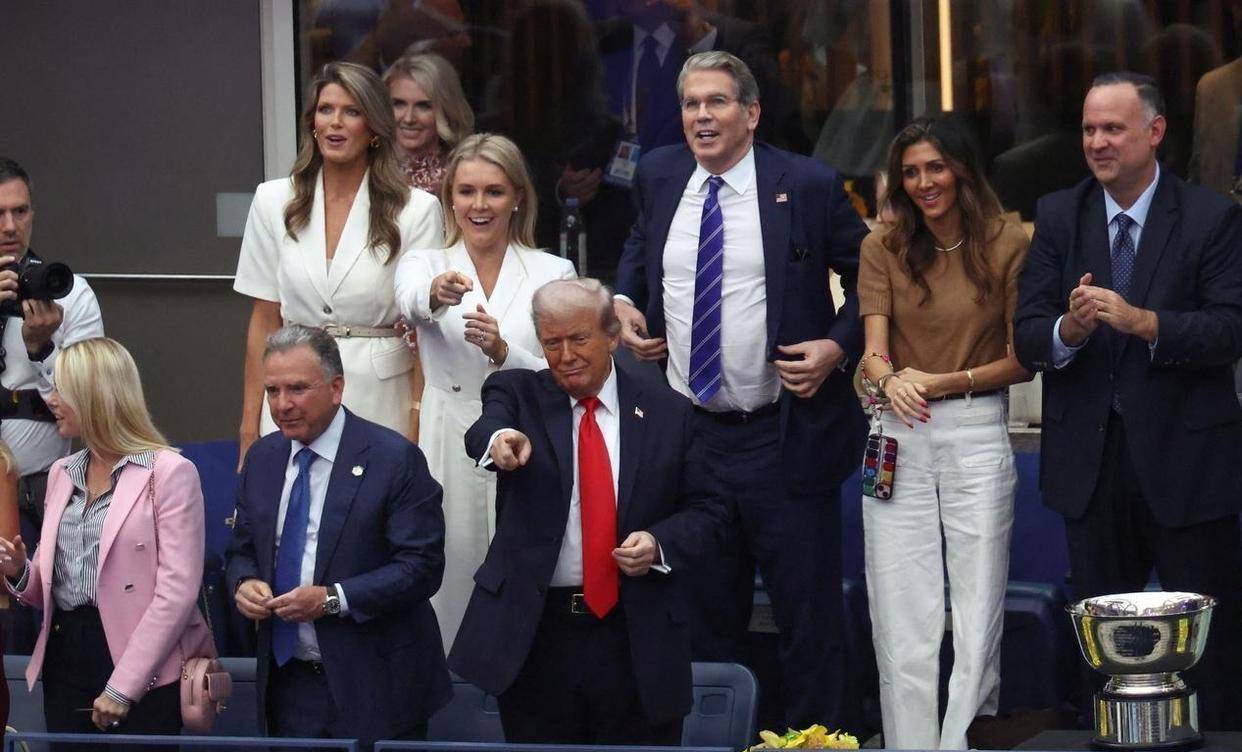
美国宣布重启核试验引多方质疑,美媒:让人联想到冷战最黑暗时期
Huan Qiu Shi Bao· 2025-10-31 23:06
Core Points - President Trump has ordered the immediate resumption of nuclear weapons testing after a 33-year hiatus, which has sparked significant public and international backlash [1][2] - Critics warn that the resumption of nuclear tests could trigger a global arms race, with concerns raised by various international leaders and organizations [3][4] Summary by Sections U.S. Government Actions - Trump announced on social media that he has instructed the military to restart nuclear tests due to other countries' testing plans, claiming the U.S. has the largest nuclear arsenal [2] - The Vice President emphasized the importance of ensuring the nuclear arsenal operates correctly, without addressing the notion of reciprocal testing with other nations [2] International Reactions - Russian officials clarified that their recent tests do not constitute nuclear tests and warned that they would respond if the U.S. proceeds with actual nuclear tests [3] - China urged the U.S. to adhere to its commitments under the Comprehensive Nuclear-Test-Ban Treaty (CTBT) to maintain global strategic stability [3] - Iran's foreign minister condemned the U.S. decision as a serious threat to international peace and security [3] Domestic Concerns - There is skepticism within the U.S. regarding the necessity of resuming nuclear tests, with officials previously stating that scientific data should suffice for maintaining the nuclear arsenal [4] - The last nuclear test by any country occurred in 2017, and the U.S. has conducted a total of 1,032 nuclear tests since 1945, with the last one in 1992 [4]