
石油运输安全

Search documents
Iran's Houthi Allies Lie in Wait on Another Key Oil Route: the Red Sea
WSJ· 2026-03-21 23:00
Core Viewpoint - Tehran's Houthi allies in Yemen have intensified their threats, particularly regarding shipping routes, after years of blockades and disruptions [1] Group 1 - The Houthis have been involved in prolonged shipping disruptions, which have significant implications for maritime trade in the region [1] - Recent escalations in threats from the Houthis indicate a potential increase in hostilities that could affect shipping security [1] - The situation highlights the ongoing geopolitical tensions in the Middle East, particularly involving Iran's influence through proxy groups like the Houthis [1]

霍尔木兹海峡,紧扼着哪些产油国的“咽喉”?
财联社· 2026-03-03 11:58
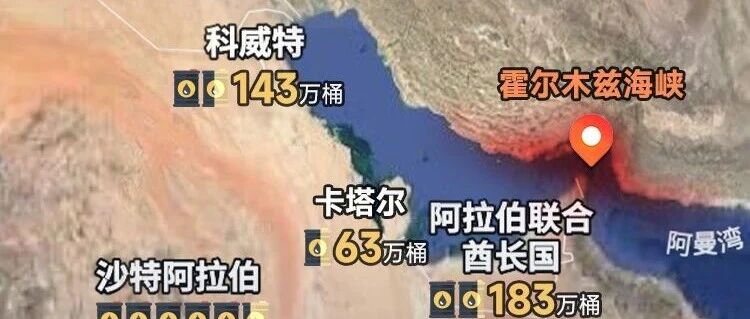
Core Insights - The article highlights the strategic importance of the Strait of Hormuz, which is crucial for oil transportation, with an estimated daily transport volume of around 20 million barrels by Q1 2025, accounting for over 25% of global maritime oil trade [1] - The daily transport volume of crude oil and condensate is projected to exceed 14 million barrels, representing nearly one-third of global maritime crude oil exports, primarily sourced from six countries: Saudi Arabia, Iraq, UAE, Kuwait, Iran, and Qatar [1] Group 1 - The closure of the Strait of Hormuz for more than 25 days could lead to a complete shutdown of production in major Middle Eastern oil-producing countries, as stated by the commander of the Iranian Revolutionary Guard Corps [3] - The majority of oil transported through the Strait is directed towards Asia, with 12.66 million barrels, while 1.55 million barrels are sent to Europe and other economies [4]
伊朗:不会允许一滴石油流出,任何试图通过霍尔木兹海峡的船只都会被击毁
中国能源报· 2026-03-03 02:11
Core Viewpoint - The Iranian Revolutionary Guard Corps has declared that any vessel attempting to pass through the Strait of Hormuz will be destroyed, emphasizing that no oil will be allowed to flow from the region [1]. Group 1: Military Actions and Statements - The commander of the Iranian Revolutionary Guard, Jabari, stated during a live television broadcast that they will not permit any oil to leave the region [1]. - Following military strikes by the U.S. and Israel on February 28, the Iranian Revolutionary Guard announced a ban on all vessels passing through the Strait of Hormuz [1]. - An unauthorized oil tanker was reportedly hit when attempting to pass through the Strait of Hormuz on March 1 [1]. Group 2: Shipping and Oil Transport - Currently, there are no oil tankers passing through the Strait of Hormuz, with 26 tankers lingering nearby and another 27 completely halted, totaling a carrying capacity of 12 million barrels of crude oil [1]. - The Strait of Hormuz is a critical route for oil exports from Middle Eastern countries such as Saudi Arabia, Iraq, Qatar, and the UAE, with approximately one-fifth of global oil transport occurring through this strait [1].
【环球财经】土耳其对黑海油轮袭击事件表示关切
Xin Hua She· 2025-11-30 03:05
Core Points - Turkey expressed concern over the attack on two Gambian-flagged oil tankers in the Black Sea, which poses a serious threat to navigation safety, life, property, and the environment in the region [1] - The attack on the "Kairós" and "Vilarat" tankers was reportedly executed by the Ukrainian Security Service and Navy using drones, significantly damaging the vessels and impacting Russian oil transportation [1] Summary by Sections - **Incident Details** - The attack occurred on November 28, targeting the "Kairós" and "Vilarat" tankers within Turkey's exclusive economic zone in the Black Sea [1] - The "Kairós" tanker was located 28 nautical miles from the Turkish coastline when it exploded and caught fire due to external factors, while the "Vilarat" was 35 nautical miles away when it reported a similar incident [1] - **Impact on Russian Oil Transportation** - Both tankers are part of Russia's "shadow fleet" and were headed to the Russian Black Sea port city of Novorossiysk, indicating that the attack will have a significant impact on Russian oil transport [1]
伊以冲突对霍尔木兹地区石油流量影响不大
news flash· 2025-06-16 15:22
Core Viewpoint - The ongoing conflict between Iran and Israel has not significantly impacted the oil flow through the Strait of Hormuz, alleviating some of the most severe concerns regarding the situation [1] Summary by Relevant Sections - **Oil Transportation**: There has been a slight decrease in cargo transportation through the Strait of Hormuz, with 111 vessels passing on June 15, down from 116 on June 12 [1]