石油运输

Search documents
“石油咽喉”要收费?伊朗立法,重塑霍尔木兹海峡秩序?
第一财经· 2026-03-31 15:13
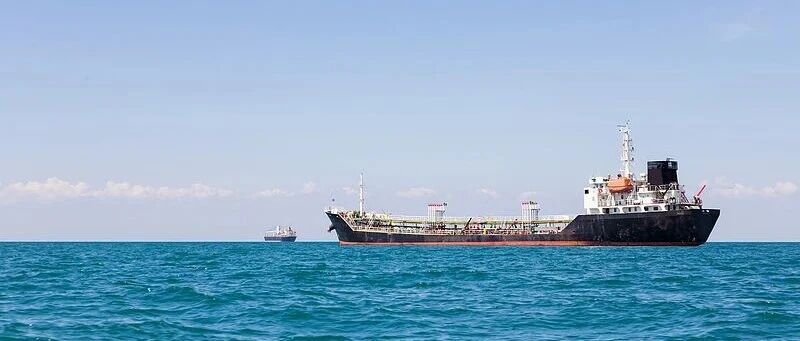
Core Viewpoint - Iran's parliament has passed a bill to impose fees on vessels passing through the Strait of Hormuz, aiming to assert control over this critical maritime route and pressure the U.S. [3][4] Group 1: Legislative Developments - The Iranian National Security Committee has established a management plan for the Strait of Hormuz, designating the Iranian armed forces as the controlling authority and prohibiting vessels from the U.S., Israel, and countries imposing unilateral sanctions on Iran from passing through [4]. - The proposed fee system will be implemented in Iranian rials, with the intention of enhancing Iran's international standing and securing direct financial benefits [3][4]. Group 2: Strategic Implications - The Strait of Hormuz is the only passage from the Persian Gulf to the Indian Ocean, with over 25% of global oil shipments and about 20% of liquefied natural gas transported through it [7]. - Iran's move to charge fees is framed as a measure to ensure the safety of passing vessels, with the Iranian government asserting its responsibility for maritime security in the region [4][5]. Group 3: Regional Reactions and Alternatives - U.S. Secretary of State Rubio has stated that the U.S. will not allow Iran to permanently control the Strait or establish a fee system, indicating potential military responses [4]. - In response to the situation, Gulf countries like Saudi Arabia and the UAE are seeking alternative routes for oil transport, utilizing land pipelines to bypass the Strait of Hormuz [8].

突发!又一艘油轮遭袭
证券时报· 2026-03-31 00:04
Group 1 - A tanker caught fire near Dubai after being hit by an unidentified object, with all crew members reported safe [1] - Kuwait National Petroleum Company confirmed that one of its tankers was attacked in the port of Dubai [2] - Recent incidents of tanker attacks have been reported, including a Turkish tanker "ALTURA" being attacked by a drone in the Black Sea and another tanker in the Gulf of Oman sustaining minor structural damage from an unidentified projectile [3] Group 2 - The UK Maritime Trade Operations reported a total of 24 incidents related to vessel safety from February 28 to March 30, with 16 classified as attacks and 8 as suspicious activities, primarily occurring in the Persian Gulf, Strait of Hormuz, and Gulf of Oman [3]

高盛闭门会-伊朗冲突-持续多久-影响多严重
Goldman Sachs· 2026-03-30 05:15
Investment Rating - The report does not explicitly provide an investment rating for the industry Core Insights - The conflict in Iran is expected to last longer than initially anticipated, with Iran refusing to agree to a ceasefire due to its core demands for sanction relief and regime survival [1] - The strategic control of the Strait of Hormuz is critical, as it has effectively ceased operations, and any U.S. victory would require establishing a multinational escort fleet to break Iran's control over the waterway [1] - Despite conventional military superiority, the asymmetric warfare capabilities of Iran, particularly through low-cost drones, continue to pose a significant threat [1][7] - The restoration of energy supply chains is projected to be slow, with initial recovery expected to only reach 20% of normal flow, as shipping and insurance companies remain cautious due to credit risks [1][16] - Internal unrest in Iran is unlikely to catalyze a ceasefire, as the war has strengthened domestic security measures and suppressed dissent [1][8] Summary by Sections Conflict Duration and Dynamics - Iran views the ongoing conflict as a struggle for regime survival, aiming to distribute the war's costs broadly to ensure favorable terms in any future agreements [3] - The U.S. initially expected a quick resolution but has had to adjust its objectives as the conflict escalated [4][5] Military and Strategic Considerations - The U.S. and Israel hold conventional military advantages, but Iran's asymmetric capabilities, particularly through drones, remain a persistent threat [7] - The ability of the U.S. and allies to implement military escorts in the Strait of Hormuz is feasible, but full restoration of normal oil transport is unlikely [15][16] External Influences - The involvement of China and Russia is pivotal, as any U.S. blockade of Iranian oil exports could compel China to intervene, altering the dynamics of the conflict [2][14] - The report emphasizes that the actions of these external players will be crucial in determining the future trajectory of the conflict [13][14] Internal Factors and Future Outlook - Iran's leadership must address internal economic issues post-conflict, as the regime's survival hinges on managing public discontent and economic stability [17] - The report suggests that the conflict may persist longer than expected, with Iran's current demands indicating a lack of immediate willingness to negotiate [9]
甲醇日报:进口难以补充,继续走强-20260326
Guan Tong Qi Huo· 2026-03-26 11:31
Group 1: Report Industry Investment Rating - Not provided Group 2: Core View of the Report - Methanol is expected to continue to strengthen after a short - term correction. The short - term volatility is intensified due to the current situation. The supply will take time to return to the pre - war state, and the overall situation is still bullish in the short term. It is necessary to focus on the current US - Iran situation and crude oil trends, with relatively high short - term risks [4] Group 3: Summary by Relevant Catalogs Fundamental Analysis - As of March 25, the inventory of Chinese methanol sample production enterprises was 43.50 tons, a decrease of 5.04 tons from the previous period, a month - on - month decrease of 10.39%. The pending orders of sample enterprises were 28.39 tons, an increase of 0.46 tons from the previous period, a month - on - month increase of 1.64%. The total inventory of Chinese methanol ports was 115.55 tons, a decrease of 10.62 tons from the previous data. As of March 19, the capacity utilization rate of domestic methanol - to - olefins plants was 85.57%, a month - on - month increase of 3.08%. The restart of the second - phase plant of Yanchang Yulin Zhongmei and the increase in the load of Tianjin Bohua led to an increase in industry start - up [1] - Zhengshang Institute decided to add Anhui Province as the methanol futures delivery area to improve the function of methanol futures and serve the industrial development. It is now publicly soliciting designated delivery warehouses for methanol futures. The premium and discount for the new delivery area is 150 yuan/ton, to be implemented from the date of the announcement of the new delivery warehouses [1] Macroeconomic Analysis - In March, the traffic volume of the Strait of Hormuz dropped by more than 90%. An Iranian Revolutionary Guard ordered a ship to return. The UK Royal Navy will lead a coalition to reopen the Strait of Hormuz [2] - A person from the securities department of China Merchants Energy Shipping revealed that the company has no ships stranded in the Persian Gulf, and has no plan to pass through the risk area after the war, instead choosing other shipping routes. The current tanker freight rate has increased by more than 50% compared with before the war [2] - The US plans to cease fire for one month, and a plan to end the conflict with Iran was exposed [2] Futures and Spot Market Analysis - Due to the inconsistent statements of the two sides in the Middle East peace talks and the changes in key events, crude oil may experience sharp fluctuations. Methanol's short - term fluctuations are intensified by the situation. Considering the damaged facilities and production capacity in the war, it will take time for the supply to return to the pre - war state. With the Strait of Hormuz not fully open, methanol is still considered bullish after a short - term correction, and the US - Iran situation and crude oil trends should be closely monitored [4]
芳烃日报:美伊和谈疑云,短暂回调-20260325
Guan Tong Qi Huo· 2026-03-25 09:35
1. Report Industry Investment Rating - Not provided in the report 2. Core Viewpoint of the Report - Due to new developments in the Middle - East situation and news of peace talks, crude oil prices have dropped. Aromatics are affected by the situation in the short - term with intensified fluctuations. Considering the damaged facilities and production capacity from the war and the incomplete passage of the Strait of Hormuz, the supply will take time to return to the pre - war state. In the short - term, after a correction, the market should still be treated as bullish. It is necessary to closely monitor the US - Iran situation and crude oil trends, as the short - term risks are high [3][4] 3. Summary by Relevant Catalogs Fundamental Analysis - Supply side: The 600,000 - ton Gulei plant is under maintenance, and the load of some plants is adjusted. Styrene production decreased by 3.12% to 360,100 tons, and the capacity utilization rate decreased by 2.32% to 71.79% [1] - Demand side: The downstream operating rates of styrene vary. The EPS operating rate decreased by 0.98% to 57.78%, the PS operating rate increased by 0.2% to 51.7%, the ABS operating rate decreased by 2.1% to 67.4%, the UPR operating rate increased by 3% to 38%, and the butadiene - styrene rubber operating rate decreased by 1.76% to 75.65% [1] - Inventory: Styrene factory inventory decreased by 7.70% to 191,900 tons, East China port inventory decreased by 10.88% to 156,500 tons, and South China port inventory decreased by 3.77% to 51,000 tons [1] Macroeconomic Analysis - The traffic volume through the Strait of Hormuz in March dropped by more than 90%. A Thai oil tanker passed through the Strait of Hormuz safely. The Islamic Revolutionary Guard Corps of Iran ordered an unauthorized vessel to return. Iran stated that "non - hostile vessels" can pass through the strait after coordinating with Iran. British media reported that the British Royal Navy will lead a coalition to reopen the Strait of Hormuz [2] - A person from the securities department of China Merchants Energy Shipping revealed that the company currently has no ships stranded in the Persian Gulf and has no plans to pass through the risk area after the war, instead choosing other shipping routes. The current tanker freight rate has increased by more than 50% compared to before the war [2] - The US plans to cease fire for one month, and a plan to end the conflict with Iran by 15:00 was exposed [2] Futures and Spot Market Analysis - With new news in the Middle - East situation and the news of peace talks, crude oil prices have dropped. Given the changes in key events, crude oil may experience sharp fluctuations. Aromatics are affected by the situation in the short - term with intensified fluctuations. Considering the damaged facilities and production capacity from the war and the incomplete passage of the Strait of Hormuz, in the short - term, after a correction, the market should still be treated as bullish. It is necessary to closely monitor the US - Iran situation and crude oil trends, as the short - term risks are high [3][4]
为抑制油价,特朗普政府拟豁免这项百年法案
第一财经· 2026-03-13 06:59
Core Viewpoint - The White House is considering a temporary exemption from the Jones Act to ensure the uninterrupted transport of essential energy products and agricultural supplies to U.S. ports amid rising fuel prices due to escalating tensions in the Middle East [2]. Group 1: Impact on Agriculture - The American Farm Bureau Federation has warned the White House about systemic shocks faced by U.S. farmers due to disruptions in shipping through the Strait of Hormuz, affecting fertilizer supply and prices [4]. - Farmers are entering a challenging economic environment, with the potential for increased uncertainty if key product supplies are not prioritized [5]. - The region affected accounts for nearly 49% of global urea exports and about 30% of global ammonia exports, highlighting the dependency of U.S. agriculture on stable and reasonably priced fertilizer supplies [6]. Group 2: Opposition to the Exemption - Seven maritime unions in the U.S. strongly oppose the exemption, arguing that crude oil prices, rather than transportation costs, are the primary drivers of gasoline prices [9]. - Analysts suggest that while the exemption may slow the rise in gasoline prices in regions reliant on imports, overall price trends will still be influenced by the situation in the Middle East [9]. - Estimates indicate that repealing the Jones Act could save East Coast drivers about 10 cents per gallon of gasoline, facilitating the free flow of gasoline that would otherwise need to be imported from Europe or other regions [10].
欧盟委员会:已向乌克兰提议对“友谊”输油管道进行检查,以确认其受损情况
中国能源报· 2026-03-13 05:03
Group 1 - The European Union (EU) has been in close discussions with Ukraine regarding the restart of the "Friendship" oil pipeline, proposing an inspection to assess its damage [3] - Since January 27, Russian oil has not been transported through the "Friendship" pipeline to Hungary and Slovakia, leading to suspicions from these countries that Ukraine is deliberately delaying the restoration of supply, which Ukraine denies [3]
Iran Strikes Oil Tankers Off Iraq as Middle East Crisis Worsens
Youtube· 2026-03-13 01:03
Core Insights - The article discusses the recent escalation of tensions in the Middle East, particularly focusing on Iran's military actions against oil tankers off the coast of Iraq, which could have significant implications for global oil supply and prices [1]. Group 1: Industry Impact - Iran's strikes on oil tankers are likely to disrupt oil supply routes, raising concerns about potential increases in oil prices globally [1]. - The ongoing crisis in the Middle East may lead to heightened volatility in the oil market, affecting both producers and consumers [1]. Group 2: Geopolitical Context - The military actions by Iran are seen as a response to increasing pressure from Western nations, particularly the United States, which could further escalate tensions in the region [1]. - Analysts suggest that the situation could lead to a broader conflict, impacting not only regional stability but also international trade and security [1].
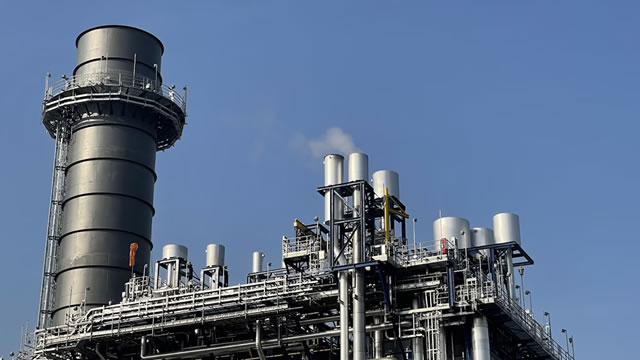
中东紧张局势下,第一艘油轮穿越霍尔木兹海峡抵达印度
21世纪经济报道· 2026-03-12 12:30
Group 1 - The first oil tanker flying the Liberian flag arrived at Mumbai port on the night of the 11th, marking the first vessel to traverse the Strait of Hormuz and reach India since the escalation of tensions in the Middle East [1] - The oil tanker, operated by an Indian captain, loaded crude oil at Ras Tanura port in Saudi Arabia on March 1 and set sail two days later [1] - The tanker briefly turned off its automatic identification tracking system while passing through the Strait of Hormuz, according to oil tanker tracking platforms [1]

中东紧张局势下 第一艘油轮穿越霍尔木兹海峡抵达印度孟买港
财联社· 2026-03-12 11:53
Core Viewpoint - The article highlights the arrival of the first oil tanker, flying the Liberian flag, at Mumbai port since the escalation of tensions in the Middle East, marking a significant event in the oil supply chain [1]. Group 1 - An oil tanker, under the command of an Indian captain, loaded crude oil at Ras Tanura port in Saudi Arabia on March 1 and set sail two days later [3]. - The tanker briefly turned off its automatic identification tracking system while passing through the Strait of Hormuz, indicating potential navigational or security measures taken during transit [4].