矿产博弈

Search documents
美国对非洲矿产战略注定失败?不是缺钱,是这三大短板无解
Sou Hu Cai Jing· 2026-02-19 18:47
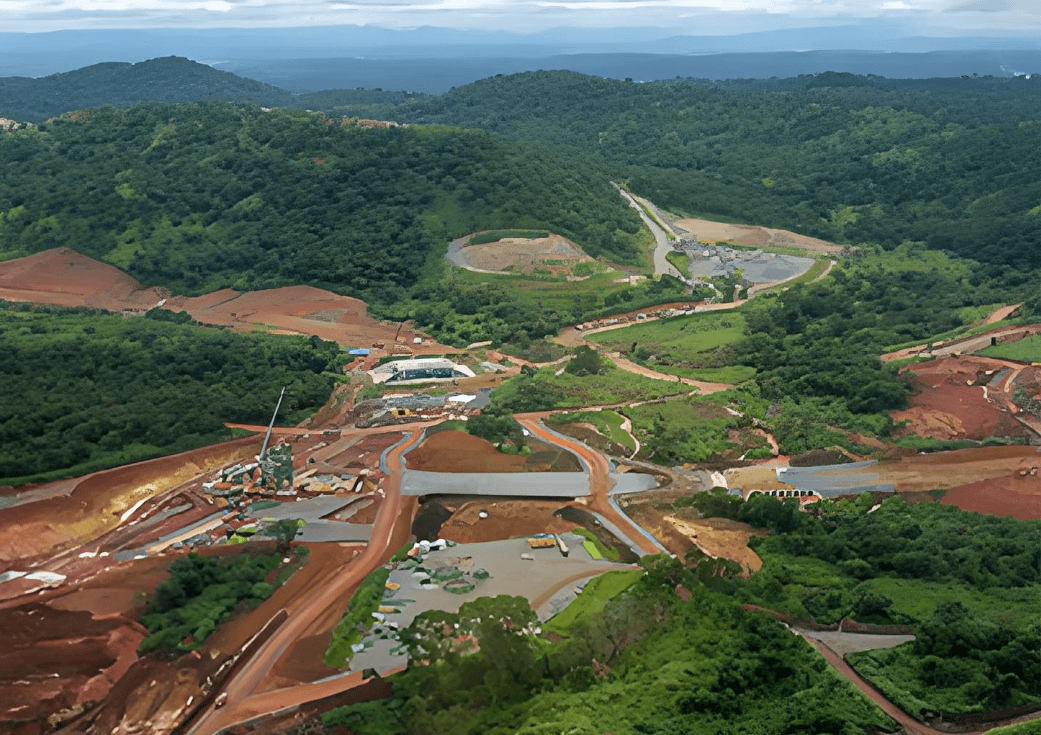
Core Viewpoint - The article discusses the increasing competition between the U.S. and China for key mineral resources in Africa, highlighting the U.S.'s significant investments but also its fundamental shortcomings in effectively engaging with African nations [1][8]. Investment Comparison - In 2023, U.S. direct investment in Africa reached $7.8 billion, significantly surpassing China's $4 billion, suggesting a strong financial commitment [3]. Shortcomings of U.S. Strategy - **First Shortcoming**: The U.S. approach is characterized by "exclusive shackles," where investments come with conditions that African nations find unappealing. For instance, U.S. funding often requires minerals to be supplied directly to U.S. factories, which African leaders reject in favor of more inclusive partnerships [3][6]. - **Second Shortcoming**: The U.S. exhibits inefficiency in its operations, with companies like Cobold holding extensive mining rights but failing to act due to unclear ownership issues, while Chinese firms rapidly develop infrastructure and production capabilities [4][3]. - **Third Shortcoming**: The U.S. focuses solely on raw materials, neglecting the local value chain. In contrast, Chinese companies invest in local infrastructure and processing, allowing African nations to benefit from higher-value segments of the supply chain [6][4]. Operational Models - The U.S. relies on private enterprises with complex approval processes, leading to slower decision-making compared to China's government-business collaboration, which is more efficient and stable [4][6]. Perception of Africa - African nations are increasingly aware of their value and are seeking partners who respect their sovereignty and contribute to local development, rather than viewing them merely as resources to exploit [6][8].

苗头显现,美企绕开中国出口限制,3000余吨关键矿产第三国流入
Sou Hu Cai Jing· 2025-07-12 01:35
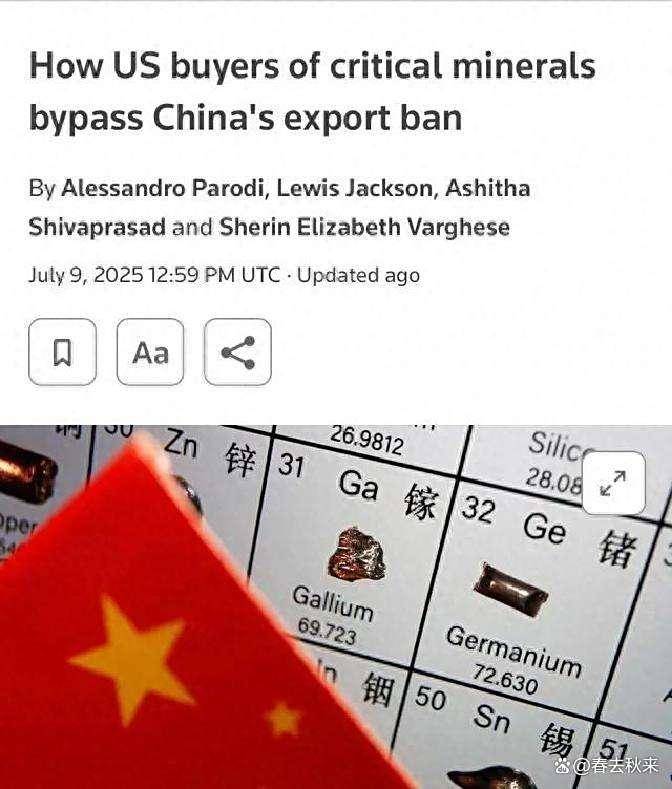
Group 1 - The core argument highlights that despite China's export controls on rare earths and other strategic minerals, the U.S. has found ways to circumvent these restrictions, leading to an increase in imports of materials like antimony disguised under different labels from countries like Mexico and Thailand [1][3][4] - The U.S. has seen a dramatic increase in imports of antimony, with some companies reporting a surge of over twenty times in the past six months, indicating a significant loophole in the export control measures [4][5] - The article discusses the evolution of smuggling techniques, where materials are disguised as other products, showcasing a sophisticated network that operates under the guise of compliance [7][9] Group 2 - China's dominance in the supply of rare metals such as antimony, gallium, and germanium remains unchallenged, with prices skyrocketing following the announcement of export restrictions, reflecting a genuine shortage in the supply chain [5][9] - The Chinese government has responded to the smuggling issue with a comprehensive crackdown, including enhanced legal measures and penalties, indicating a shift towards stricter enforcement of export controls [9][11] - The article emphasizes that the real challenge lies not just in resource extraction but in maintaining regulatory integrity and preventing illicit activities that undermine national security [12]