出口管制

Search documents
国家出手调控油价;北京三部门约谈12家平台企业……盘前重要消息还有这些
证券时报· 2026-03-24 00:00
Group 1 - The Chinese government is urging all parties to cease military actions in the Middle East to prevent further escalation and protect global economic development [2][3] - The National Development and Reform Commission announced temporary adjustments to domestic fuel prices due to significant increases in international oil prices, with gasoline and diesel prices adjusted by approximately 0.87 yuan and 0.95 yuan per liter, respectively [3] - The Dalian Commodity Exchange has adjusted the price fluctuation limits and margin levels for liquefied petroleum gas futures contracts, increasing the fluctuation limit from 11% to 14% for certain contracts [4] Group 2 - China Bank is enhancing risk prevention measures in the precious metals market [6] - Several funds, including E Fund and Jiashi, will be suspended from trading on March 24 until 10:30 AM [7][8][9] - WuXi AppTec reported a 105.2% year-on-year increase in net profit for 2025 and plans to distribute a dividend of 15.7927 yuan per share [10] - Fuxiang Pharmaceutical expects a year-on-year net profit increase of 2222.67% to 3250.01% for the first quarter [11] - Huate Gas anticipates limited impact on its 2026 performance from price increases of certain gas products [12] - Dashengda's stock price is significantly deviating from its fundamentals, indicating a risk of rapid decline [13] - Wantong Kai is planning to acquire 100% equity of Zeng Rui Zhi Control and will be suspended from trading starting March 24 [14] - Libet has signed three significant contracts with its subsidiaries [15] Group 3 - Zijin Mining repurchased 21 million A-shares on March 23 [19] - Yongguan New Materials' actual controller plans to increase shareholding by 50 million to 100 million yuan [19] - Changyuan Donggu is planning to acquire 100% equity of Xiangyang Kanghao Electromechanical Engineering Company and will be suspended from trading starting March 24 [19] - Huadian Liaoning Energy has seen a cumulative increase of 89.81% over ten trading days, with no significant changes in daily operations [19] - Cangge Mining plans to repurchase shares worth 200 million to 400 million yuan [19]

惊天大案!170亿GPU走私曝光,超微电脑多名高管在美被捕
是说芯语· 2026-03-21 00:33
Core Viewpoint - The article discusses the arrest of three individuals associated with Super Micro Computer Inc. for allegedly engaging in a conspiracy to illegally export controlled AI servers valued at $2.5 billion (approximately 17.2 billion RMB) [3][5]. Summary by Sections Arrest and Charges - Yih-Shyan "Wally" Liaw, co-founder of Super Micro, along with Ting-Wei "Willy" Sun and Ruei-Tsang "Steven" Chang, has been indicted for conspiracy to violate the Export Control Reform Act, conspiracy to smuggle goods, and conspiracy to defraud the U.S. government [5][6]. - The maximum penalties for these charges could total 30 years in prison [5]. Smuggling Operation Details - The indictment outlines a systematic plan to evade U.S. export controls and illegally smuggle AI servers, primarily using methods such as fictitious entities, forged documents, and disguised shipments [5][6]. - The smuggling process involved three key stages: placing disguised orders, re-packaging and transferring the servers, and forging documents to pass compliance checks [6][8]. Scale of Operations - From 2024 to 2025, the accused allegedly facilitated the procurement of controlled AI servers worth $2.5 billion, with a significant portion assembled in the U.S. [6][7]. - In a short period from late April to mid-May 2025, at least $510 million worth of AI servers were illegally transferred [6]. Deceptive Practices - To further conceal their illegal activities, the group used fake servers that resembled real AI servers but contained no core components, effectively creating a façade during inventory checks [7][8]. - The group also engaged in tampering with the fake servers to mislead audits by the U.S. Department of Commerce [8]. Company Response - Super Micro Computer has publicly distanced itself from the accused individuals, emphasizing its commitment to compliance with U.S. export laws and regulations [9]. - The company has placed the implicated employees on administrative leave and terminated its relationship with the contractor involved [9]. Market Impact - Following the news of the arrests, Super Micro's stock experienced a significant decline, dropping by 33.32% to $20.53 [11].


突发利空!科技巨头,深夜暴跌
证券时报· 2026-03-20 13:57
Core Viewpoint - The article discusses the legal issues faced by Super Micro Computer (SMCI) due to allegations of violating export control laws, leading to a significant drop in its stock price by over 28% following the news of the lawsuit [1][2]. Group 1: Legal Allegations - The U.S. Attorney's Office for the Southern District of New York filed a lawsuit against three individuals associated with Super Micro Computer, accusing them of fraudulently exporting servers worth billions of dollars while evading strict U.S. export controls [1]. - The accused individuals include co-founder and senior vice president Yih-Shyan "Wally" Liaw, sales manager Ruei-Tsang "Steven" Chang, and contractor Ting-Wei "Willy" Sun [3]. - The lawsuit claims that since 2024, Super Micro has achieved approximately $2.5 billion in sales through illegal channels, with $510 million worth of servers shipped to a Southeast Asian company without the necessary U.S. Department of Commerce licenses [4]. Group 2: Company Response and Compliance - Super Micro Computer stated that it is not a defendant in the case and has suspended the accused employees while terminating its relationship with the contractor [6]. - The company emphasized that the actions of the accused individuals violated its policies and compliance requirements, asserting that it has a robust compliance system in place to adhere to all applicable U.S. export laws [6]. - The former SEC chairman Jay Clayton highlighted the necessity for swift punishment of crimes involving sensitive technology to maintain the integrity of related laws [6].

ASML营收创纪录仍裁员4%!
国芯网· 2026-03-17 12:20
Core Viewpoint - ASML, a Dutch chip equipment manufacturer, announced a record annual revenue of €32.7 billion while planning to cut 1,700 management positions, causing uncertainty among employees regarding their job security [2][4]. Group 1: Layoff Details - The layoffs primarily affect management positions in the technology and IT departments, with 1,400 positions cut in the Netherlands and 300 in the U.S., representing about 4% of the company's global workforce [4]. - Employees are experiencing anxiety due to the lack of clarity about their job status, with many questioning the implications for their roles [4]. - ASML aims to finalize the restructuring plan by April 1, with some affected employees potentially being reassigned to new engineering roles to minimize layoffs [4]. Group 2: Union Negotiations - Two major unions involved in negotiations believe the April 1 deadline for finalizing the restructuring plan is unrealistic, advocating for a more thorough approach to ensure employee protection [5]. - The unions are questioning the logic of ASML's simultaneous layoffs and expansion plans, as the company is moving forward with a new facility that could accommodate 20,000 new employees, nearly doubling its current workforce in the Netherlands [5]. Group 3: Financial Outlook - ASML projects a net profit of €9.6 billion for 2025 and expects revenue for 2026 to be between €34 billion and €39 billion, with a significant order backlog of €13.2 billion in Q4 2025, exceeding analyst expectations [5]. - However, due to ongoing U.S. export restrictions, ASML's revenue from the Chinese market is expected to decrease from 33% in 2025 to around 20% in 2026 [5].

全球磷矿磷肥2026展望
2026-03-12 09:08
Summary of Phosphate Fertilizer Industry Conference Call Industry Overview - The conference call focuses on the phosphate fertilizer industry, particularly in China, with insights into export policies, production costs, and market dynamics [1][3][5]. Key Points Export Control and Policy Changes - The National Development and Reform Commission (NDRC) has announced a ban on phosphate fertilizer exports from the end of 2025 until August 2026, aiming to stabilize domestic demand and prices [1][3]. - In 2025, the total fertilizer export volume was over 46 million tons, with a 44% increase year-on-year. However, exports of monoammonium phosphate (MAP) and diammonium phosphate (DAP) decreased by 6% and 24%, respectively [3][4]. - The expected reduction in MAP and DAP exports for 2026 is between 300,000 to 500,000 tons each, with potential for a rebound if policies are relaxed in the latter half of the year [4]. Cost Pressures and Production Rates - Sulfur prices remain high at approximately 4,000 CNY/ton, leading to a reduction in industry operating rates to 50%-55%. Large state-owned enterprises maintain higher rates of 55%-60% due to supply responsibilities [1][4][6]. - The high sulfur prices are expected to keep phosphate fertilizer production below 2025 levels, compounded by environmental regulations and the dual carbon policy [4][12]. Price Disparities - There is a significant price difference between domestic and international markets, with MAP prices approximately 50% higher overseas and DAP prices about 40% higher [1][5]. - If export restrictions are lifted post-August 2026, leading companies like Yuntianhua could benefit from these price differentials [1][5]. Capacity and Production Trends - Actual effective capacity is projected to increase by about 10 million tons annually from 2026 to 2027, primarily in Yunnan, Guizhou, and Hubei provinces [1][10]. - The industry is transitioning towards high-end, intelligent, and green development, with a focus on integrated processes [5][9]. Supply Chain and Geopolitical Factors - The supply of sulfur is currently stable, and while costs are high, there is no immediate concern over sulfur shortages affecting production [6][7]. - Geopolitical tensions, particularly the US-Iran conflict, may impact sulfur transportation and prices but are not expected to significantly disrupt phosphate supply chains [7][8]. Strategic Resource Management - Phosphate rock is classified as a strategic resource in China, with no explicit national production cap, but local regulations may restrict mining activities [13][14]. - The "mining ticket" system is in place to control extraction and ensure local processing of phosphate resources [13][14]. Future Outlook - The phosphate fertilizer industry is expected to face ongoing challenges from high raw material costs and regulatory pressures, but companies with integrated operations and resource control may find growth opportunities, especially in the context of the expanding renewable energy sector [5][9]. Additional Insights - The industry is navigating a complex landscape of cost management, regulatory compliance, and market dynamics, with a focus on sustainability and efficiency in production processes [12][14].
日本企业被中国纳入管控清单意味着什么?
Western Securities· 2026-03-01 06:04
Group 1: Export Control Measures - China has included 40 Japanese entities in its export control list, with 20 entities directly involved in enhancing Japan's military capabilities[19] - The export control measures are a response to Japan's increased defense spending and military exports, which have reached record levels[2] - The measures are not temporary but were planned since January 2026, with a formal announcement made on January 6, 2026, prohibiting dual-use items to military users in Japan[20] Group 2: Impact on Japanese Entities - The impact on domestic Japanese companies is overall limited, as the defense and military industries of China and Japan are significantly decoupled[28] - The entities on the control list primarily focus on defense sectors, while those on the observation list include aerospace and electronics, indicating a broader scope[21] - Japanese defense stocks, particularly Mitsubishi Heavy Industries, experienced a decline, with shares dropping by 3.6% following the announcement[29] Group 3: Political Context - The recent electoral victory of Prime Minister Fumio Kishida has facilitated a more aggressive defense policy, with the ruling party holding over two-thirds of the seats in the House of Representatives[27] - Kishida's government is expected to push for constitutional amendments to enhance military capabilities, reflecting a shift away from post-war pacifism[31] - The geopolitical tension in the region may lead to further restrictive measures from China in sectors like rare earths and seafood, as part of a systematic countermeasure strategy[3]
高市称“绝对无法容许”中国对日出口管制
日经中文网· 2026-02-27 02:53
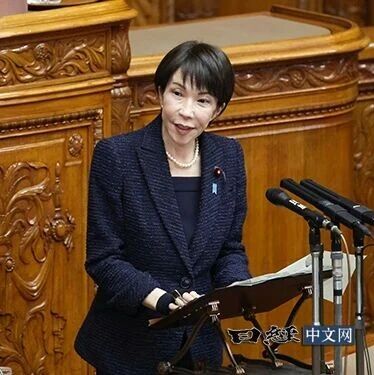
Core Viewpoint - Japan's Prime Minister, Sanae Takaichi, expressed strong opposition to China's export control measures on dual-use items, stating they are inconsistent with international norms and unacceptable [2][4]. Group 1: China's Export Control Measures - China has placed 20 Japanese companies, including Mitsubishi Shipbuilding, on an export control list, which Takaichi described as regrettable and unacceptable [4]. - The export controls are believed to involve rare earth materials, prompting Takaichi to investigate the economic impact on Japan [5]. Group 2: Japan's Response and Strategy - Takaichi emphasized the need to build a resilient supply chain that does not rely on specific countries, indicating a commitment to diversify supply sources in collaboration with like-minded nations [5]. - Japan remains open to dialogue with China, including trade management measures, while aiming to address national interests calmly and appropriately [6]. - Takaichi acknowledged the importance of communication and exchange between Japan and China, given the unresolved issues between the two nations [6].
将日有关实体列入出口管制管控名单和关注名单完全正当、合理、合法
Xin Lang Cai Jing· 2026-02-26 18:39
Group 1 - The Chinese Ministry of Commerce has officially added certain Japanese entities to its export control list, citing concerns over Japan's militarization and nuclear ambitions as the rationale for this action [1] - The recent decision follows the inclusion of 20 Japanese entities in the export control list and another 20 in the watch list, indicating a strengthening of export control measures against Japan [1] - The spokesperson emphasized that the measures are specifically targeted at dual-use items, which include materials like rare earths, and do not affect normal trade relations between China and Japan [1]
中方为何将40家日本企业列入管控、关注名单?商务部回应
Nan Fang Du Shi Bao· 2026-02-26 11:27
Core Viewpoint - The Chinese Ministry of Commerce has placed 20 Japanese entities on an export control list due to their involvement in enhancing Japan's military capabilities, reflecting concerns over Japan's militarization and nuclear ambitions [1][2]. Group 1: Export Control Measures - The Ministry of Commerce has listed entities such as Mitsubishi Heavy Industries on the control list, prohibiting export operators from exporting dual-use items to these entities [1]. - Additionally, it is forbidden for foreign organizations and individuals to transfer or provide dual-use items originating from China to the listed entities, with ongoing activities needing to cease immediately [1]. Group 2: Entities of Concern - Another 20 entities, including Subaru Corporation, have been placed on a watch list due to the inability to verify the end users and end uses of dual-use items [1]. - Export operators are not allowed to apply for general licenses or obtain export certificates for these entities without submitting a risk assessment report and a written commitment that the items will not be used to enhance Japan's military capabilities [1]. Group 3: Regional and Global Implications - The spokesperson highlighted Japan's accelerated military expansion and attempts to revise its "Three Non-Nuclear Principles," indicating a dangerous trend towards re-militarization and nuclear ambitions that threaten regional and global peace [2]. - The actions taken by China are framed as a legitimate response to Japan's militarization efforts, emphasizing China's commitment to fulfilling international non-proliferation obligations [2].
对日本加严出口管制是维护国家安全和地区安全所必需|专家热评
Di Yi Cai Jing· 2026-02-26 10:28
Core Viewpoint - The Chinese Ministry of Commerce has announced export control measures against 20 Japanese entities involved in enhancing Japan's military capabilities, marking Japan as the second country after the United States to be included in such a control list for dual-use items [1][5]. Group 1: Export Control Measures - The Ministry of Commerce's announcement includes a prohibition on exporting dual-use items (goods, technology, and services) to the listed Japanese entities [3]. - It also restricts foreign organizations and individuals from transferring or providing dual-use items originating from China to these Japanese entities [3]. - Ongoing activities related to these exports must be immediately halted [3]. Group 2: Focus List and Compliance - A separate focus list has been created for another 20 Japanese entities, which includes companies and universities, to prevent potential risks [4]. - If these entities fail to cooperate with the Ministry of Commerce for user verification within a specified timeframe, they may be added to the focus list [4]. - Exporters dealing with entities on the focus list will face stricter procedural and review requirements [4]. Group 3: Legal Framework and Justifications - The export control measures are based on China's export control law, which allows for such actions if entities pose a threat to national security or are involved in military applications [3][6]. - The measures aim to counter Japan's militarization and nuclear ambitions, which have been accelerating in recent years [6]. - The Ministry of Commerce retains the authority to remove entities from the control list if they meet specific conditions [4][5].