硬科技概念

Search documents
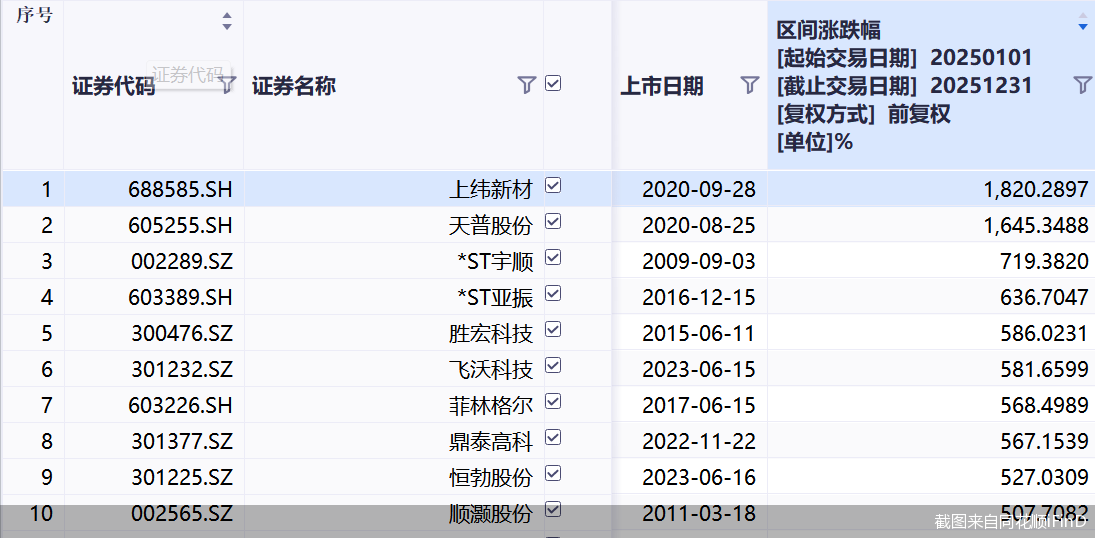
沪指全年累计涨幅18.41%!过半个股跑赢大盘,翻倍牛股超500只
Bei Jing Shang Bao· 2025-12-31 11:27
Core Viewpoint - The A-share market experienced a strong performance in 2025, with major indices rising significantly, particularly the Shanghai Composite Index, which closed at 3968.84 points, marking an 18.41% increase for the year [1][3][4]. Group 1: Market Performance - The A-share market saw over 4000 listed companies' stock prices rise, with approximately 80% of stocks increasing in value, compared to only 20% in the previous year [2][4]. - The ChiNext Index had the best performance, with a cumulative increase of 49.57% throughout the year, while the Shanghai Composite Index surpassed the 4000-point mark for the first time in ten years [3][4]. - The market's upward trend was supported by a significant influx of global capital, which reversed the previous outflow trend, enhancing investor confidence in China's technological innovations [4][10]. Group 2: Notable Stocks - The top-performing stock of the year was Upway New Materials, which achieved an impressive increase of over 1800%, followed by Tianpu Co., Ltd. with a rise exceeding 1600% [2][5]. - More than 500 stocks doubled their prices in 2025, a significant increase from 82 stocks in the previous year, indicating a robust market environment [8]. - Other notable stocks included *ST Yushun and *ST Yazhen, which also saw substantial gains, with increases of 719.38% and 636.7% respectively [6][7]. Group 3: Sector Trends - "Technology" and "mergers and acquisitions" emerged as the dominant themes driving the market, with a notable surge in interest towards hard technology and acquisition-related stocks [2][9]. - The market's enthusiasm for technology stocks was fueled by significant breakthroughs in AI and other tech sectors, leading to substantial capital inflows and stock price increases [9][10]. - The trend of mergers and acquisitions is expected to continue, focusing on high-end manufacturing and new energy sectors, as companies seek to enhance their growth through strategic resource integration [10].