磁悬浮列车

Search documents
铁科轨道(688569.SH):未涉及磁悬浮列车相关领域
Ge Long Hui A P P· 2026-01-15 08:46
Group 1 - The company, Tieke Railway (688569.SH), focuses on high-speed rail fasteners as its core business [1] - The company's product offerings also include prestressed steel wires, anchorage plates, railway bridge bearings, engineering materials, and track component processing services [1] - The company does not engage in the field of maglev trains [1]

研奥股份:公司产品已应用的磁悬浮列车项目有广州清远磁悬浮列车等
Zheng Quan Ri Bao Zhi Sheng· 2026-01-09 13:11
Core Viewpoint - The company has actively participated in magnetic levitation train projects and will continue to engage in market bidding for such projects in the future [1] Group 1: Company Involvement - The company's products have been applied in several magnetic levitation train projects, including the Guangzhou Qingyuan magnetic levitation train, medium and low-speed magnetic levitation test vehicles, and the new generation of conventional high-speed magnetic levitation prototype [1] Group 2: Future Engagement - The company will continue to monitor and actively participate in the bidding progress of magnetic levitation train projects in the market [1]
城市24小时 | 考研报名人数“三连降”,什么信号?
Mei Ri Jing Ji Xin Wen· 2025-11-24 15:00
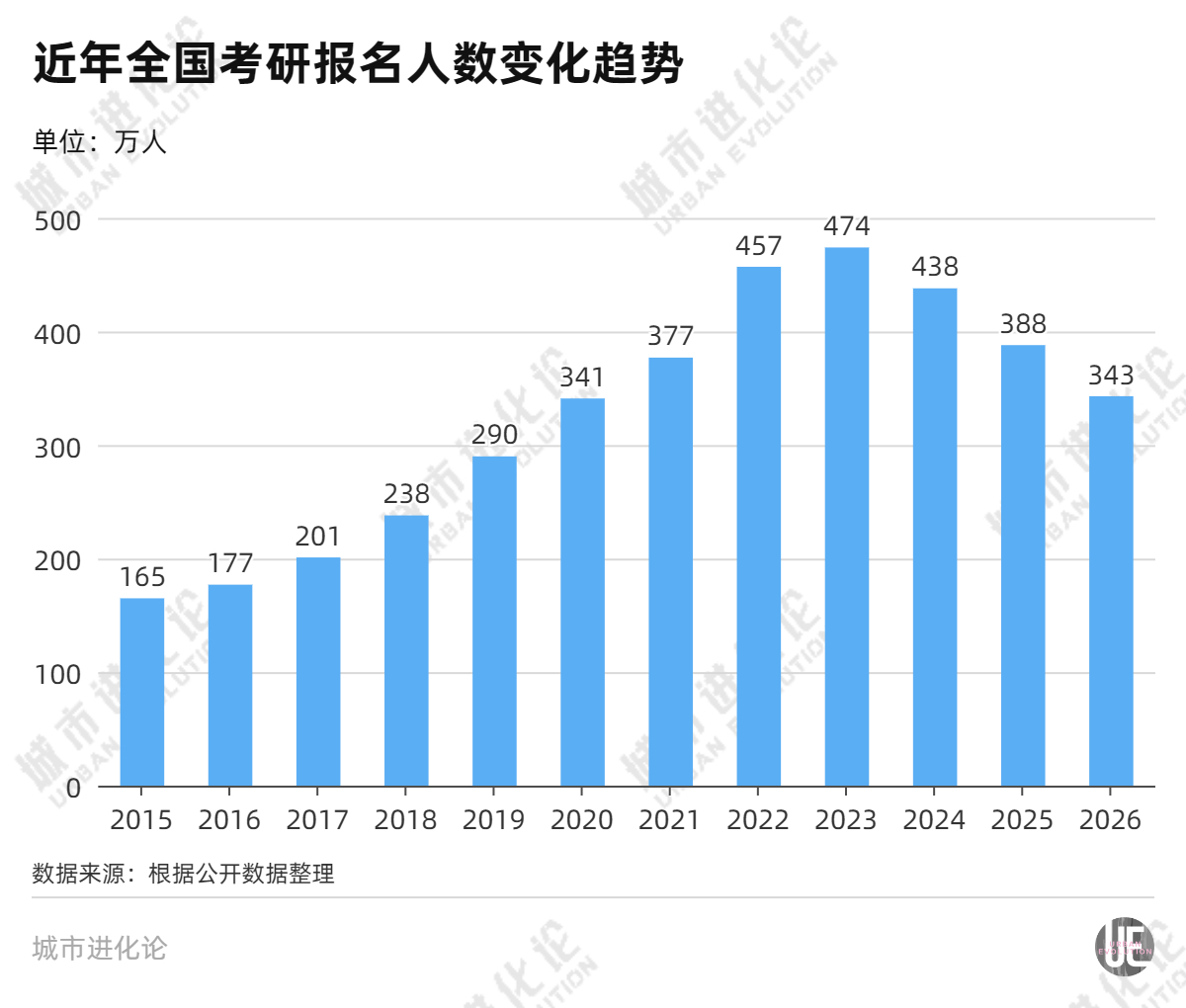
Graduate Examination Trends - The number of applicants for the 2026 national master's degree entrance examination is reported to be 3.43 million, marking a decline for three consecutive years, totaling a decrease of 1.31 million applicants over three years [1] - The number of applicants has decreased from 4.74 million in 2023 to 4.38 million in 2024, a reduction of 360,000, and further down to 3.88 million in 2025, a decrease of 500,000 [1] - The trend of declining applicants is attributed to the diminishing return on investment for pursuing a master's degree, as the value of a graduate degree has decreased with the increase in the number of graduates [3] Employment and Education Dynamics - A significant factor for the decline in graduate school applications is the perception that the cost-benefit ratio of obtaining a master's degree has worsened, with many graduates prioritizing work experience over further education [3] - Data from the 2024 China Undergraduate Employment Report indicates that 48% and 45% of graduates pursue further studies for better job prospects and career development needs, respectively [3] - The job market for master's degree holders is not significantly better than that for bachelor's degree holders, leading to a shift in focus towards developing core employment skills rather than obtaining higher degrees [3] Public Sector Examination Interest - Interest in public sector examinations remains high, with 3.718 million candidates passing the qualification review for the 2026 national civil service examination, reflecting a competitive ratio of approximately 98:1 [3] Vocational Education Trends - There is a growing trend towards vocational undergraduate institutions, as students who could attend regular universities are opting for vocational programs, valuing the job security and certainty that skills training provides [4]