
铁路

Search documents
一图看懂 | 水下高铁概念股
市值风云· 2026-03-31 10:19
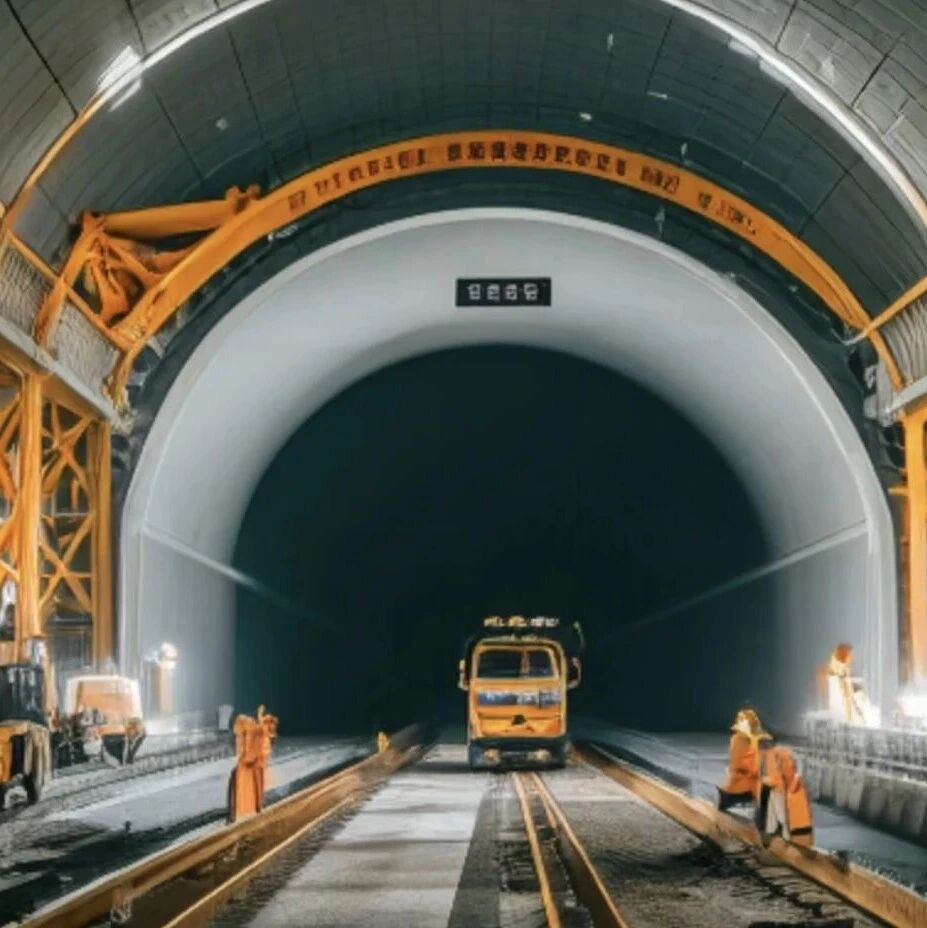
Group 1 - The core viewpoint of the article is that the Yangtze River High-Speed Railway will drive an increase in the value added of upstream and downstream industries by nearly 1.5 trillion yuan [1] Group 2 - The article lists key companies involved in core components and materials for tunnel construction, including China Railway Construction, China Railway Group, and others [5] - It highlights the importance of core technologies and policy benefits in accelerating development within the industry [4] - Various sectors are mentioned, such as rail transit vehicles, electrical communication, and construction services, indicating a broad impact across multiple industries [5]

中国中车(01766.HK)2025年归母净利润131.81亿元,同比增长6.4%
Ge Long Hui A P P· 2026-03-27 14:45
Core Viewpoint - The company, CRRC Corporation Limited, reported a revenue of 273.063 billion yuan for 2025, marking a year-on-year increase of 10.79%, and a net profit attributable to shareholders of 13.181 billion yuan, reflecting a growth of 6.40% compared to the previous year [1] Group 1: Financial Performance - The company achieved a revenue of 273.063 billion yuan in 2025, which is a 10.79% increase year-on-year [1] - The net profit attributable to shareholders reached 13.181 billion yuan, showing a year-on-year growth of 6.40% [1] Group 2: Development and Innovation - The company has seen continuous improvement in development quality, with enhanced labor productivity and increased R&D expenditure intensity [1] - Two subsidiaries were selected for the national cultivation pool of world-class enterprises [1] - The company is advancing higher levels of technological self-reliance and independence, with ongoing assessments of the CR450 train prototype and the deployment of 200 km/h power concentrated trains for testing [1] Group 3: Strategic Initiatives - The company is focused on cultivating new quality productivity tailored to local conditions and is actively promoting a modern industrial system characterized by "six modernizations" [1] - The company is working on a dual-track and dual-cluster industrial layout to outline a "second curve" of growth [1] - The "Qihang" and "Lingfeng" projects represent a historical shift in industrial development from a single core to dual-track efforts [1]

交通运输产业行业研究:1-2 月快递业务量同比增长 7% 中东地缘扰动持续影响航运
SINOLINK SECURITIES· 2026-03-22 12:10
Investment Rating - The report does not explicitly provide an investment rating for the transportation sector Core Views - The transportation index decreased by 2.2% during the week of March 14-20, 2026, underperforming the Shanghai Composite Index by 0.2% [1] - The logistics sector is expected to improve due to rising chemical prices, with a focus on companies like Milkyway, Hongchuan Wisdom, and others [3] - The air travel sector is seeing a recovery with a 3.34% increase in planned international passenger flights for the summer season of 2026 [4] - The shipping sector is facing geopolitical pressures, but the oil transportation index remains high due to geopolitical factors [5] - The road and rail sectors are showing resilience, with increased truck traffic and a focus on coal transportation [6] Summary by Sections Transportation Market Review - The transportation index fell by 2.2%, while the Shanghai Composite Index dropped by 2.4%, ranking 5th out of 29 sectors [1][13] Industry Fundamental Status Tracking Shipping and Ports - The export container shipping market is under pressure from geopolitical tensions, with the CCFI index at 1120.61 points, up 4.5% week-on-week but down 6.0% year-on-year [5][22] - The oil transportation index BDTI increased to 2849.2 points, reflecting a 1.3% week-on-week rise and a 194.6% year-on-year increase [39] Aviation and Airports - The average daily flights increased by 4.79% year-on-year, with domestic flights up by 17.85% [4] - The Brent crude oil price rose to $112.19 per barrel, impacting operational costs for airlines [74] Rail and Road - National railway passenger volume increased by 10.53% year-on-year, while freight volume saw a slight decline of 0.59% [86] - The number of trucks on highways increased by 14.75% week-on-week, indicating a robust road transport sector [90] Express and Logistics - The express delivery sector saw a revenue increase of 7.9% year-on-year, with major companies like Zhongtong Express expected to recover in market share and profitability [2]
A股刮起HALO风
经济观察报· 2026-03-16 03:23
Core Viewpoint - The article discusses the emergence of the HALO (Heavy Assets, Low Obsolescence) investment strategy in the A-share market, questioning its sustainability and whether it represents a fundamental shift in global asset logic or merely a repackaging of traditional cyclical stocks by Wall Street [1][4]. Group 1: HALO Strategy Overview - The HALO strategy focuses on investing in assets that are difficult to replace with technology and possess substantial barriers to entry, emphasizing stability and low obsolescence risk [8]. - Goldman Sachs introduced the HALO asset allocation framework in February 2026, highlighting a shift from light asset groups, which have seen valuation declines, to heavy asset groups that are experiencing valuation increases [7]. - Morgan Stanley's research indicates that the fear of AI disrupting traditional industries has peaked, making HALO assets an attractive hedge for investors concerned about this risk [7]. Group 2: Market Dynamics and Performance - As of March 12, 2026, several cyclical sectors in the A-share market, including public utilities and non-ferrous metals, have seen year-to-date gains exceeding 15%, contrasting sharply with the declines in technology sectors [4][9]. - The article notes that the current market sentiment is shifting towards HALO assets due to rising commodity prices driven by geopolitical tensions, which have dampened the enthusiasm for tech growth stocks [5][6]. Group 3: Investment Implications - The HALO strategy is seen as a response to a structural supply-demand mismatch in the market, driven by a lack of investment in physical assets over the past decade [11][12]. - Analysts suggest that while HALO assets may provide defensive characteristics, they are still subject to macroeconomic cycles, and high valuations in certain commodities could lead to volatility [12][14]. - The article emphasizes the need for careful consideration of valuation, industry dynamics, and policy direction when investing in HALO assets, advising against blind following of trends [15][16].



战略看多中游制造系列三:如何具象化和跟踪中游制造的价格?
Huachuang Securities· 2026-03-15 05:50
Group 1: Macro Overview - The midstream manufacturing sector is a key driver of economic stability, with 8 out of 10 tracked prices rising this year, indicating a positive trend[1] - The PPI weight of midstream manufacturing has increased by approximately 6 percentage points over the past decade to 41%[1] - Midstream manufacturing is expected to benefit from technological upgrades and global supply chain restructuring, marking a strategic era for the sector[1] Group 2: Price Tracking Indicators - In the computer and communication electronics sector, the PPI weight is projected to be around 12.5% in 2025, with DDR5 prices rising by approximately 33% this year[1] - The electrical machinery sector, with a PPI weight of about 8.5%, has seen a 7% increase in photovoltaic component prices this year[2] - The automotive manufacturing sector, accounting for 8.1% of PPI, is experiencing a marginal improvement in vehicle prices, with some companies indicating potential price increases due to rising costs[5] Group 3: Material Costs - The metal products industry, with a PPI weight of 3.4%, has seen steel prices decrease by about 2% this year, while copper prices have increased by 2%[6] - The new shipbuilding price index in the railway, shipbuilding, and aerospace sector, which has a PPI weight of 1.3%, has risen by 1% this year[7] - The price of battery-grade lithium carbonate, crucial for battery manufacturing, has surged by approximately 34% this year, reflecting its significant cost share in lithium batteries[3]
——战略看多中游制造系列三:如何具象化和跟踪中游制造的价格?
Huachuang Securities· 2026-03-15 04:42
Group 1: Macro Overview - The midstream manufacturing sector is a key driver of economic stability, with 8 out of 10 tracked price indicators showing an upward trend this year[1] - The PPI weight of midstream manufacturing has increased by approximately 6 percentage points over the past decade to 41%[15] - Midstream manufacturing is expected to benefit from technological upgrades and global supply chain restructuring, marking a strategic era for the sector[10] Group 2: Price Tracking Indicators - In the computer and communication electronics sector, the price of DDR5 memory chips has risen by about 33% this year, while NAND Flash prices have also increased by 33%[1] - The price of battery-grade lithium carbonate has surged by approximately 34% this year, reflecting its significant cost share in lithium batteries[3] - The average price of air conditioners has increased by around 13% this year, with some manufacturers planning price hikes of 2% to 12% due to rising copper costs[3] Group 3: Industry-Specific Insights - The automotive manufacturing sector, which has a PPI weight of about 8.1%, is experiencing marginal improvements in pricing due to rising costs of chips and raw materials[5] - The steel price index has decreased by approximately 2% this year, while copper prices have risen by 2%[6] - The new shipbuilding price index has increased by 1% this year, indicating a slight recovery in the maritime sector[7]
油价冲击关注航空超跌布局机会,避险需求提升持续推荐高速公路
ZHONGTAI SECURITIES· 2026-03-15 00:25
Investment Rating - The report maintains an "Overweight" rating for the transportation industry [2]. Core Insights - The report highlights investment opportunities in the aviation sector due to recent price corrections and the potential for recovery in demand, particularly in the context of rising oil prices and geopolitical tensions [4][6]. - The logistics and express delivery sectors are expected to benefit from ongoing improvements in operational quality and a shift towards higher profitability driven by anti-competitive measures [6]. - The infrastructure segment, particularly highways, is recommended due to increased demand for safe-haven assets amid economic uncertainties [6]. Summary by Sections Investment Highlights - The aviation sector is poised for a rebound as passenger demand continues to recover, with significant growth expected in both domestic and international markets [4][6]. - Key airlines such as China Southern Airlines and Spring Airlines are highlighted for their strong operational metrics and growth potential [4][6]. Operational Tracking - Recent data indicates a mixed performance in the aviation sector, with daily flight operations showing a slight decline week-on-week but an overall increase year-on-year [4]. - The logistics sector is experiencing a slight decrease in package collection but a notable increase in delivery volume, indicating a resilient demand [6]. Shipping Data Tracking - The shipping industry is witnessing fluctuations in freight rates, with the SCFI index showing a significant increase, indicating a positive trend for shipping rates [6]. - Oil shipping rates are expected to rise due to geopolitical tensions and supply constraints, presenting investment opportunities in this segment [6]. Infrastructure Data Tracking - Recent statistics show an increase in highway traffic, suggesting a recovery in freight movement, which is beneficial for highway operators [6]. - The report emphasizes the importance of infrastructure investments, particularly in highways, as a stable investment avenue amid economic volatility [6].





郑栅洁:“十五五”时期将实施一批投资万亿级以上的能源重大工程
中国能源报· 2026-03-06 10:07
Core Viewpoint - The National Development and Reform Commission emphasizes the growth potential of six emerging pillar industries, projecting their output to approach 6 trillion yuan by 2025 and potentially exceed 10 trillion yuan by 2030 [1]. Group 1: Emerging Industries - The six key emerging industries identified are integrated circuits, aerospace, biomedicine, low-altitude economy, new energy storage, and intelligent robotics [1]. - The expected output for these industries is nearly 6 trillion yuan by 2025, with a possibility of doubling to over 10 trillion yuan by 2030 [1]. Group 2: Strategic Projects - During the 14th Five-Year Plan period, the government plans to implement several strategic projects, including major energy projects like the Yarlung Tsangpo River downstream hydropower and the "Shage Desert" new energy base [1]. - Additional significant infrastructure projects include the promotion of the Three Gorges waterway new channel and the completion of the "eight vertical and eight horizontal" high-speed railway main channels and national expressway network [1].

伯克希尔哈撒韦第四季度运营利润为102亿美元,同比下降近30%
美股IPO· 2026-02-28 23:16
Core Viewpoint - Berkshire Hathaway's net profit for 2025 is projected to decline to $66.968 billion, significantly down from $88.995 billion in 2024, primarily due to over $8 billion in substantial impairments affecting profit clarity, alongside a 6% decrease in operating profit driven by cooling insurance performance [1][3]. Financial Performance Summary - The net profit for 2025 is composed of three main components: operating profit of $44.486 billion, investment gains of $30.737 billion, and non-temporary impairments of $8.255 billion (after-tax) [5]. - The operating profit for 2025 is reported at $44.486 billion, down approximately 6% from $47.437 billion in 2024, with a significant 30% decline in Q4 operating profit to $10.200 billion [3][5]. - Investment gains for 2025 are recorded at $30.737 billion, a decrease from $41.558 billion in 2024, with impairments on Kraft Heinz and Occidental Petroleum contributing to the profit decline [4][5]. Investment Performance Breakdown - The investment gains for 2025 include two key sources: improved unrealized gains but a significant reduction in realized gains compared to 2024, compounded by impairments impacting net profit support [6]. - Unrealized gains for Q4 2025 are approximately $9.6 billion, with total unrealized gains for the year at about $12.9 billion, contrasting with a loss of about $38.1 billion in 2024 [10]. Insurance Segment Analysis - The primary reason for the decline in operating profit is a notable drop in insurance underwriting profits, which fell to $7.258 billion in 2025 from $9.020 billion in 2024, with Q4 profits dropping significantly to $1.561 billion [11]. - Insurance investment income for 2025 is reported at $12.513 billion, down from $13.670 billion in 2024, with Q4 income also declining [11]. Non-Insurance Business Resilience - Despite the weakness in the insurance segment, Berkshire's diversified operations continue to show resilience, with traditional business segments contributing stable cash flow and profits to offset the downturn in insurance [8]. - BNSF Railway's profit for 2025 is $5.476 billion, up from $5.031 billion in 2024, while Berkshire Hathaway Energy's profit is $3.979 billion, also showing an increase [12]. Float and Capital Structure - The insurance float has increased to approximately $176 billion by the end of 2025, up by about $5 billion from the end of 2024, which is crucial for the company's investment capacity and strategic flexibility during market fluctuations [15]. - The average A-class equivalent shares remain stable, with net profit per A-share at $46,563 and B-share at $31.04 [15].

中铁山桥取得组合式辙叉及其制造方法专利
Sou Hu Cai Jing· 2026-02-28 02:30
Group 1 - The State Intellectual Property Office of China has granted a patent titled "Combined Switch and Its Manufacturing Method" to China Railway Shanqiao Group Co., Ltd. and China Railway Hi-Tech Industry Co., Ltd., with the announcement number CN115928507B and application date in December 2022 [1] - China Railway Shanqiao Group Co., Ltd., established in 2001 and located in Qinhuangdao, primarily engages in black metal smelting and rolling processing, with a registered capital of 1.67 billion RMB. The company has invested in 32 enterprises, participated in 5,000 bidding projects, holds 6 trademark registrations, 594 patents, and possesses 82 administrative licenses [1] - China Railway Hi-Tech Industry Co., Ltd., founded in 1999 and based in Beijing, focuses on manufacturing for railways, ships, aerospace, and other transportation equipment, with a registered capital of approximately 2.22 billion RMB. The company has invested in 28 enterprises, participated in 5,000 bidding projects, holds 21 trademark registrations, 817 patents, and has 78 administrative licenses [1]
