
礼乐文化

Search documents
无锡文化的多元透视
Xin Lang Cai Jing· 2026-01-16 19:06
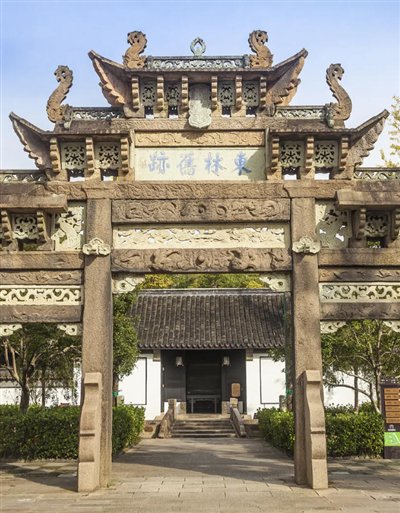
Cultural Heritage - Wuxi, an ancient city in Jiangnan, embodies a rich cultural heritage that includes political, musical, and educational traditions [3][4][5] - The story of Tai Bo, who left the Zhou kingdom to establish the Wu state, highlights the value of selflessness and virtue in governance, as praised by Confucius [3] - The cultural significance of Ji Zha, who evaluated poetry and music during the Spring and Autumn period, reflects Wuxi's historical influence on Chinese music and literature [3][4] Educational Influence - The establishment of Gui Shan Academy by Yang Shi and the prominence of Donglin Academy during the Ming dynasty illustrate Wuxi's role in the development of educational institutions [4] - The emphasis on practical application of knowledge, as advocated by Tang Wenzhi, underscores the importance of moral conduct alongside academic study [4] - Qian Mu's contributions to education and his reflections on the importance of character in scholarly pursuits further highlight Wuxi's educational legacy [4] Economic Development - Wuxi is recognized as a cradle of modern Chinese industry, with a thriving economy in sectors such as textiles, silk, and finance, driven by a spirit of entrepreneurship [5] - The "Su Nan model," characterized by township enterprises, emerged from Wuxi's innovative approach during the economic reforms of the 1990s, establishing it as a leading region in China [5] - The local ethos of "daring to be the first in the world" has propelled Wuxi to the forefront of contemporary commercial civilization and economic reform [5]

在文献中“聆听”千年宫乐:台北故宫博物院推出宫廷音乐特展
Xin Hua Wang· 2025-07-05 04:31
Core Viewpoint - The exhibition "The Sound of Court Music: Court Music in Literature" at the National Palace Museum in Taipei showcases the evolution of court music from the Zhou Dynasty to the Qing Dynasty, highlighting the rich cultural heritage of ritual music in China [1][2]. Group 1: Exhibition Overview - The exhibition features four sections: "Court Orchestra," "Singing and Dancing," "Music Gathering from All Directions," and "Echoes Beyond Strings," presenting historical aspects of Qing Dynasty court music through documents, ancient texts, and artworks [1]. - "Court Orchestra" focuses on "Zhonghe Shaoyue," the highest-ranking music in the Qing court, performed during significant events using over ten types of instruments [1]. - "Singing and Dancing" displays various court dances from the Qing Dynasty, including ritual dances and traditional banquet performances [1]. - "Music Gathering from All Directions" illustrates the fusion and exchange of ethnic music cultures within Qing court music [1]. - "Echoes Beyond Strings" revisits historical documents, showcasing classic works on Chinese music theory and court music [1]. Group 2: Curatorial Insights - The curator, Yeh Shuhui, emphasizes the deep-rooted connection between traditional Chinese music and its role in rituals and beliefs, aiming to present the unique historical aspects of court music and dance traditions [2]. - The exhibition encourages visitors to appreciate the historical significance behind the music through literature and imagery [2]. - The ongoing practice of traditional music in various Confucian temples in Taiwan reflects the enduring legacy of court music, with instruments like bells and zithers still being used in rituals [2]. Group 3: Exhibition Duration - The exhibition will run until September 7 [3].