社会信任危机

Search documents
中新网评:扶人反被讹,对讹人者要有实质性处罚
Zhong Guo Xin Wen Wang· 2025-09-30 02:08
Core Viewpoint - The incident involving Mr. Yin highlights a growing societal issue where individuals who help others in distress face the risk of being falsely accused and extorted, leading to a chilling effect on altruistic behavior in society [1]. Group 1: Incident Summary - Mr. Yin assisted an elderly person who fell while pushing a cart, but was later accused by the elderly's family of being the cause of the fall, demanding compensation of 30,000 yuan [1]. - Despite Mr. Yin's explanations, the lack of surveillance footage at the incident location made it difficult for him to defend himself until he found video evidence proving his innocence [1]. - The apology from the elderly's family after the truth was revealed was deemed insufficient to address the emotional and reputational damage Mr. Yin suffered during the ordeal [1]. Group 2: Legal Perspective - According to Article 184 of the Civil Code, individuals who voluntarily assist others in emergencies are not liable for damages unless there is gross negligence [2]. - Legal experts indicate that the law does not impose strict requirements on those who offer help, but the general duty of care lacks objective standards [2]. Group 3: Societal Implications - The low legal consequences for extortionate behavior contribute to a culture where many similar cases end with mere verbal apologies and little to no substantial punishment [3]. - To combat the phenomenon of false accusations against good Samaritans, it is suggested that legal measures should be strengthened to increase the penalties for extortion, including potential criminal charges for serious offenses [3]. - Ensuring that those who engage in extortion face significant consequences is essential for restoring public confidence in helping others without fear of repercussions [3].
连辑谈公益广告使命:筑牢诚信、友善之基,防止社会信任危机
Jing Ji Guan Cha Bao· 2025-07-22 12:58
Core Viewpoint - The forum emphasizes the importance of public service advertisements in rebuilding social trust through the core values of integrity and kindness, addressing the roots of the social trust crisis and proposing solutions [1][2]. Group 1: Importance of Social Trust - Social trust is highlighted as a crucial public topic in the context of urbanization and the proliferation of new technologies, with integrity and kindness serving as foundational elements [1]. - Cultivating private virtues of integrity and kindness can enhance social trust, tolerance, transparency, and resilience, thereby strengthening social soft power [1]. Group 2: Role of Public Service Advertisements - Public service advertisements should focus on themes of integrity and kindness, utilizing deep national sentiment, profound thematic exploration, and artistic expression to promote widespread integrity and kindness [2]. Group 3: Advertising and Urban Culture - Advertising is described as the "brain" of a city, requiring deep understanding and research to effectively express a city's unique culture, especially in the face of increasing homogeneity among cities [3]. - Differentiation through advertising is essential for cities to stand out in terms of taste, style, and connotation, which is seen as a core mission of advertising [3]. Group 4: Integration of AI in Advertising - AI technology is recognized as an unavoidable reality in the advertising industry, necessitating a positive attitude towards its integration and application [4]. - There is a need for a deep fusion of AI technology with traditional advertising techniques to create more attractive and impactful advertisements [4]. Group 5: Challenges and Opportunities with AI - Collaboration with AI presents both opportunities and challenges, with the importance of judgment and critical thinking emphasized for advertising professionals to navigate AI outputs effectively [5][6]. - As AI capabilities grow, advertising professionals must enhance their own skills and knowledge to effectively utilize AI tools [6]. Group 6: Building a Trust Mechanism - A multi-faceted approach is required to build social trust through public service advertisements, focusing on both government credibility and interpersonal trust [7]. - The government must lead by example to gain public trust, while individuals should cultivate personal integrity and kindness, contributing to a robust social trust system [7].
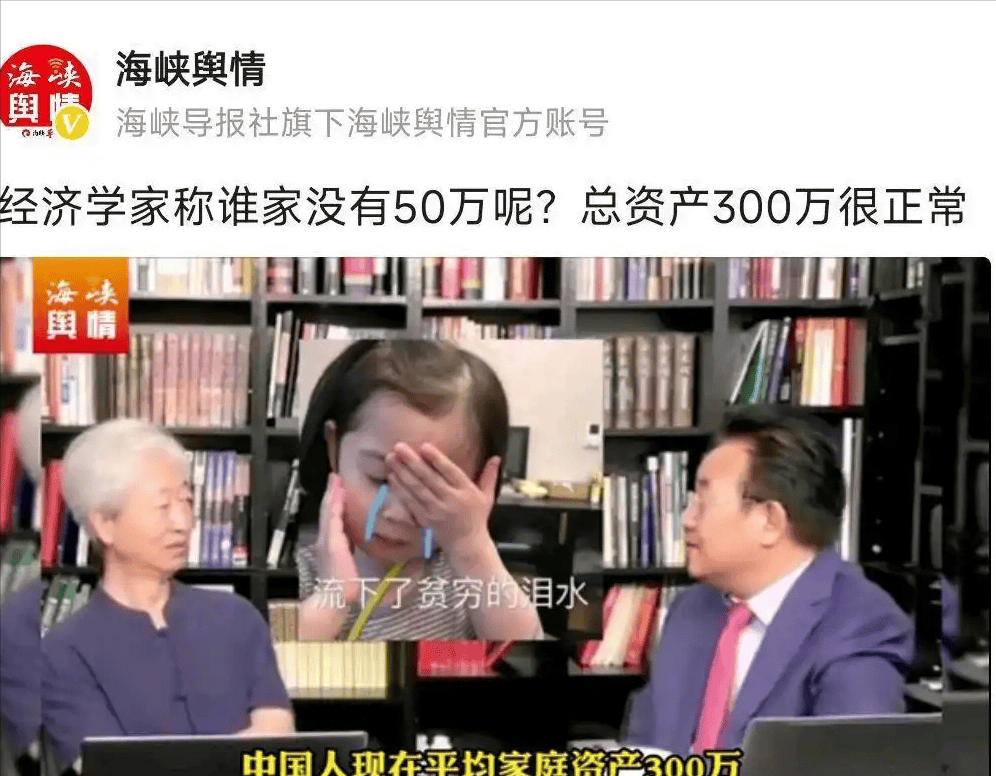
经济学家陈浩:人均家庭资产300万,存款50万!央行排查结果出来了
Sou Hu Cai Jing· 2025-04-14 06:58
Core Viewpoint - The statement by economist Chen Hao regarding the average family asset in China being 3 million yuan has sparked significant online debate, revealing a stark contrast between perceived wealth and actual financial reality [1][4]. Group 1: Family Wealth Statistics - Only 182.8 million households in China can easily withdraw 500,000 yuan, representing just 0.37% of all households, indicating that 99.63% cannot access this amount [4][5]. - There are approximately 494 million households in China, meaning that less than 4 out of every 1,000 households can withdraw 500,000 yuan at once [5]. - Over 20% of families hold 60% of total savings, highlighting a significant wealth concentration [5]. Group 2: Discrepancy in Wealth Perception - The average family asset in China is reported at 3.179 million yuan, while the per capita disposable income is only 36,900 yuan, suggesting a disparity between asset ownership and income levels [7]. - A significant portion of the population, approximately 600 million people, earn less than 1,000 yuan per month, which is often overlooked in wealth discussions [7][12]. - The majority of individual investors in the A-share market have assets below 500,000 yuan, with only about 7% holding more than this amount [7]. Group 3: Housing and Debt Impact - Housing constitutes over 70% of family assets, but this "paper wealth" is not easily convertible to cash, as many families are burdened with substantial mortgage debts [9]. - The top 1% of families hold assets exceeding 10 million yuan, while the bottom 50% have assets below 500,000 yuan, skewing the average asset figures [9]. - Family debt, particularly from mortgages, accounts for 76% of total liabilities, indicating that the reported average asset figures may not reflect true net worth [9]. Group 4: Public Reaction and Criticism - Chen Hao's comments have been criticized as out of touch with the realities faced by the average citizen, leading to a perception of economic elitism [11][20]. - Many online users expressed frustration, suggesting that economists should be more aware of the struggles faced by the general population [12][20].