神经美学

Search documents
“科学+艺术”:电影脑科学暨神经美学研讨活动举办
Xin Lang Cai Jing· 2025-12-29 17:12
Core Insights - The event "Science + Art" focused on the intersection of neuroscience and aesthetics, utilizing the film "Distant Progangri" as a medium to explore the application of brain science in artistic appreciation and national narrative [1][2] - Tsinghua University's Neuroengineering Laboratory, with over 20 years of research history, is one of the earliest labs in China to conduct brain-machine interface research, providing strong academic support for the event [1][2] Group 1 - The film "Distant Progangri" is based on the real development history of Tibet and aligns with the national strategy for brain-machine interface industry development [1] - Professor Gao Xiaorong from Tsinghua University highlighted that good cinematic art can induce "acquired pleasure," promoting hormone secretion and facilitating emotional transmission across time and space [1] - During the event, a brain-machine interface viewing experiment was conducted where volunteers wore high-precision devices, showing significant increases in overall brain activation during climactic scenes, translating abstract emotions into visual data [1][2] Group 2 - The film crew undertook a challenging real-location shoot at an altitude of 5,800 meters, covering over 3,000 kilometers in extreme cold and low oxygen conditions, providing valuable artistic samples for the seminar [2] - Experts analyzed cultural codes of Tibetan dance movements from a neuroaesthetic perspective, revealing the neural connections between the body and aesthetics [2] - The interdisciplinary event established an innovative platform for the integration of technology and humanities, exploring new pathways for the application of brain science in artistic appreciation and national narrative [2]
《遥远的普若岗日》主创团队走进清华大学:先进脑科学解读电影审美密码
Xin Lang Cai Jing· 2025-12-28 22:36
Core Insights - The event showcased the intersection of art and science through the film "Distant Pu Ruogangri," highlighting the emotional impact of storytelling and its visualization through brain-computer interface technology [1][2] Group 1: Event Overview - The event took place at Tsinghua University, featuring a collaboration between the film's creative team and the university's Biomedical Engineering Department, known for its 20 years of experience in brain-computer interface research [1] - The director of the film, Cai Yu, and the laboratory director, Gao Xiaorong, emphasized the importance of emotional transmission in both film and neuroscience [1] Group 2: Brain-Computer Interface Experiment - A notable segment involved volunteers wearing high-precision EEG devices while watching key scenes from the film, revealing significant brain activation, particularly in the frontal region, during emotionally charged moments [2] - The experiment demonstrated the ability to convert abstract feelings of "emotion" into visualized data, showcasing the strong impact of cinematic storytelling on viewers [2] Group 3: Artistic and Cultural Insights - Professor Tang Yi from Beijing Normal University discussed the power of body language in Tibetan dance, linking it to cultural expressions that activate mirror neurons in viewers, enhancing empathy [3] - The event included interactive sessions where participants used wearable brain-computer interface devices to engage with the film's narrative, illustrating the appeal of brain-computer interaction technology [3] Group 4: Innovation and Future Directions - The event served as a platform for interdisciplinary collaboration, exploring the integration of technology and humanities, aligning with national strategies for future industries like brain-computer interfaces [3]
先进脑科学解读电影审美密码
Xin Lang Cai Jing· 2025-12-28 18:23
Core Insights - The event showcased the intersection of art and science through the film "Distant Pu Ruo Gang Ri," highlighting the emotional impact of storytelling and its visualization through brain-computer interface technology [1][2] Group 1: Event Overview - The event took place at Tsinghua University, featuring a collaboration between the film's creative team and the university's Biomedical Engineering Department's Neural Engineering Lab, which has over 20 years of experience in brain-computer interface research [1] - The lab's director, Professor Gao Xiaorong, emphasized the importance of emotional transmission in art and its ability to enhance dopamine and endorphin secretion, leading to immediate pleasure and lasting happiness [1] Group 2: Brain-Computer Interface Experiment - A notable segment involved volunteers wearing high-precision EEG devices while watching key scenes from the film, revealing significant brain activation, particularly in the frontal region, during emotionally charged moments [2] - The experiment illustrated how abstract feelings like "emotion" can be transformed into visual data, demonstrating the strong impact of film narratives on viewers [2] Group 3: Artistic and Cultural Insights - Professor Tang Yi from Beijing Normal University discussed the power of body language in Tibetan dance, highlighting how specific movements can activate "mirror neurons" in viewers, evoking deep empathy [3] - The event concluded with interactive sessions where participants used wearable brain-computer interface devices to engage with the film's plot, showcasing the appeal of brain-computer interaction technology [3] Group 4: Innovation and Future Directions - The event served as a platform for interdisciplinary innovation, exploring the integration of technology and humanities, and aligning with national strategies for future industries like brain-computer interfaces [3]
清华神经美学实验揭秘“脑洞世界”
Xin Lang Cai Jing· 2025-12-27 11:29
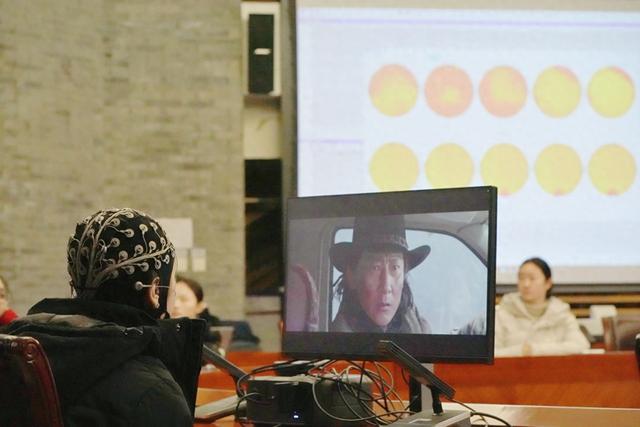
Core Insights - The event at Tsinghua University focused on the intersection of neuroscience and aesthetics, utilizing high-precision EEG devices to capture audience neural activity during film viewing [2][4] - The research aims to explore the neural activity patterns involved in art appreciation, providing scientific support for artistic creation and education [4] Group 1: Event Overview - The "Science + Art" film neuroscience and neuroaesthetics seminar featured student volunteers wearing portable EEG devices while watching a film segment [2] - The research team from Tsinghua's Biomedical Engineering School aims to assist in brain-computer interface and decoding algorithm research through this experiment [2] Group 2: Research Findings - Real-time neural activity from the prefrontal cortex was displayed, indicating significant changes during emotionally charged film segments, suggesting empathy and emotional engagement [2] - The research is also exploring applications of neuroaesthetic principles in areas such as emotional disorder rehabilitation, aesthetic education, and cognitive intervention for the elderly [4] Group 3: Film and Participation - The film "Distant Progangri" showcases the development of Tibet's Shuanghu region, with a focus on the stories of young university students and herders, and is set to be released on December 16 [4] - The event attracted participation from students and faculty from various universities, including Tsinghua, Peking University, Beijing Normal University, and Beijing Dance Academy [4]

引发大众共鸣 舞剧《人在花间住》完成2025年首轮巡演
Zhong Guo Xin Wen Wang· 2025-06-21 08:48
Core Insights - The dance drama "People Living Among Flowers" has successfully completed its first national tour in 2025, showcasing its performances in eight cities over nearly two months, starting from its premiere in Guangzhou in April [1][2] - The narrative focuses on the emotional interactions between a mother suffering from Alzheimer's disease and her son, who is lost in the hustle of urban life, marking a bold thematic choice in the realm of dance drama [1][2] Group 1 - The dance drama explores the challenges posed by Alzheimer's disease within the context of a "Chinese family," using immersive techniques to convey the internal struggles of the patient and the resilience of familial love [1][2] - The production has been recognized for its dual value: artistically expanding the emotional expression in dance drama and socially introducing the theme of Alzheimer's disease into this genre for the first time [2] - The director has deepened the emotional bond between the mother and son in the revised version, resonating with audiences and enhancing the overall impact of the performance [2] Group 2 - The production was selected as a project for the National Arts Fund in 2025, which provided an opportunity for the creative team to refine various aspects of the performance, including choreography, lighting, and music [2] - An event at Tsinghua University highlighted the unique perspective the drama offers on understanding human emotions and cognition through the lens of art, emphasizing its academic significance [2] - The second round of the national tour is already in preparation, with upcoming performances scheduled at the Shenzhen Nanshan Cultural and Sports Center [2]
清华惊现神秘高科技组织?实验团队回应
Ke Ji Ri Bao· 2025-06-19 08:08
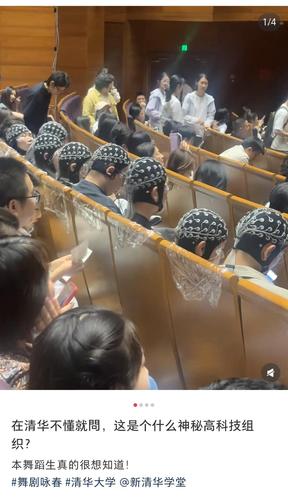
Core Insights - The article discusses a recent event at Tsinghua University where a team utilized non-invasive brain-computer interface technology in aesthetic and artistic research, marking a significant advancement in the field of neuroaesthetics [4][6]. Group 1: Neuroaesthetics Research - The Tsinghua University Neuroengineering Laboratory's research team aims to decode audience aesthetic experiences by synchronously capturing neural activity during live performances [4][6]. - Neuroaesthetics is an emerging interdisciplinary field that combines neuroscience with art and humanities, focusing on how humans perceive and evaluate beauty at a neural level [5]. - The research utilizes non-invasive brainwave caps to collect data from multiple participants simultaneously, enhancing the understanding of audience engagement in real-time artistic experiences [6][8]. Group 2: Technological Advancements - China's research in non-invasive brain-computer interface technology has been ongoing since the 1990s, with the country now being on par with international counterparts and even leading in certain aspects [6]. - The application of non-invasive brain-computer interfaces in rehabilitation has shown significant results, with recovery times reduced by one-third and effectiveness improved by one-third compared to traditional methods [6]. - The current experiment represents the first systematic application of non-invasive brain-computer interface technology in neuroaesthetics research, providing high temporal resolution and the ability to operate in natural settings [6][8]. Group 3: Future Directions - Future plans include exploring the mechanisms behind core aesthetic experiences such as "immersion" and "empathy," and applying findings to support artistic creation, emotional regulation, and rehabilitation [13].
神经美学:发生在大脑和艺术之间的化学反应
3 6 Ke· 2025-06-16 00:49
Group 1 - The article explores the relationship between art and the brain, emphasizing how live performances evoke strong emotional responses and connections among audiences [1][22][23] - Neuroscience, particularly neuroaesthetics, is highlighted as a field that investigates how the brain perceives and interprets art, revealing the intricate processes involved [1][24] - The social aspect of experiencing art is significant, as being surrounded by others enhances emotional engagement and understanding of performances [2][3][22] Group 2 - The narrative structure of stories, such as in ballet, plays a crucial role in emotional connection, allowing audiences to empathize with characters without direct involvement [5][7] - Specific artistic elements, like isolation, contrast, and metaphor, are identified as factors that enhance emotional responses and engagement with the artwork [11][13][14][16] - Different body shapes and movements in performances can elicit varying emotional reactions, with softer forms generally provoking positive feelings and sharper forms leading to negative emotions [17][19] Group 3 - Music is identified as a powerful emotional partner in performances, significantly amplifying the audience's emotional responses when aligned with the dance [21] - The collective experience of watching a live performance creates a shared emotional atmosphere, binding the audience's brains together in a unique way [22][23] - The article concludes by emphasizing the ongoing exploration of how the brain creates and perceives art, highlighting the complexity and mystery of this relationship [24]