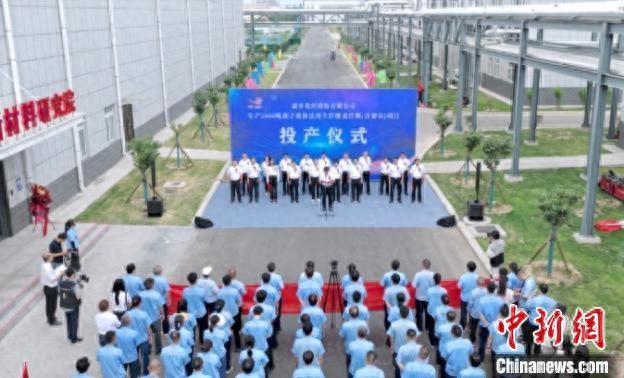
离子液体法再生纤维素纤维技术

Search documents
全球首个!中国科研团队实现离子液体法再生纤维素纤维规模化生产
Zhong Guo Xin Wen Wang· 2025-07-03 10:59
Core Viewpoint - The successful industrialization of ionic liquid-based regenerated cellulose fiber technology marks a significant breakthrough in green fiber production, with the first demonstration project achieving an annual output of 1,000 tons in Henan [1][3]. Group 1: Technology and Innovation - The project is the world's first to achieve large-scale production of regenerated cellulose fibers using ionic liquid technology, overcoming traditional spinning process and environmental challenges, resulting in zero emissions of wastewater, waste gas, and solid waste [3][5]. - The ionic liquid team, led by academician Zhang Suojiang, has spent over a decade addressing various scientific challenges, including ionic liquid design, cellulose dissolution mechanisms, and spinning processes, culminating in a new technology for dissolving cellulose and green spinning [3][5]. Group 2: Environmental Impact - The newly developed technology is expected to reduce carbon dioxide emissions by 5,000 tons annually compared to traditional fossil fibers, with a solvent recovery rate exceeding 99% [5]. - The project sets a benchmark for the industrialization of new green technologies, providing sustainable options for the textile industry and contributing to China's carbon peak and carbon neutrality goals [5]. Group 3: Market Potential - Regenerated cellulose fibers, derived from natural plant cellulose, possess excellent moisture absorption, breathability, and a silk-like luster, indicating strong market potential in the textile sector [3]. - Common products in the market include viscose, modal, and lyocell, which are expected to benefit from the advancements in ionic liquid technology [3].