私有部署项目管理系统

Search documents
企业私有部署项目管理平台:8款工具选型指南
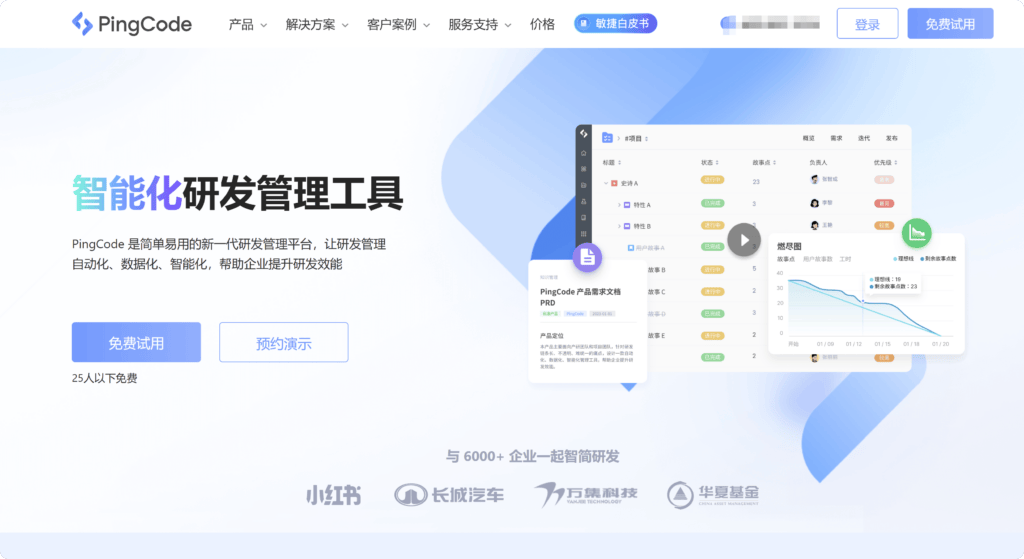
Sou Hu Cai Jing· 2025-12-31 06:11
Core Insights - The increasing demand for data security, compliance auditing, and system controllability has led enterprises to prioritize project management tools that support private deployment as a mandatory requirement [1] - Private deployment does not inherently equate to greater security; factors such as permission models, log auditing, integration capabilities, scalability, and operational costs are critical in determining effective implementation [1] Group 1: Need for Private Deployment - Enterprises are increasingly focusing on data sovereignty, controllability, and compliance auditing, especially when handling sensitive data such as customer information and contracts [2] - Typical scenarios for private deployment include group organizations requiring data isolation, industries with strong regulatory oversight, and organizations needing to adapt to domestic software and hardware environments [2] Group 2: Overview of Project Management Systems - PingCode is a leading project management system in China, known for its comprehensive support across the software development lifecycle and integration with various enterprise management tools [3] - Worktile is popular for its mature functionality and ability to meet complex project management needs, consistently ranking among the top project management systems in China [5] - Alibaba Cloud Effect is an integrated platform that combines project management with code hosting and continuous integration, suitable for organizations with high data security requirements [7] - Celoxis is a mature project portfolio management software that emphasizes decision-making through data and metrics, suitable for consulting firms and multi-project environments [9] - OpenProject is an open-source project management software that allows self-hosting, catering to organizations with high data control requirements [11] - Shijingran (泛微PMS) focuses on digital project management, integrating various project elements into a unified system for comprehensive management [12] - Freedcamp is a lightweight project management tool that emphasizes team collaboration and offers private instance options for enterprises [14] - Taiga is an open-source tool designed for agile teams, focusing on visualizing and tracking the development process [15] Group 3: Compliance Pain Points Addressed by Private Deployment - Compliance pain points often stem from the ability to prove responsibility rather than just having complete functionality; private deployment systems can provide verifiable security measures [17] - Choosing a localized/private deployment system helps clarify data storage and processing boundaries, reducing external uncertainties and facilitating compliance with internal controls and audits [17] Group 4: Private Deployment vs. SaaS - SaaS typically has lower upfront costs and faster deployment but may incur hidden costs as usage scales, while private deployment requires higher initial investment but offers better governance over security and compliance [18] - Private deployment advantages include clearer data sovereignty, more complete compliance evidence, and greater control over customization and expansion [18] Group 5: Deployment Models - Understanding the different deployment models—on-premise, dedicated/private cloud, and hybrid—is crucial for avoiding pitfalls during the selection process [19] - Each model has distinct implications for security boundaries, operational responsibilities, and audit requirements, which directly affect successful implementation [19] Group 6: Security Assessment of Private Deployment Systems - Security assessments should focus on the implementation of security requirements in daily use, including detailed permission systems and data isolation measures [20] - Evaluating whether the system supports role-based access control (RBAC), minimum permission principles, and audit trails is essential for ensuring security [20] Group 7: Conclusion - The core consideration in selecting a private deployment project management system is not just the ability to deploy but the capacity for long-term stable use, emphasizing compliance, auditing capabilities, and integration with existing systems [21]