
科举制度

Search documents
槐院里的时光
Xin Lang Cai Jing· 2026-02-27 04:58
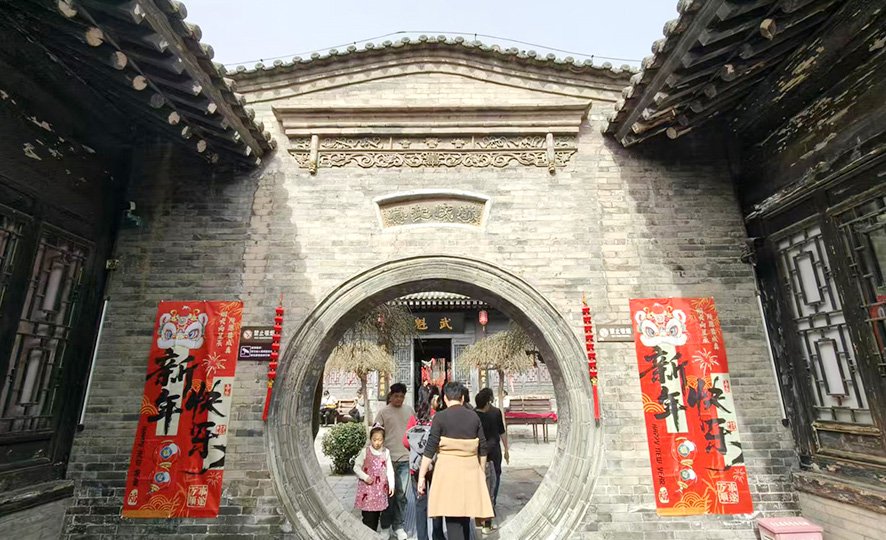
Group 1 - The article highlights the cultural richness and traditional festivities of the Guanzhong region during the Spring Festival, showcasing local customs such as drum performances and folk dances that create a vibrant atmosphere [2] - The Qing Dynasty examination hall in Pucheng serves as a historical site that reflects the importance of education and the imperial examination system, preserving the legacy of scholars' dedication to their studies [2] - The Pucheng Time Museum, built on the site of the National Time Center, emphasizes the contributions of scientists in measuring time and the evolution of timekeeping devices, illustrating humanity's quest for precision in time measurement [3] Group 2 - The museum's exhibits, including ancient timekeeping tools, demonstrate the relationship between advancements in productivity and the development of time measurement, highlighting the significance of accurate timekeeping in various aspects of society [3] - The narrative of the scientists at the National Time Center underscores themes of dedication and selflessness in the pursuit of scientific progress, reinforcing the idea of serving the nation through technology [3] - The article reflects on the philosophical implications of time measurement, encouraging a deeper appreciation for the present and the importance of making the most of one's time [3]

文本中的历史与制度
Xin Lang Cai Jing· 2026-01-23 20:58
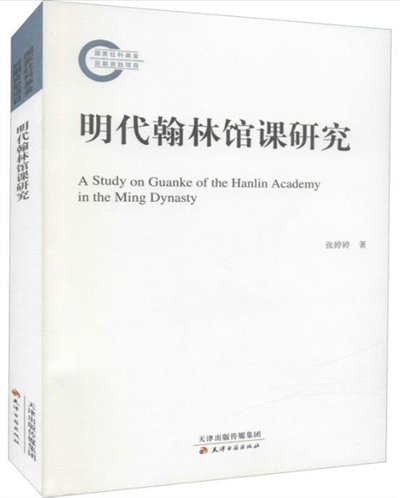
Core Viewpoint - The Ming Dynasty Hanlin Academy's curriculum, known as the "Shuji System," was a significant method for training civil officials, providing valuable insights into the examination system and the performance of the "Shuji" candidates [3]. Group 1: Research Significance - The existing literature on the Hanlin Academy's curriculum has been extensive, but comprehensive studies on the training of "Shuji" candidates remain insufficient [3]. - Zhang Tingting's research represents a breakthrough in understanding the training and assessment of "Shuji," combining textual and institutional historical research [3][4]. Group 2: Curriculum Content Analysis - The author meticulously categorized the examination topics from the Hanlin Academy into various literary forms, including official documents, essays, and poetry, highlighting the uneven distribution of topics across different genres [4]. - The examination topics covered a wide range of subjects, including politics, economics, culture, military affairs, and ideology, with detailed statistical analysis provided [5]. Group 3: Historical Context and Political Implications - The author analyzed the political implications of the curriculum by examining specific examination topics and their historical context, such as military topics related to the Ming Dynasty's military system and border defense [5][6]. - The study also explored how the curriculum influenced the political capabilities of "Shuji" candidates, using historical examples to illustrate the continuity of political thought among candidates [6]. Group 4: Future Research Directions - The research indicates potential areas for further exploration, such as integrating cultural history and ideological studies to deepen the understanding of the "Shuji" candidates' societal impact [6].
“运河明珠”武城的崔氏状元家族
Xin Lang Cai Jing· 2026-01-21 10:20
Group 1 - The article highlights the historical significance of Wucheng County, known as a cultural hub with a rich educational legacy, producing numerous top scholars, including 16 successful candidates in the imperial examination, second only to Xiuxian County in Anhui [2] - The article details the prominent figures from the Qinghe Cui family, emphasizing their contributions to education and governance, with many family members achieving high ranks, including several prime ministers [2][8] - The article mentions the notable achievements of Cui Yuanhan, who was the first recorded scholar to achieve the "three yuan" distinction in the imperial examination, showcasing the family's academic excellence [5][6] Group 2 - The article provides a brief biography of Cui Xian and Cui Jiao, who were recognized as a grandfather-grandson pair of top scholars, although specific details about their lives are scarce due to the passage of time [3] - It discusses the brotherly duo of Cui Zhaowei and Cui Zhaojun, detailing their respective achievements and the political challenges they faced during their careers [4] - The article also highlights Cui Yuan, a military scholar who became a prime minister during the Tang Dynasty, illustrating the family's influence in both civil and military spheres [7]
聚天下英才而用之:一部中国科举制度的千年演进史
Jing Ji Guan Cha Bao· 2026-01-21 07:08
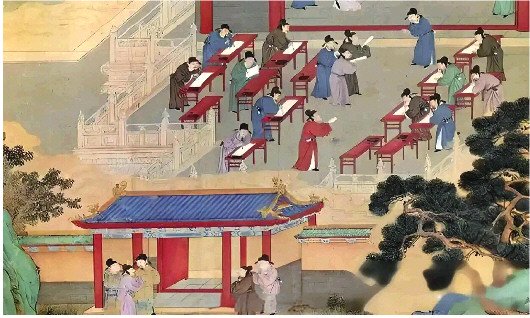
Core Viewpoint - The examination system in ancient China, known as the imperial examination or "keju," served as a means to select officials through public examinations, promoting social mobility and breaking the constraints of aristocratic lineage. Established during the Sui dynasty, it flourished through the Tang, Song, Ming, and Qing dynasties, ultimately ending in the late Qing dynasty, and significantly contributed to the education and development of Chinese society [1]. Group 1: Evolution of the Examination System - The tradition of valuing talent has been a hallmark of Chinese culture, transitioning from hereditary systems to merit-based selections, such as the "xiang ju li xuan" during the pre-Qin period, which allowed local recommendations for talented individuals to serve in government [2]. - The Zhou dynasty implemented a system where local gentry selected individuals based on virtue and talent, leading to formal recommendations for government positions after rigorous assessments [3]. - The Qin dynasty introduced a military meritocracy, breaking the hereditary system by appointing officials based on military achievements [4]. - The Han dynasty's "chajü" system became the mainstream method for selecting officials, with annual examinations assessing various virtues and talents [5]. Group 2: Development and Standardization - The Nine-Rank System during the Wei, Jin, and Northern and Southern dynasties categorized individuals based on family background, talent, and moral character, influencing the selection process [6]. - The Sui dynasty abolished the Nine-Rank System and established a more open examination system, allowing candidates to take exams without needing recommendations from officials [7]. - The Tang dynasty further developed the examination system, creating a two-tiered examination structure and emphasizing the importance of testing as the primary means of selecting talent [8]. Group 3: Impact and Legacy - The examination system was instrumental in breaking the monopoly of aristocratic families on government positions, allowing for a more equitable selection of officials based on merit [31]. - It fostered a culture of education and scholarship, leading to the establishment of various educational institutions and a societal emphasis on learning [32]. - The influence of the examination system extended beyond China, impacting the selection processes in neighboring countries and even Western nations, establishing a "civil service examination" tradition [33].
安徽休宁状元文化“圈粉”海外华文媒体
Zhong Guo Xin Wen Wang· 2025-11-17 08:50
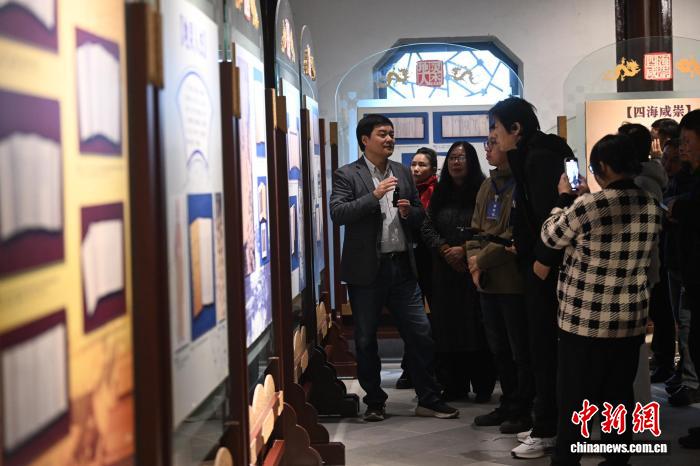
Core Insights - The article highlights the cultural significance of Xiuning County, known as "China's First County of Scholars," which has produced 19 top scholars throughout history [1][3][5]. Group 1: Cultural Heritage - Xiuning County is located in the ancient Huizhou region, known for its strong literary traditions and economic support from Huizhou merchants [3]. - The China Scholar Museum, established on the site of an ancient county government, showcases the history of scholars and the imperial examination system, housing 1,760 artifacts, including seven first-class cultural relics [3][5]. Group 2: Media Engagement - Overseas Chinese media representatives visited the museum to explore the historical journey of scholars and the evolution of the imperial examination system [5][7]. - The museum's exhibitions include a systematic overview of the lives of the 19 scholars and the contributions of local elites to cultural heritage [5]. Group 3: Modern Cultural Promotion - Xiuning County is leveraging its scholar culture to develop a new tourism industry, creating a positive cycle of cultural preservation and economic development [7]. - Various local products, such as scholar rice wine and tea, are becoming popular elements in the cultural economy, enhancing the region's appeal as a tourist destination [7].
时代剪影:武则天的大明宫绝唱
Jing Ji Guan Cha Bao· 2025-10-22 01:49
Core Insights - The article discusses the historical significance and archaeological findings of the Daming Palace, which was the largest palace complex in the world during the Tang Dynasty, covering an area of 3.3 square kilometers, significantly larger than the Forbidden City [1][2]. Group 1: Historical Context - The Daming Palace was initially constructed in 634 AD by Emperor Taizong of the Tang Dynasty for his father, Li Yuan, but was halted shortly after due to his death [2]. - The construction was officially resumed in 662 AD under Emperor Gaozong, with significant influence from Empress Wu Zetian, who played a crucial role in the palace's completion within just two years using around 100,000 workers [2][5]. Group 2: Architectural Features - The main entrance of the Daming Palace, known as Danfeng Gate, was designed as the highest level of ancient Chinese city gates, measuring 74.5 meters in length and 33 meters in width [4]. - The palace complex included the Hanyuan Hall, which was the largest building in the Daming Palace, constructed with 192 pillars, making it three times larger than the Hall of Supreme Harmony in the Forbidden City [16]. Group 3: Cultural Significance - The Daming Palace served as a symbol of imperial power and cultural identity, with its name derived from the "Phoenix" motif, representing prosperity and auspiciousness in Chinese culture [3]. - Empress Wu Zetian's reforms during her time in the Daming Palace included significant changes to the civil service examination system, allowing for greater access to government positions for commoners, thus breaking the traditional aristocratic barriers [11][12]. Group 4: Archaeological Discoveries - Ongoing archaeological excavations have revealed numerous artifacts, including bricks and stone carvings, which provide insights into the construction techniques and daily life during the Tang Dynasty [1][9]. - The Daming Palace National Heritage Park has been established to preserve and showcase these archaeological findings, highlighting the historical importance of the site [1].
看完徽州的粉墙黛瓦,别忘了到这个博物馆看一看|博物馆巡游
Jing Ji Guan Cha Bao· 2025-06-28 00:10
Core Viewpoint - The article highlights the significance of the Huizhou History Museum, emphasizing its role in showcasing the rich cultural heritage and historical significance of the Huizhou region in China, particularly through its artifacts and architectural style [1][3]. Group 1: Museum Overview - The Huizhou History Museum is located in the ancient city of Huizhou, blending seamlessly with the local architecture, providing visitors with a unique experience of both the museum's exhibits and the historical context of Huizhou's architectural style [3]. - The museum features various artifacts that reflect the historical and cultural development of Huizhou, including the famous Huizhou three carvings: brick carving, stone carving, and wood carving [3][4]. Group 2: Historical Significance - Huizhou originated in the 9th year of the Kaihuang era (589 AD) under the Sui Dynasty and was renamed Huizhou during the Northern Song Dynasty, becoming a significant political, economic, and cultural region over the subsequent dynasties [3]. - The region produced approximately 2,000 successful candidates in the imperial examination system, indicating a flourishing educational and cultural environment, with notable figures such as Zhu Xi, Cheng Dawei, Dai Zhen, and Hu Shi emerging from this area [2][3]. Group 3: Artifacts Displayed - The museum houses a variety of historical artifacts, including bronze vessels from the Western Zhou period, pottery from the Han dynasty, and various ceramics from the Tang, Song, and Ming dynasties, showcasing the evolution of craftsmanship and artistic expression in Huizhou [5][6][7].