科创债投资与配置

Search documents
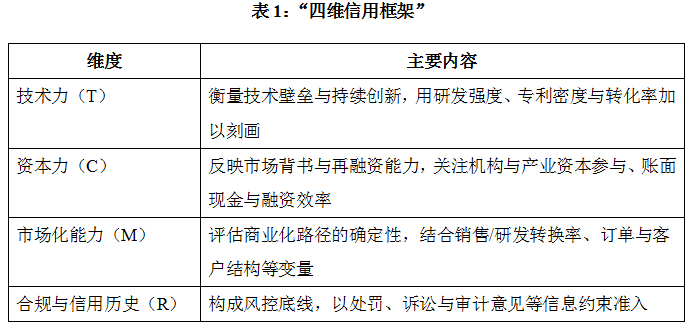
基于四维信用评级框架的科创债投资与配置
Zheng Quan Shi Bao Wang· 2025-11-24 04:11
Core Insights - The introduction of Sci-tech bonds since 2021 marks a systematic advancement in the capitalization of technological attributes, differing fundamentally from traditional credit bonds in investment logic [1] - Traditional credit rating systems are inadequate for evaluating Sci-tech bonds, necessitating a new approach to assess credit risk and potential returns [1] Group 1: Four-Dimensional Credit Framework - The "Four-Dimensional Credit Framework" is proposed to align investment signals with the characteristics of Sci-tech enterprises, focusing on technology strength, capital strength, market capability, and compliance/credit history [2][4] - This framework aims to create a comprehensive credit score that can be translated into tradable returns, with stronger technology and capital support leading to improved financing conditions and cash flow [4] Group 2: Portfolio Construction for Sci-tech Bonds - Portfolio construction for Sci-tech bonds should consider weight settings based on ratings, industry, and lifecycle, with a focus on comprehensive credit scores to categorize investments [6] - Duration selection is crucial to avoid mismatches between technology cycles and bond maturities, with recommendations for simplified approaches to manage liquidity and risk [7] Group 3: Risk Management in Sci-tech Bond Investment - Risk management is divided into four areas: interest rate/duration risk, credit risk, specific market risk, and liquidity risk, with strategies for dynamic hedging and concentration management [8] - Emphasis is placed on monitoring market conditions and adjusting exposure to mitigate risks associated with credit spreads and liquidity [8] Group 4: Application and Considerations - The framework shifts the focus of credit rating from default exclusion to yield stratification, utilizing a combination of indicators to generate auditable and tradable credit scores [9] - Different investment institutions can implement tailored strategies based on their specific needs, with a focus on maintaining strict risk constraints and enhancing liquidity management [9]