
科学加湿

Search documents
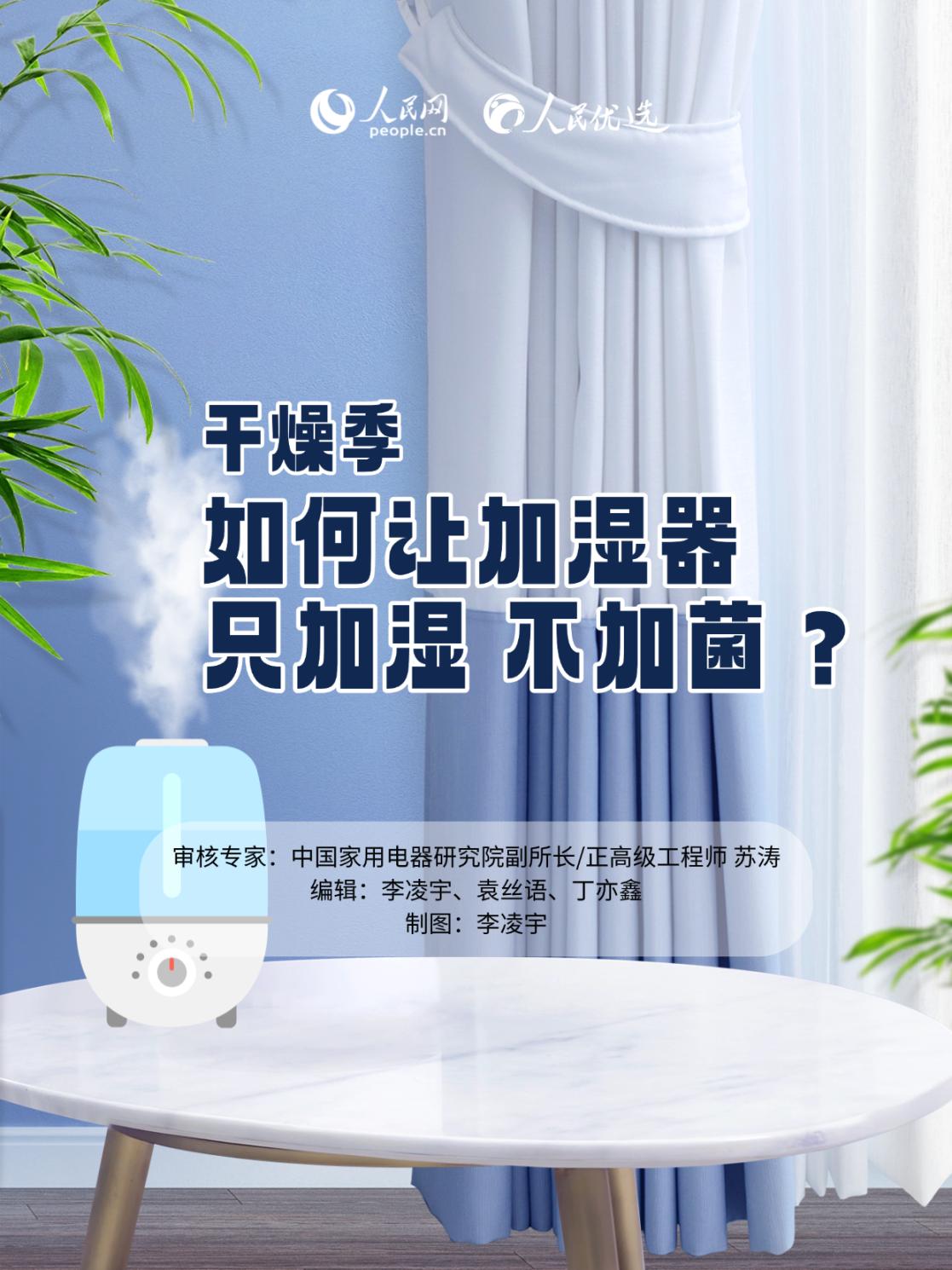
干燥季 如何让加湿器只加湿不“加菌”?
Ren Min Wang· 2025-12-18 02:18
Core Viewpoint - The article emphasizes the importance of proper usage and maintenance of humidifiers to enhance indoor comfort during dry winter months while avoiding potential health risks associated with improper use. Group 1: Humidifier Usage Guidelines - Ultrasonic humidifiers should not use tap water; instead, purified water is recommended to avoid the spread of calcium and magnesium ions and microorganisms [5] - Evaporative humidifiers can use tap water as impurities are typically left behind, but it is still advisable to follow the manufacturer's instructions regarding water source [5] - Humidifiers should be placed on stable surfaces, away from walls, furniture, and heat sources, ideally in the center of the room for even moisture distribution [13] Group 2: Maintenance and Cleaning - Stagnant water in humidifiers can harbor bacteria and mold; it is essential to change the water daily and clean the unit weekly [7] - Cleaning should involve using a soft brush and specialized cleaning agents to prevent biofilm and scale buildup [7] Group 3: Health Considerations - "Humidifier lung" is a condition caused by inhaling aerosolized particles containing bacteria and chemicals, primarily due to improper use rather than the device itself [11] - To prevent health risks, it is crucial to use clean water, maintain regular cleaning, avoid continuous operation, and ensure good air circulation [11] - For vulnerable populations such as infants and allergy sufferers, cold evaporative humidifiers are recommended, and water quality and cleaning protocols should be strictly followed [16] Group 4: Additional Recommendations - Adding essential oils or fragrances to humidifiers is not recommended as it can lead to respiratory irritation and other health issues [19] - When selecting a humidifier, consider factors such as noise level, ease of cleaning, brand reputation, compliance with national standards, and features like automatic humidity control [22]

很多人用加湿器的方法都是错的,反而对身体有害!现在改还来得及
Zhong Guo Xin Wen Wang· 2025-12-01 02:58
Core Viewpoint - Maintaining indoor humidity between 40% and 65% is essential for health, as low humidity can lead to various discomforts, while high humidity can promote the growth of allergens and pathogens. Group 1: Indoor Humidity - Indoor humidity should be maintained between 40% and 65% year-round for optimal health benefits [2] - Low humidity can cause symptoms such as sore throat, dry mouth, dry eyes, cough, and skin itching [2] - High humidity can create conditions favorable for mold and dust mites, increasing the risk of eczema and allergic conjunctivitis [3] Group 2: Choosing a Humidifier - Three types of humidifiers are recommended: ultrasonic, evaporative, and steam [4][5] - Ultrasonic humidifiers are quiet and cost-effective but require pure water to avoid white powder pollution [4] - Evaporative humidifiers use tap water and are suitable for children and the elderly, though they have lower efficiency [4] - Steam humidifiers have good sterilization properties but are energy-intensive and pose burn risks [5] Group 3: Key Parameters for Selection - The humidification capacity (milliliters per hour) is crucial; for rooms of 10-20 square meters, choose 200-300 mL/hour, and for 20-30 square meters, select 300-500 mL/hour [6] - Humidifiers with humidity display and automatic on/off functions are preferred [6] Group 4: Safety and Durability Considerations - A water tank capacity of over 3 liters is recommended to reduce refill frequency [7] - A large tank opening facilitates cleaning and reduces scale buildup [7] - Humidifiers for bedrooms should have noise levels ≤35 decibels to avoid disturbing sleep [7] Group 5: Proper Usage of Humidifiers - It is advised to use purified or distilled water and change the water daily to prevent mineral buildup and contamination [8] - A hygrometer should be used to maintain humidity levels between 40% and 65% [9] - After 2 hours of continuous use, the humidifier should be turned off for 10-20 minutes [9] Group 6: Maintenance Practices - Daily water changes and regular disinfection are essential to prevent bacterial growth [10] - A thorough cleaning every two weeks is recommended, using a disinfectant with 250-500 mg/L effective chlorine [11] - If the humidifier has not been used for a long time, it should be disinfected before reuse [11] Group 7: Placement and Usage Guidelines - Humidifiers should be placed away from heat sources and at a height of 0.5 to 1.5 meters [12] - Avoid directing the mist towards people's faces to reduce inhalation of pathogens [12] - It is advisable not to use humidifiers on carpeted floors to prevent moisture absorption and bacterial growth [12] Group 8: Prohibited Additives - Adding substances like disinfectants, vinegar, essential oils, or perfumes to humidifiers is discouraged due to potential health risks [13] - These additives can lead to respiratory issues and allergic reactions when aerosolized [13]