科学循证

Search documents
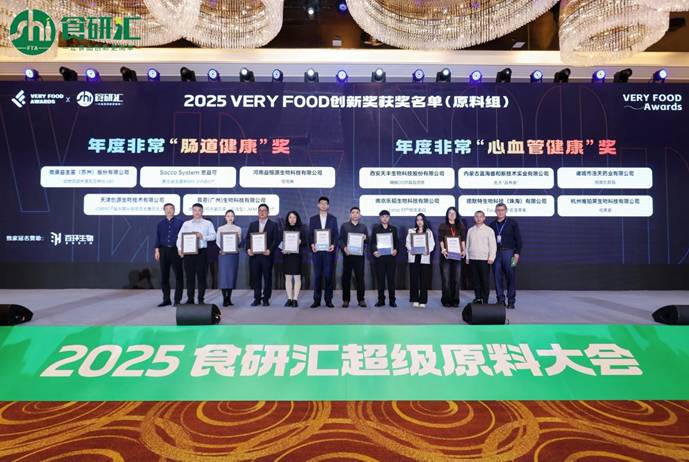
微康益生菌BLa80荣获2025 Very Food年度大奖 科学循证引领益生菌产业创新
Zhong Guo Shi Pin Wang· 2025-11-17 07:14
Core Insights - The 2025 Very Food Annual "Gut Health Award" was awarded to Microbiome Probiotics' BLa80 strain, highlighting its exceptional gut health benefits and solid scientific evidence [1][2] - BLa80, derived from healthy breast milk samples in the Sichuan plateau, marks a significant breakthrough for China in the infant probiotic sector, being officially recognized by the National Health Commission [2] - The successful development of BLa80 reflects China's transition from following to competing and eventually leading in the probiotic industry [2] Company Achievements - The development of BLa80 involved over ten years of research by the Microbiome team, including comprehensive genomic analysis and rigorous clinical studies [4] - More than 20 clinical studies have been conducted on BLa80, involving over 2,500 participants, including 1,100 infants, demonstrating its safety and efficacy in improving infant health [4] - BLa80 has shown significant effects in reducing infant diarrhea, lowering allergy incidence, alleviating eczema, and enhancing immune function [4] Research and Development - Microbiome Probiotics has established a robust evidence-based research system, conducting over 100 clinical studies across six health domains, including metabolic and immune health [8] - The company has built four state-of-the-art probiotic manufacturing plants in China, covering a total area of 100,000 square meters, ensuring a stable production capacity of over 1,000 tons of high-activity probiotic powder annually [8] Industry Outlook - The global probiotic industry is entering a critical phase focused on scientific evidence, quality, and industrialization [10] - Experts predict that the industry will evolve towards more precise, efficient, and personalized probiotic solutions [10] - Microbiome Probiotics aims to contribute to national health by continuing to develop scientifically validated probiotic strains, enhancing China's presence in the global probiotic research arena [10]

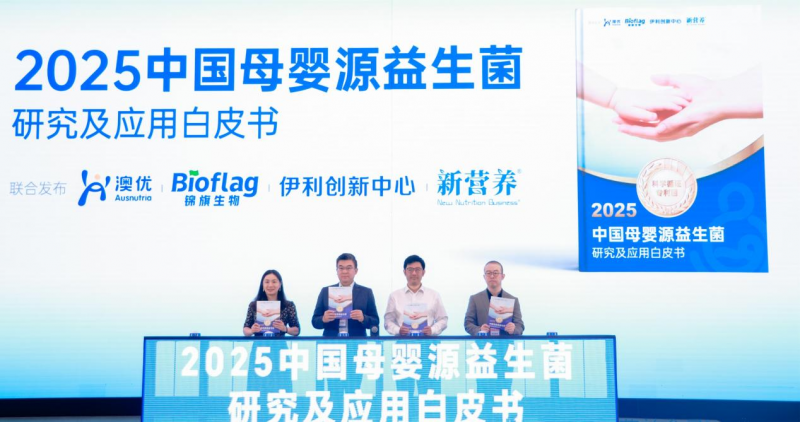
《2025中国母婴源益生菌研究及应用白皮书》正式发布,推动科技创新与产业发展
Zhong Guo Shi Pin Wang· 2025-06-06 09:51
Core Insights - The 2025 13th New Nutrition Conference was held in Hangzhou, Zhejiang, gathering over 1,000 industry experts and representatives to discuss cutting-edge research, innovative technologies, and applications in the nutrition and health sector [1] - A joint white paper titled "2025 China Maternal and Infant Source Probiotics Research and Application" was released by Aoyou, Jinqi Bio, and the Yili Innovation Center, highlighting the importance of maternal and infant probiotics in health and immune development [3][4] - Jinqi Bio's product, Yizhi Xian® dietary fiber probiotic powder, won the "Best-Selling Product Award" in the meal replacement and weight management category at the conference [1][6] Industry Trends - Probiotics research has become a significant topic in global nutrition and health, with a focus on maternal and infant probiotics as key regulators of the human microbiome [3] - The white paper emphasizes the unique characteristics of the gut microbiota in Chinese populations and discusses the clinical applications of specific probiotic strains in alleviating functional digestive disorders and reducing body fat [3][4] - The industry is moving towards standardization and regulation, with the white paper providing forward-looking insights on industry standards and future trends [3] Company Developments - Jinqi Bio has developed a complete industrial chain for the production and commercialization of high-value probiotic strains, including YLGB-1496 and CP-9, which have received multiple Chinese invention patents [4][5][6] - The company has successfully integrated these probiotics into various Yili products, such as yogurt, milk powder, ice cream, and cheese, receiving positive consumer feedback [6] - Jinqi Bio aims to continue innovating and developing high-quality probiotics to meet the diverse health needs of consumers, adhering to the principle of "using infant-level standards to create better probiotics" [9]