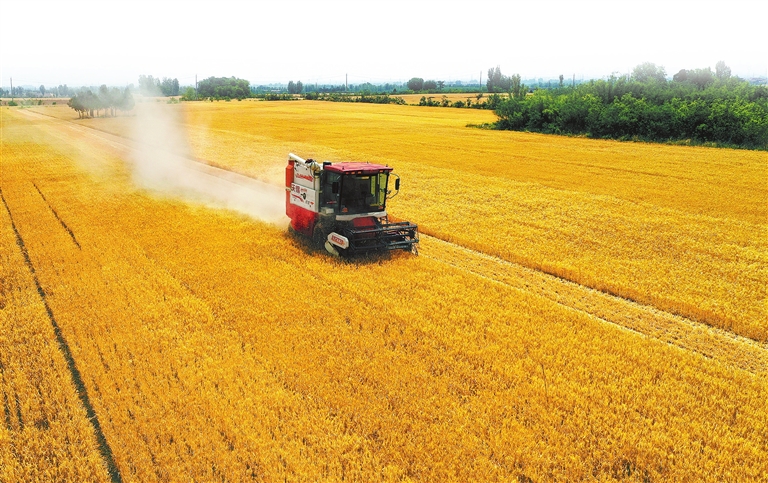
科学种田

Search documents
一场种粮竞赛让新一代接受“接班”淬炼
Zhong Guo Qing Nian Bao· 2026-02-11 23:07
Core Insights - The second "Qianyin Cup" modern youth farmer high-yield competition recognized 72 young farmers and large-scale planters, with the first prize being 10,000 yuan [2] - The competition aims to address the pressing issues of who will farm in the future and how to increase grain production, emphasizing the need to improve yield per unit area due to limited arable land and water resources [2] Group 1: Competition Overview - The competition targeted modern youth farmers and large-scale planters in Anhui, who selected recommended varieties of rice, corn, and wheat for cultivation [3] - The organizing body, Qianyin High-Tech, is a key player in the seed industry, providing technical guidance and overseeing yield measurement [3] - The competition's results showed that participants achieved average yields of 748 kg/acre for rice, 732 kg/acre for corn, and 670 kg/acre for wheat, despite facing adverse weather conditions [5] Group 2: Participant Experiences - Contestant Ge Hao, a 28-year-old master's graduate in agriculture, returned home to manage farming operations alongside his father, achieving significant yields [3][5] - Another participant, Niu Ke, transitioned from a career in hairdressing to farming, reflecting on the challenges and learning experiences gained through the competition [6][7] - Participants noted the importance of technical support and real-time problem-solving during the competition, which enhanced their farming practices [7] Group 3: Industry Implications - The competition involved nearly half of Anhui's counties, promoting the adoption of suitable varieties and advanced cultivation techniques among local farmers [9] - Young farmers demonstrated a quick adaptation to new agricultural technologies, although they still face challenges in practical experience and disaster response [9] - The competition's format encourages active engagement and knowledge sharing among young farmers, helping to reshape perceptions of agriculture as a viable career [10]


新华视点丨东北粮仓守护中国饭碗
Xin Hua Wang· 2026-01-12 07:04
Group 1 - In 2025, Heilongjiang Province achieved a grain production milestone with a total output of 164.006 billion jin, marking the 22nd consecutive year of increased production and maintaining its position as the top grain-producing province in China [1] - The province's grain output increased by 3.97 billion jin, accounting for 23.6% of the national grain increase, which is an improvement of 4.4 percentage points from 2024 [3] - The province emphasizes the dual enhancement of yield and quality, positioning itself as a cornerstone for national food security [1] Group 2 - In Jilin Province, the use of modern agricultural technology, such as intelligent monitoring systems, has transformed traditional farming practices into automated and mechanized operations, significantly aiding in precise fertilizer application and machinery operation [5] - Jilin's strategy includes a focus on seed quality, with a goal for high-quality new varieties to contribute over 45% to grain yield increases [7] - The province has established several breeding innovation platforms to accelerate the development of high-yield and high-quality crop varieties [11] Group 3 - Liaoning Province reported a grain production of 51.556 billion jin in 2025, with a year-on-year growth of 3.1%, the highest increase among major grain-producing provinces [10] - The city of Tieling in Liaoning plays a crucial role, contributing approximately 16% of the province's total grain output [10] - The implementation of high-standard smart farmland and scientific farming practices is key to increasing grain production in Tieling [13] Group 4 - Inner Mongolia's Xing'an League has focused on reducing losses and increasing efficiency as a key measure for food security, promoting various scientific grain storage methods [16] - The region has implemented strategies to improve grain storage quality, including the construction of concentrated storage points and the use of multi-layer storage systems [16]
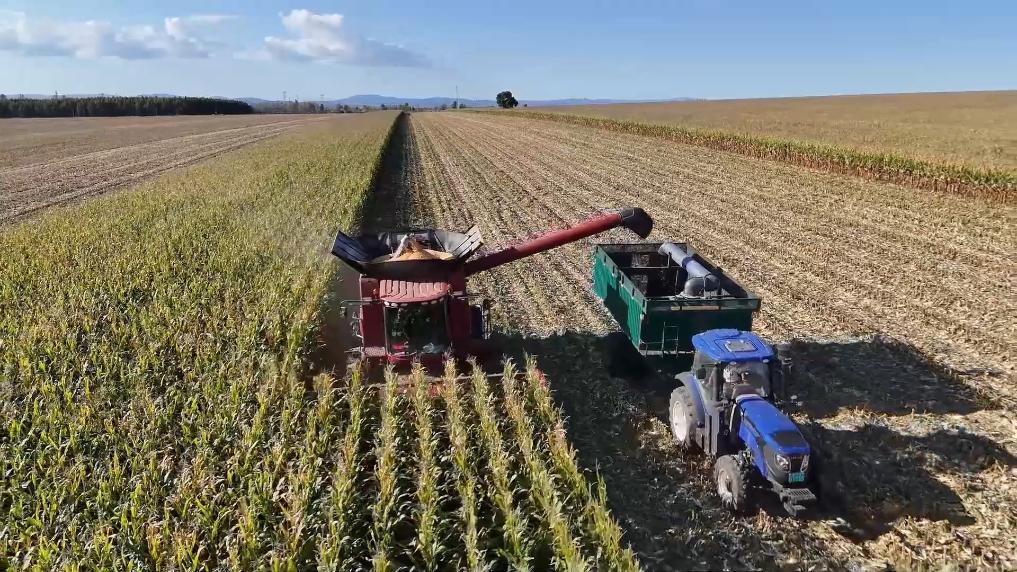
“量身定制”科学种田向沙漠要产量 “节水+排碱”助力荒废盐碱地喜迎丰收
Yang Shi Wang· 2025-12-06 13:44
Core Viewpoint - The agricultural transformation in Tumushuke City, Xinjiang, has led to a successful harvest of 4,000 acres of late-maturing desert rice, showcasing innovative farming techniques in challenging environments [1][3]. Group 1: Agricultural Practices - The rice is expected to be harvested by December 10, with the cultivation of drought-resistant and salt-tolerant rice varieties initiated since 2025 [3]. - The irrigation method employed is a "water-saving + salt drainage" intermittent irrigation system, allowing for flexible water management based on the rice growth stages [3]. - Local agricultural technicians utilize abundant sunlight for pest control through a "water control and sun drying" method, which reduces the need for chemical pesticides [6][8]. Group 2: Soil Improvement Techniques - Techniques such as local salt drainage and straw return are implemented to create a sustainable cycle of "using water to nourish rice, using rice to improve soil, and using soil to conserve water" [6]. - The process of washing away salt and alkalinity from the soil is crucial, with water needing to seep in locally to effectively remove salt [8]. - The decomposition of straw after harvesting significantly contributes to soil improvement by adding organic matter [8].
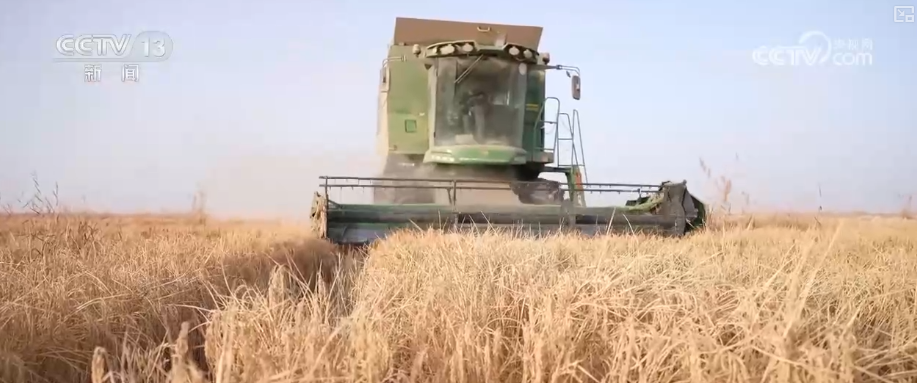
实探吉林商品粮基地: 黑土粮仓 秋收正酣
Zheng Quan Shi Bao· 2025-10-13 18:08
Core Viewpoint - Jilin Province plays a crucial role in China's grain production, contributing over 10% of the national grain supply, with a total grain output exceeding 800 billion jin for four consecutive years, aiming for over 880 billion jin by 2025 to ensure national food security [1][7][8] Group 1: Grain Production and Harvest - The key to achieving annual grain production targets lies in autumn harvest, with Jilin Province experiencing a successful harvest season in October, characterized by keywords like "increased production" and "abundant harvest" [1] - The Phoenix Mountain Cooperative in Siping City reports a corn yield of approximately 30,000 jin per hectare, exceeding the expected yield of 28,000 jin per hectare for 2024, indicating a year of abundant harvest [2] - The total grain output in Lishu County is projected to reach 4.4 billion jin by 2025, an increase of 0.73 billion jin from the previous year, with corn planting area expected to be 3.401 million mu [3] Group 2: Agricultural Innovation and Technology - The Phoenix Mountain Cooperative employs modern agricultural technologies, including intelligent monitoring systems and precision farming techniques, to enhance crop yields [4] - Jilin Province is strengthening its seed industry, focusing on developing high-yield and resilient crop varieties through various agricultural innovation platforms [5] - The province is also advancing smart agricultural machinery development, with significant progress in new machine types for efficient farming practices [6] Group 3: Future Goals and Strategies - Jilin Province aims to build 10 million mu of high-standard farmland and increase protective tillage areas by 2 million mu by 2025, with a target grain output of over 880 billion jin [7] - The "Billion Jin Grain" capacity enhancement project aims to ensure grain production reaches over 1 trillion jin by 2035, with a focus on utilizing saline-alkali land for additional agricultural resources [8][9] - The city of Baicheng has implemented projects to rehabilitate saline-alkali land, potentially adding 195,700 mu of arable land and increasing grain production capacity by 235 million jin annually [9]

追梦科学种田路
Ren Min Ri Bao· 2025-07-23 22:11
Core Viewpoint - The article highlights the success of Xu Zongxiang, a farmer in Anhui Province, who has significantly increased crop yields through scientific farming techniques and modern agricultural practices, benefiting both himself and the local farming community [1][2][3]. Group 1: Agricultural Innovation - Xu Zongxiang has established a modern agricultural planting cooperative, focusing on high-yield crop varieties and efficient farming techniques, leading to record yields in wheat, corn, and soybeans in Anhui Province [1][3][4]. - The average yield of Xu's wheat has reached 820.5 kg per mu, even under drought conditions, showcasing the effectiveness of his methods [3]. Group 2: Technological Integration - Xu employs advanced agricultural technology, including automatic monitoring systems for crop diseases and pests, which allows for precise management of farming conditions [6]. - The shift from manual labor to mechanized farming has reduced costs significantly, with full mechanization bringing costs down to around 600-700 yuan per mu compared to 1500 yuan if relying solely on manual labor [6]. Group 3: Community Engagement - In 2010, Xu founded the Xu Zongxiang Modern Agricultural Planting Cooperative, which helps local farmers increase their yields by providing resources and expertise [7]. - The cooperative has successfully raised the average wheat yield of participating farmers from over 400 kg to nearly 600 kg per mu [7]. Group 4: Educational Outreach - Xu has utilized local proverbs to simplify and promote agricultural techniques, making it easier for farmers to remember and apply these methods [8]. - His initiatives have led to the establishment of the Grain Growers Association, which provides training and support to farmers, covering 300,000 mu of farmland and benefiting 23,000 households [8].
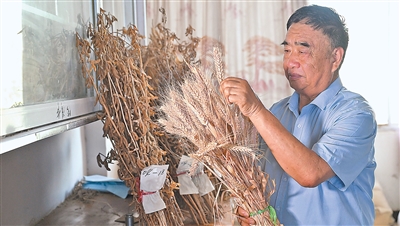
粮豆搭配 收入翻倍——陕西宝鸡夏季农业生产见闻
Xin Hua She· 2025-07-11 07:54
Core Viewpoint - The successful trial of the new soybean variety "Baodou No. 10" has led to a significant shift in agricultural practices in Shaanxi Province, resulting in increased income and productivity for local farmers [1][2][3]. Group 1: Agricultural Practices - Farmers are transitioning from traditional wheat and corn rotation to a new practice of wheat and soybean intercropping, driven by the success of "Baodou No. 10" [2]. - The introduction of "Baodou No. 10" has resulted in a doubling of soybean yield compared to older varieties, with farmers reporting yields exceeding 500 pounds per acre [1][2]. Group 2: Economic Impact - The demand for "Baodou No. 10" has outstripped supply, with farmers experiencing rising purchase prices, which have reached over 2 yuan per pound [2]. - The local agricultural bureau has noted a steady increase in the planting area for soybeans and oilseed crops, contributing to improved economic outcomes for farmers [3]. Group 3: Technological Advancements - The implementation of scientific planting techniques and the use of mechanization throughout the farming process have been highlighted as key factors in achieving higher yields [2][3]. - The local government emphasizes the importance of enhancing technological innovation and expanding the production of oilseed and soybean crops to ensure food security [3].
农机收麦显身手
Jing Ji Ri Bao· 2025-06-02 22:01
Core Viewpoint - The article highlights the successful wheat harvest in Henan province, emphasizing the effective agricultural practices and government support that have led to increased yields and efficient harvesting operations [1][3][4]. Group 1: Wheat Harvesting in Henan - In Kaifeng's Qixian County, the average yield per mu is expected to reach 473.04 kg, with a total production of 460,600 tons, surpassing previous years' performance [1]. - Farmers in Qixian County have reported yields of 900 to 1,000 jin per mu, attributed to guidance from agricultural technicians throughout the growing season [1]. - The overall wheat planting area in Nanyang is 11 million mu, with over 20,000 harvesting machines deployed for efficient collection [2]. Group 2: Agricultural Practices and Technology - The implementation of advanced agricultural techniques, such as the use of superior seed varieties and precise water and fertilizer management, has significantly improved wheat resilience and yield structure [1][3]. - The "Henan Agricultural Machinery Cloud" platform connects over 68,000 harvesting machines, facilitating precise matching of operational needs and equipment distribution [4]. Group 3: Government Support and Infrastructure - The Henan provincial government prioritizes summer grain production, organizing meetings to assess conditions and ensure effective disaster response strategies [3]. - Traffic management measures have been enhanced to accommodate the increased flow of harvesting vehicles during the peak season, ensuring efficient transportation [3].
麦收时节丨金色的青春
Yang Guang Wang· 2025-05-31 01:39
Group 1 - The core viewpoint of the articles highlights the successful wheat harvest in China, with over 1.29 million acres harvested and significant progress in various regions [1][2] - The technology small courtyard in Dezhou, Shandong, serves as a bridge between research and agriculture, contributing to improved crop yields through scientific methods [1][2] - The estimated yield from the experimental fields in the technology small courtyard is projected to reach 1200 pounds per acre, indicating a positive impact of zinc fertilizer on crop growth [1] Group 2 - The technology small courtyard has introduced over 50 agricultural technologies and conducted more than 290 training sessions, benefiting approximately 30,000 farmers and covering around 200,000 acres [2] - The contributions of the students and researchers in promoting scientific farming practices have led to increased crop yields, with some farmers reporting yields of 800 to 1200 pounds per acre [2] - The local agricultural bureau acknowledges the significant impact of the students' efforts in implementing agricultural production techniques among smallholder farmers [2]
坚决打赢“三夏”攻坚战丨麦穗沉甸甸 粮安稳当当——省委一号文件系列解读①
He Nan Ri Bao· 2025-05-23 23:19
Group 1 - The article highlights the successful implementation of modern agricultural practices in Henan province, particularly through the use of technology and scientific methods to improve wheat production [2][3] - The introduction of advanced irrigation systems and soil testing has led to a reduction in fertilizer usage by 8% to 10%, while simultaneously increasing soil fertility [2] - The expected wheat yield for the cooperative is estimated at over 1,300 pounds per acre, with a potential profit increase of 12% compared to market prices [2] Group 2 - The provincial government aims to stabilize grain planting area at over 160 million acres, emphasizing the importance of food security in the region [3][4] - High-standard farmland construction is a key focus, with plans to build and upgrade over 5 million acres by 2025, ensuring sustainable agricultural practices [3] - The integration of technology in agriculture, such as smart irrigation systems, is expected to enhance productivity and efficiency in grain production [4]