科技成果转化改革

Search documents
陕西省级上市后备企业名单发布
Sou Hu Cai Jing· 2025-08-07 08:24
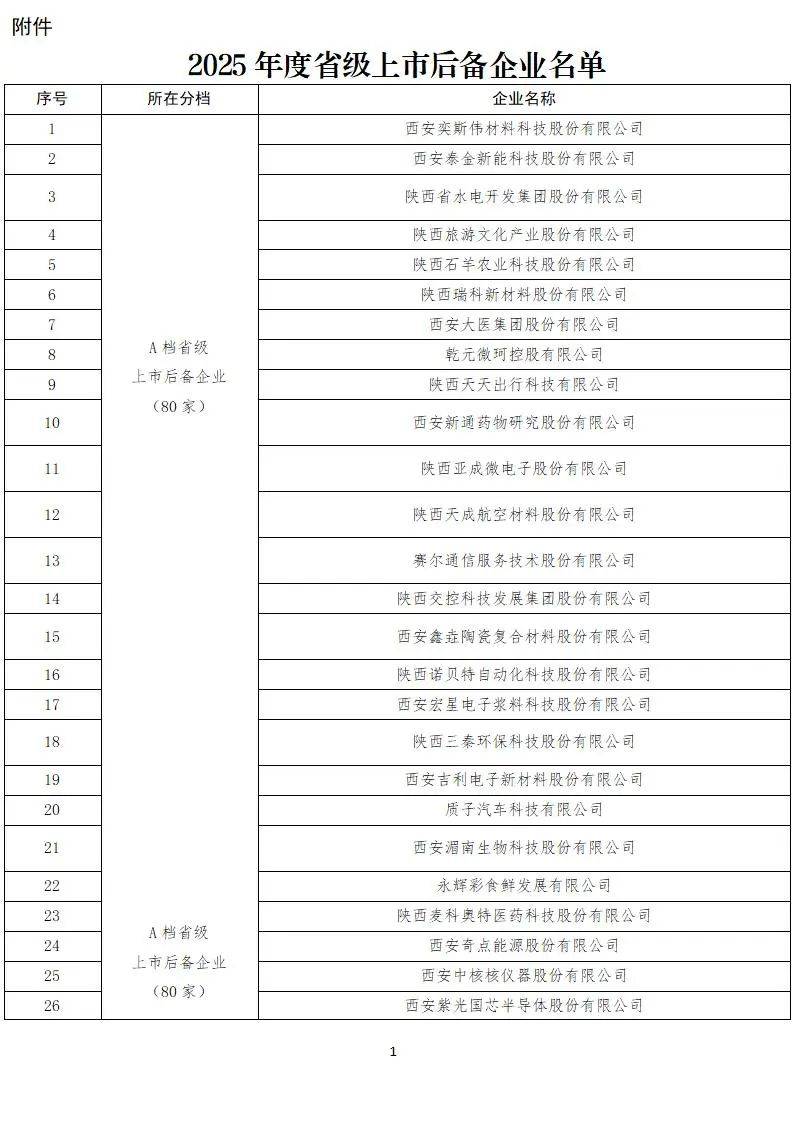
Core Points - The Shaanxi Provincial Financial Office has released the list of 520 provincial-level listed reserve enterprises for 2025, expanding by 20 companies compared to last year [1][2] - Among the listed reserve enterprises, there are 80 in Category A, 120 in Category B, and 320 in Category C [1][2] - A significant majority of the enterprises are technology-oriented, with 502 companies (96.54%) classified as such, and 438 companies (84.23%) are from key manufacturing industry chains [1][2] - Private enterprises dominate the list, with 428 companies (82.31%), marking an increase of 7.71 percentage points from the previous year [1][2] Summary by Categories Category A Enterprises - There are 80 enterprises classified as Category A, including notable companies such as Xi'an Yisiwei Material Technology Co., Ltd. and Qianyuan Weike Holdings Co., Ltd. [4][5] Category B Enterprises - The list includes 120 enterprises in Category B, such as BoRui JiXin (Xi'an) Electronic Technology Co., Ltd. and Huachuang Synthetic Pharmaceutical Co., Ltd. [7][8] Category C Enterprises - A total of 320 enterprises fall under Category C, which includes a wide range of companies across various sectors [10][11] Industry Focus - The technology sector is heavily represented, with a focus on industries such as photonics (16 companies), aerospace (26 companies), aviation (36 companies), and artificial intelligence (14 companies) [1][2]

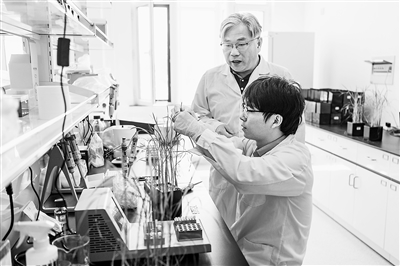
黑龙江发布成果转化改革攻坚方案
Ke Ji Ri Bao· 2025-07-08 02:07
Core Viewpoint - The Heilongjiang Province has launched a reform plan aimed at transforming the technology transfer system in universities and research institutions, with a goal to empower researchers and enhance the commercialization of scientific achievements [2][3] Group 1: Reform Measures - The plan includes seven breakthrough reform measures targeting the core issues of technology transfer, addressing the long-standing challenges of reluctance and inability to commercialize research outcomes [2] - A "one-stop" service system will be established to simplify the internal approval processes for technology transfer, significantly shortening the path from laboratory to market [2] - The introduction of a professional sequence for technology managers in the title evaluation system aims to alleviate career development bottlenecks for technology transfer personnel [2] Group 2: Empowerment and Incentives - The plan fully implements the reform of granting ownership of work-related scientific achievements to researchers, shifting from a model of "results first, then consider transfer" to "empowerment first, then integrated promotion of creation and transfer" [3] - It encourages universities and research institutions to license technology to enterprises on a "pay after use" basis, utilizing flexible payment methods such as "zero threshold fees + phased payments + revenue sharing" [3] Group 3: Evaluation and Impact - A technology transfer index evaluation system will be established to assess the effectiveness of the reforms, based on indicators such as technology contract transaction volume and the number of newly established enterprises [3] - This index will serve as a driving force for institutions to enhance their technology transfer efficiency, promoting a culture that values successful commercialization [3]