科技股过热

Search documents
日本经济政策转向!美资追涨日股 花旗警告风险
Guo Ji Jin Rong Bao· 2025-11-10 20:58
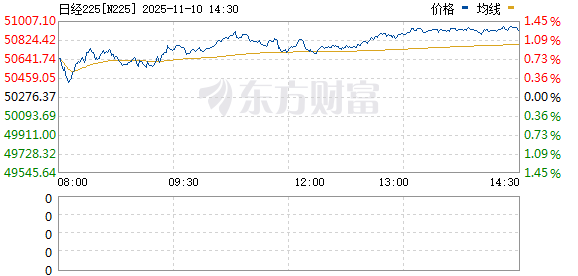
Core Viewpoint - The Japanese government is signaling a significant shift in fiscal policy, moving away from strict budget balance targets to a more flexible multi-year spending plan aimed at stimulating economic growth [1][8]. Fiscal Policy Shift - Prime Minister Sanna Takashi announced plans to abandon the current annual budget balance target in favor of a new multi-year fiscal goal [7]. - This change effectively weakens Japan's long-term commitment to fiscal consolidation, providing the government with greater spending flexibility [8]. - The government aims to restore market confidence in Japan's finances while increasing investments to boost economic growth [9]. Market Reaction - Following the announcement of the new fiscal policy, there has been a significant influx of capital into the Japanese stock market, with the Nikkei 225 index rising by 1.26% to 50,911.76 points [2][3]. - Goldman Sachs noted that the speed of capital inflow from the U.S. into the Japanese stock market is the fastest since the "Abenomics" era, with returns in U.S. dollar terms reaching approximately 30% this year, significantly outperforming the S&P 500 [5]. Investment Trends - The shift in fiscal policy has reignited market confidence, leading to increased participation from U.S. investors, particularly in technology and AI sectors [12]. - Since 2021, Japanese value stocks have consistently outperformed growth stocks, aided by government initiatives to improve capital efficiency [12]. Valuation Concerns - Citigroup has raised warnings about potential overheating in Japanese tech stocks, indicating that valuations have surpassed those of the U.S. "Big Seven" tech companies [13]. - Analysts suggest that the current rise in Japanese tech stocks lacks sufficient profit support, which could lead to unsustainable growth [13]. - Despite maintaining a long-term optimistic outlook on Japanese stocks, there are concerns about short-term risks such as yen appreciation and potential market corrections [14].