科艺结合

Search documents
父亲钱学森的艺术修养(人文茶座)
Ren Min Ri Bao· 2025-10-18 22:02
Core Viewpoint - The article highlights the duality of Qian Xuesen as both a pioneering scientist in China's aerospace industry and a person deeply engaged in the arts, emphasizing how his artistic background influenced his scientific thinking and innovation [1][2][4]. Group 1: Artistic Influence on Scientific Thinking - Qian Xuesen's unique upbringing fostered a blend of scientific and artistic qualities, leading him to explore music and painting while also studying art theory, which significantly impacted his scientific perspective [2][3]. - His early experiences in art, such as mastering watercolor and Chinese painting, contributed to his understanding of the emotional and philosophical dimensions of art, paralleling the creative processes in scientific exploration [2][3]. - Qian's advocacy for integrating art education in basic education reflects his belief that aesthetic appreciation is essential for modern citizens, linking artistic sensibility with scientific inquiry [3]. Group 2: Integration of Science and Art - Qian Xuesen's later years were marked by a continued passion for art, where he collected and analyzed various artworks, reinforcing his view on the importance of art in education and society [3][4]. - He proposed the concept of "technical aesthetics," which stems from his early artistic practices and emphasizes the synergy between engineering and artistic principles [2][4]. - The article suggests that Qian's philosophy of "great wisdom" illustrates the interplay between science and art, advocating for a holistic educational approach that transcends traditional disciplinary boundaries to cultivate innovative talent [4][5].
医学生的“浪漫”,普通人也能懂
Zhong Guo Qing Nian Bao· 2025-07-18 02:10
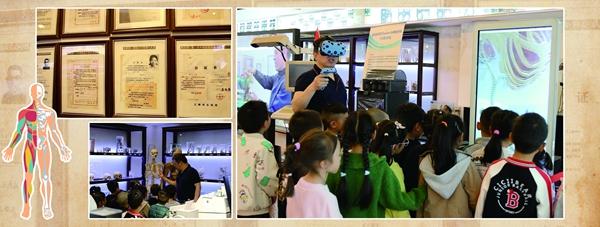
Core Insights - The Fudan University Human Body Science Museum has become a significant educational space, attracting visitors with its unique collection of human specimens and stories related to life and death [2][3][4] - The museum emphasizes the importance of body donation and the respect for "body teachers," showcasing the contributions of individuals who have donated their bodies for medical education [6][12] - The museum's approach combines science and art, creating an engaging environment that encourages public interaction and understanding of human anatomy [10][11] Group 1 - The museum has been open to the public since 2014 and has attracted numerous visitors, with many returning multiple times due to the emotional impact of the exhibits [2][3][4] - The museum's collection includes over 1,000 specimens, each representing a significant contribution to medical education and research [3][4] - The museum's director, Zhou Guomin, actively engages with visitors, providing personalized tours and emphasizing the stories behind the exhibits [10][12] Group 2 - The museum has a rich history, originating from the 1930s as a specimen display room at the National Shanghai Medical College [4] - Notable donations include specimens from the late Fudan University president Yan Fuqing, whose twin granddaughters were among the first to be donated [4][5] - The museum has a dedicated wall displaying body donation application forms, highlighting the personal stories and motivations behind these donations [7][8] Group 3 - The museum's interactive approach includes art exhibitions that blend medical science with artistic expression, making the subject more accessible and engaging for the public [11][12] - The museum has established a volunteer program with over 80 student volunteers who help share the stories of the specimens and the importance of body donation [12] - The museum's efforts to document and share these stories contribute to a deeper understanding of the human body and the ethical considerations surrounding medical education [6][10]